


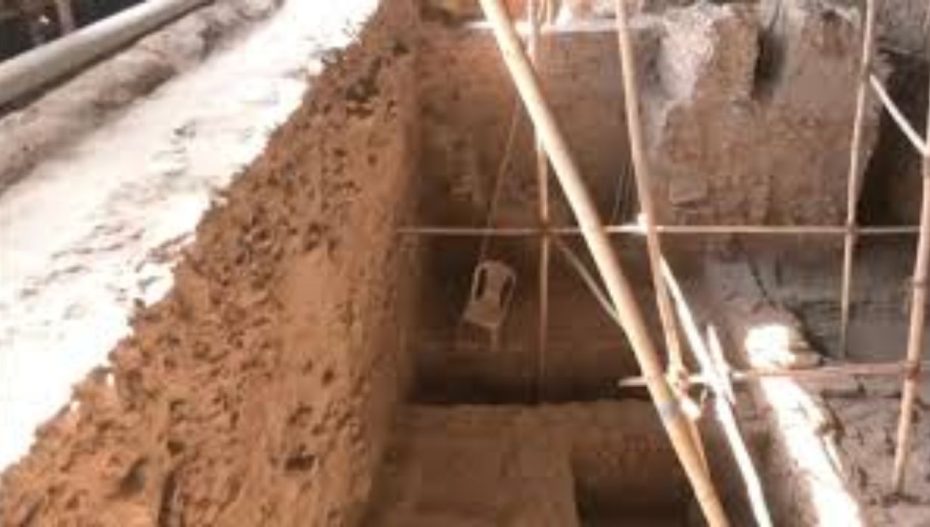
A historic town in north India has revealed a far older past than previously known. Human habitation there now dates back nearly 2,800 years.
That’s 500 years earlier than what is recorded in the archives, according to reports.
The town, Vadnagar in Gujarat, is on India’s tentative UNESCO World Heritage list.
Earlier, studies had placed the town’s origins around 2,200 years ago. That estimate reflected the earliest excavated layers at the time. The findings were reportedly limited to high groundwater and unstable trench sections.
The new findings come from a decade-long investigation by the Archaeological Survey of India. It reportedly included deep drilling to collect sediment samples from below the previously known as Pre-Rampart layers.
A report alluded to the tests that used Accelerator Mass Spectroscopy (AMS) at the Physical Research Laboratory in Ahmedabad. It confirmed the earliest settlement at approximately 2,754 years back.
Several pottery fragments and artifacts were recovered from these layers. Beneath them lies sterile soil dating back around 7,000 years. It shows a clear gap before human occupation began.
Experts told a national newspaper that its significance lies in its continuous history. A blend of Hindu and Buddhist heritage and links to other historic sites in India and abroad.
The discovery also places Vadnagar in the context of India’s second phase of urbanization after the Harappan era. The region saw the emergence of Mahajanapadas such as Avanti, Chedi, Kashi, Kamboj, Kosala, Kuru, and Magadha between the 6th and 4th centuries BCE.
The research was presented at a workshop on the Archaeological History of Gujarat.
It highlighted Vadnagar’s chronology and the resilience of its early inhabitants. Scientists believe the town’s revised timeline strengthens its historical importance besides bringing heft to its UNESCO nomination.
Also Read: DNA Analysis Shows Cosmopolitan Society In Gujarat’s Vadnagar https://www.vibesofindia.com/dna-analysis-shows-cosmopolitan-society-in-gujarats-vadnagar/