


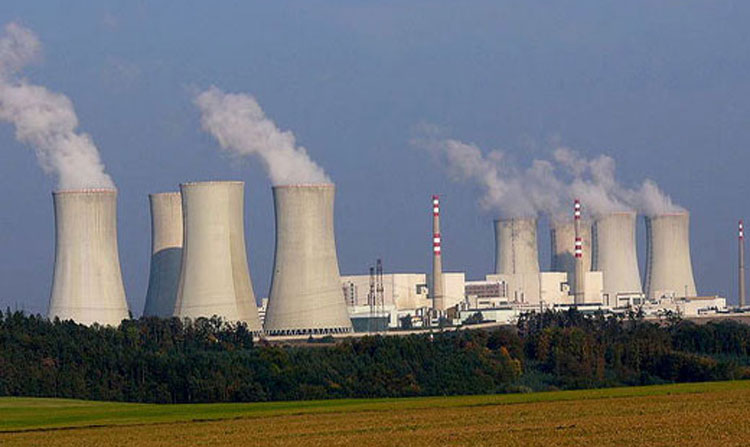
India is gearing up for a sweeping revamp of its atomic energy laws, including the Civil Liability for Nuclear Damage (CLND) Act.
Finance Minister Nirmala Sitharaman had earlier hinted at amending both the Atomic Energy Act and the CLND Act in her budget speech.
The move is aimed at paving the way for private sector participation by addressing supplier concerns around open-ended liability — a key barrier to investment in the sector.
At the heart of the proposed revamp is a shift from the current framework, which was built around a state-led nuclear programme. Insiders pointed out that the existing laws were crafted to support a government-dominated model. However, according to reports, policymakers now believe a new legal structure is necessary to attract private capital.
The liability law, originally introduced to protect against fallout from nuclear accidents, has long been a point of contention for investors. At present, Section 6(1) of the CLND Act caps total liability per incident at 300 million Special Drawing Rights (SDRs), a reserve asset defined by the International Monetary Fund (IMF), currently equivalent to about Rs 3,700 crore. Section 6(2) sets the operator’s maximum liability at Rs 1,500 crore.
However, it is Section 17 that has caused unease among suppliers. It provides for recourse by the operator in cases where a nuclear incident results from the actions of the supplier or their employees — including the provision of equipment with latent defects or substandard services. Analysts believe this clause effectively imposes unlimited liability on suppliers, which has raised serious concerns. They noted that a supplier may procure or subcontract components from various vendors, and that a plant typically consists of numerous interconnected systems, making it impractical for one supplier to bear the entire burden of liability.
Business analysts believe that a complete rewriting of the legislation is the call of the hour instead of making multiple amendments.
Under ongoing discussions, policymakers are considering a cap on the liability of suppliers, beyond which the government would assume responsibility. Media reports claim that a balanced structure is being considered to ensure accountability while also encouraging participation.
India operates 22 nuclear reactors with an installed capacity of 6,780 MW.
The government has outlined bold targets to boost nuclear capacity to 100 GW by 2047. Expanding it to 35–40 GW by 2035 is part of the government’s broader vision. The general sentiment is that legal reforms are essential to reach this milestone. Private and public players need a more favourable environment.
A key proposal under review is the creation of a nuclear fund, as outlined in the existing CLND framework, but with a clearer mechanism for operator contributions — potentially linked to the amount of power generated. One person described the current phase as a “hectic drafting exercise,” with consultations underway and further stakeholder discussions planned before the proposal is presented to the Cabinet. The aim, they said, is to table the new legislation in Parliament within the current calendar year. An inter-ministerial committee is currently finalising the draft changes.
The proposed amendments align with global practices. Although India has signed the Convention on Supplementary Compensation for Nuclear Damage (CSC), it has yet to ratify the accord. The legislative revamp would enable India to adhere to the CSC and benefit from its provisions.
By introducing a clear liability cap and rebalancing the risk structure, the new legal framework could offer a more scalable and flexible model for the nuclear industry. An industry expert observed that this shift could significantly improve the operating environment for both suppliers and operators while maintaining accountability.
Also Read: Hardik Dave Performs At “Abhivyakti” In Bhuj https://www.vibesofindia.com/hardik-dave-performs-at-abhivyakti-in-bhuj/