


In a move aimed at addressing the plight of persecuted minorities from India’s neighborhood, the government has relaxed passport and visa requirements for those who sought refuge in the country.
Those who crossed into India without valid documents — or whose papers have long expired — will no longer be required to produce a passport or visa.
According to reports, those from minority communities — Hindus, Sikhs, Buddhists, Jains, Parsis, and Christians — from Afghanistan, Bangladesh, and Pakistan who entered India on or before December 31, 2024, to escape religious persecution or the fear of it, will now be allowed to stay back. This, even if they lack valid passports or travel documents.
It should be mentioned that recently in Gujarat, as many as 185 people were granted Indian citizenship under the CAA. Certificates were reportedly given to refugees settled in Kutch, Morbi, and Rajkot, assuring them full government support and access to welfare schemes.
The announcement comes in the shadow of a law set into motion last year — the Citizenship (Amendment) Act, or CAA. Under its provisions, a quiet promise was made: those who belong to the persecuted minority would be eligible to call this land their own. Citizenship, once distant and uncertain, was now within reach — written into law, anchored by a date, and bound by the suffering they had fled.
The order has been issued under the newly enforced Immigration and Foreigners Act, 2025, and has brought significant relief to many — particularly among the Hindu community from Pakistan — who crossed into India after 2014 and had been living in a state of uncertainty regarding their legal status.
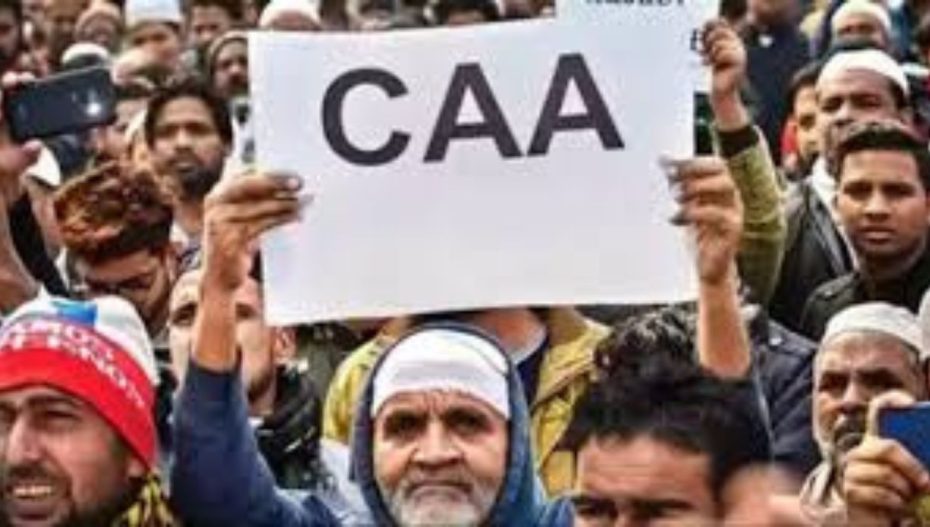
Though the law was passed more than four years ago, its enforcement was held back — stalled in the wake of widespread protests that erupted across the country.
Demonstrators called it discriminatory, warning of its divisive potential and the strain it could place on India’s diplomatic ties.
Even as the ruling party repeatedly assured Dhaka and other foreign capitals that the CAA was purely a domestic matter, the unease in Bangladesh remained. For Dhaka, reassurance was thin, especially with Bangladesh standing at the very heart of India’s foreign nationals’ issue.
Also Read: US Student Visa Rules 2025: Proposed Changes May Limit Stay To 4 Years, Affecting F-1 And J-1 Visa Holders https://www.vibesofindia.com/us-student-visa-rules-2025-proposed-changes-may-limit-stay-to-4-years-affecting-f-1-and-j-1-visa-holders/