


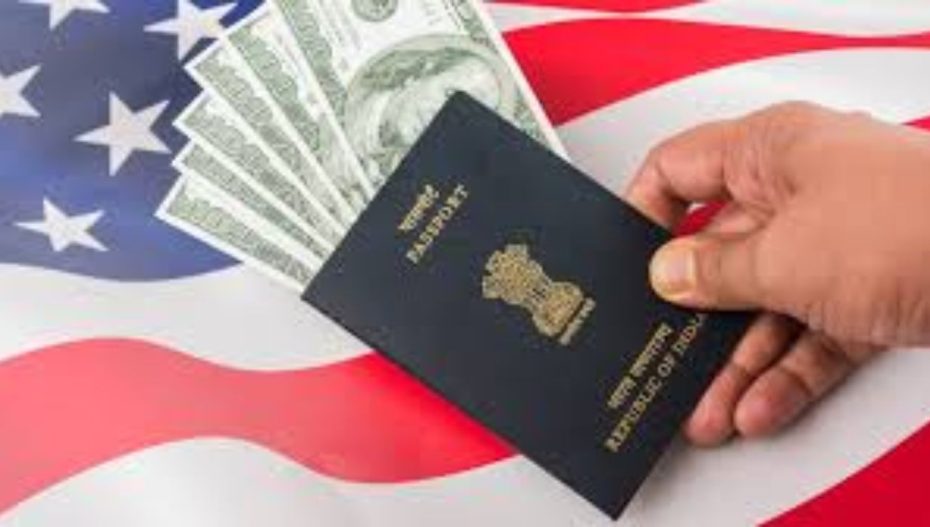
For many Indians, especially students in Gujarat, the US dream is slipping out of reach. Visa refusals are growing by the day. And this uncertainty is pushing thousands to abandon America and look elsewhere for a secure future.
According to reports, the student visa rejection rates have reached record highs. Foreign education consultants note that approval rates have fallen to about 15%.
With the January 2026 intake nearing, many are still waiting for visas, while those who were refused are unhappy about receiving no clear reason for the denial.
Reports claimed that students are changing their country of choice solely because the US application was rejected and appointment dates did not open on time for those who had faced refusals. A national daily has reported that he shifted to Australia and joined a Bachelor of Science course for the February intake, even though studying in Australia had never been part of the plan. The student did not want to lose a year.
Consultants in the city describe 2025 as one of the toughest years. A foreign education consultant stated that US visa refusals are at their highest and that most refusal letters contain only generic explanations. According to the consultant, this situation is not only emotionally draining for families but also financially damaging.
Another student, the report added, said they had secured admission, received an I-20, and even obtained a scholarship from an institute in Texas for the Sep intake. However, when the visa interview took place in July, the application was rejected.
Advisors reportedly told the student that the political climate in the US is too unpredictable and suggested exploring other countries. The student is taking a year off to work and plan the next steps and is now considering Germany and the UK for a master’s in space engineering.
A typical US application cycle costs around Rs 1 lakh, covering visa, exam, and university application fees, and several high-performing students with confirmed admissions are now compelled to reconsider their paths.
Consultancies are also experiencing losses. Industry representatives say business has dropped by 40–50% because of reduced demand for services related to the US and Canada, along with increasing worries among parents.
According to consultants, US visitor visas, however, are still being issued with relative ease.
One foreign education consultant, requesting anonymity, said the general sense is that the US is tightening entry, possibly due to political currents around migration, and that this uncertainty may continue into next year.
Countries such as the UK, Australia, Germany and New Zealand have emerged as more welcoming options.
A visa consultant said that interest in the US and Canada has fallen sharply because rejection rates are too high. The consultant added that there are three major concerns: policy unpredictability, which makes future developments unclear; very high living costs; and overall uncertainty surrounding visas.
As a result, students are shifting to the UK, Europe, New Zealand, the Middle East and Australia, where visa outcomes are considered more certain. For consultants, the volume of business has decreased and revenues are down by 40–50%.
Gujaratis obsession for the US is well-documented. When it comes to general presence in the US, Gujaratis have made a lasting impression.
Recent data (2019–2022) from the American Community Survey (ACS) reported that Gujaratis in the US earn a higher average income than Punjabis, while Punjabis are far more likely to obtain asylum.
Researchers noted that this pattern reflects both communities’ economic backgrounds and the stories they present before US authorities.
According to the findings, Gujaratis recorded an average personal income of $58,000, compared with $48,000 among Punjabis, though Gujarati speakers still reported the second-lowest personal earnings after Punjabi speakers.
However, the scenario is starkly different on the education front. In May, it was reported that the count of Gujarati students choosing the US for higher studies has fallen steeply this year, by roughly 30%.
As of now, there’s nothing to suggest that things will change for the better anytime soon.
Also Read: Indian IT Professionals Face The Brunt Of New Us Visa Fee As Microsoft Issues Urgent Return Directive https://www.vibesofindia.com/indian-it-professionals-face-the-brunt-of-new-us-visa-fee-as-microsoft-issues-urgent-return-directive/