

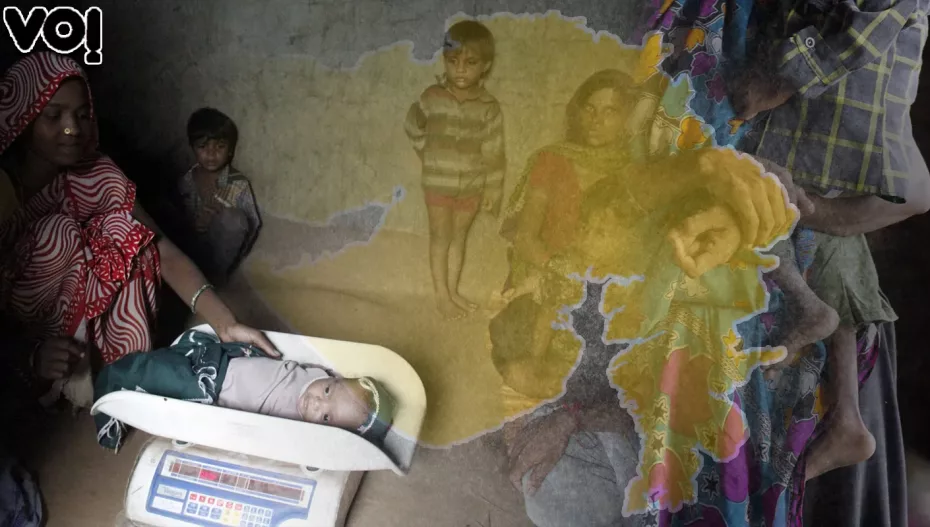
Despite spending thousands of crores of rupees to tackle malnutrition, Gujarat continues to struggle with high child and infant mortality, performing worse than several other Indian states. Data shows that the state has failed to achieve the expected improvement in child health outcomes, raising serious questions about the effectiveness of its policies and implementation.
In Gujarat, an average of 23 children under the age of five die for every 1,000 live births, a figure that reflects a troubling public health situation. This rate remains significantly higher than in states such as Kerala and Jammu & Kashmir, despite Gujarat’s repeated claims of progress and large budgetary allocations for nutrition and maternal health.
To address infant and child deaths, the Gujarat government has launched multiple initiatives, including the Bal Sakha Yojana and the Janani Suraksha Abhiyan. Alongside these schemes, the state has consistently earmarked massive funds in its annual budgets with the stated goal of making Gujarat free from malnutrition. Official statements also highlight financial and nutritional support being provided to pregnant women and newborns.
According to a report in Gujarat Samachar, a vernacular daily, ground realities, however, tell a different story. Even today, thousands of newborns continue to die in hospitals across the state. Gujarat’s infant mortality rate remains around 15 per 1,000 live births. In comparison, Delhi reports a rate of 9, Kerala just 4, Tamil Nadu 9, West Bengal 13, Punjab 12 and Karnataka 11. While several states have managed to substantially reduce infant deaths through targeted interventions, Gujarat—despite its reputation for healthcare infrastructure—has fallen behind.
The situation is equally concerning when it comes to child mortality below the age of five. Gujarat records 23 deaths per 1,000 children, whereas Kerala reports only 8, Kashmir 15, West Bengal 18, Karnataka 17, Maharashtra 16 and Tamil Nadu 13. These comparisons further highlight Gujarat’s relatively poor performance.
Government officials maintain that welfare schemes have reached villages and remote hamlets, backed by heavy spending from the state exchequer to combat malnutrition. Yet, the outcomes do not reflect the scale of investment. Critics argue that the schemes are failing to deliver meaningful results and have become largely symbolic. Many believe that benefits are limited in reach and effectiveness, preventing the state from achieving the significant reduction in child and infant mortality that the spending promises.
Also Read: Progress Or Pretense? Gujarat’s Malnutrition Rates Expose Stark Reality https://www.vibesofindia.com/progress-or-pretense-gujarats-malnutrition-rates-expose-stark-reality/