


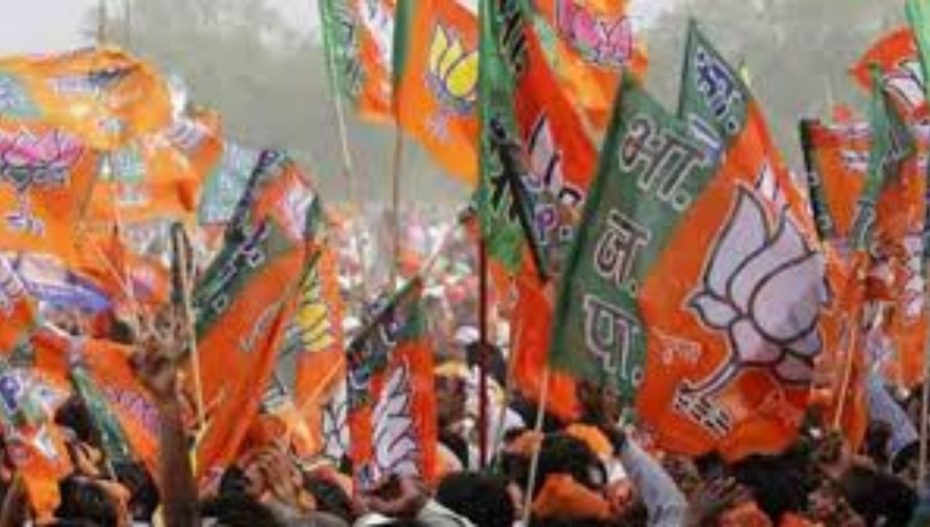
With the Nagpur Municipal Corporation (NMC) elections scheduled for January 15, the Bharatiya Janata Party (BJP) is grappling with significant internal unrest, particularly in Nagpur, where a wave of resignations has exposed deep dissatisfaction among grassroots workers.
The turmoil comes amid a broader picture of fractured alliances and multi-cornered contests across municipal corporations in Vidarbha, setting the stage for fiercely competitive civic polls.
According to media reports, in Nagpur, more than 80 BJP workers from Prabhag 16 (d) have resigned from the party, dealing a blow to its organisational strength in the area. Sources within the party suggest that the discontent is not limited to one ward and that further resignations from other parts of the city are likely in the coming days.
Gajanan Nishitkar, former BJP president of Prabhag 16(d), confirmed that 80 workers, including 45 office-bearers, have stepped down. Speaking to an English national daily, Nishitkar said his own dissatisfaction stemmed from being denied a party ticket yet again. He recalled facing a similar situation during the 2017 civic elections.
“This time the seat was open and I was a strong claimant,” Nishitkar said. “I have the highest number of booths in the Prabhag—24 in total. I was repeatedly asked to keep my documents ready for filing nomination forms, and even senior leaders tried to intervene. Despite this, the ticket was given to a woman candidate who is neither from the locality nor a resident of this Prabhag.”
The BJP leadership, however, has sought to downplay the impact of the resignations. Dayashankar Tiwari, president of the BJP’s Nagpur city unit, said he had not officially received any resignations. “Whatever resignations are being claimed are being done on social media platforms. I have not received anything in writing, so it would be premature to comment,” he was quoted by the newspaper.
The disquiet within the BJP has also spilled into the personal lives of its leaders, triggering dramatic scenes. On Wednesday, tensions flared at the residence of former Nagpur mayor Archana Dehankar after she left her home and moved to her parents’ house. This followed her husband Vinayak Dehankar’s decision to resign from the BJP and contest the NMC elections as an independent candidate.
Vinayak Dehankar, a long-time BJP worker, said he joined the party in 1984, at a time when the area was considered a Congress bastion. He claimed to have played a key role in building the BJP organisation at the grassroots level. “My wife earlier received a BJP ticket and won,” he said. “But in Prabhag 17, instead of encouraging new and local workers, the party gave tickets to outsiders, including a former Congress candidate. This has deeply upset me.”
He added that none of the four candidates fielded by the party in the Prabhag were local residents, prompting him to quit. “I never expected the party to grow by sidelining its own dedicated workers,” Dehankar said. He also acknowledged that his wife, who holds a state-level organisational post in the BJP, was unhappy with his decision to contest as an independent, which led her to temporarily move out of their home.
Nagpur is not the only city witnessing political churn. Across Vidarbha, municipal corporations are heading into elections with fractured alliances and weakened coordination, both within the ruling Mahayuti and the opposition Maha Aghadi.
In the NMC, the BJP’s alliance with the Shiv Sena (Shinde faction) remains formally intact, but the seat-sharing arrangement has raised eyebrows. The BJP has announced candidates for 143 seats, while its ally Shiv Sena has been allotted just eight. On the opposition side, unity appears elusive. The Nationalist Congress Party (NCP) chose to contest independently, while the Congress released a list of nearly 100 candidates only on the final day. The Sharad Pawar-led NCP faction fielded 79 candidates, and Shiv Sena (UBT) also opted to go solo.
The newspaper quoted sources from the NCP (SP) alleging that despite a mutually agreed seat-sharing formula with the Congress, the alliance collapsed at the last moment. According to them, Congress leaders failed to respond on the final day and, without prior notice, issued ‘B-forms’ to their own candidates on seats earlier earmarked for the NCP (SP). This compelled the Sharad Pawar faction to field 79 candidates in Nagpur.
A similar pattern of fragmented contests is visible in other Vidarbha cities. In Chandrapur Municipal Corporation, which has 66 seats, the BJP–Shiv Sena alliance continues, with the BJP contesting 57 seats and Shiv Sena nine. Congress, meanwhile, retained most seats for itself, allocating only three to Jan Vikas Sena.
Akola presents an even more crowded political battlefield. The BJP and the NCP led by Ajit Pawar are allied, with the BJP contesting 66 seats and the NCP 14. Shiv Sena (Shinde faction) is contesting independently. Congress and the NCP (SP) are fighting together, with Congress fielding 55 candidates. Shiv Sena (UBT) has announced 55 candidates with the support of the Maharashtra Navnirman Sena (MNS) and Prahar Janshakti Party. AIMIM and the Vanchit Bahujan Aghadi have also entered the fray independently.
In Amravati, alliances have virtually collapsed. The Mahayuti has broken apart, while the Maha Aghadi has failed to fully take shape. The BJP announced candidates for 75 seats, six of which were given to Yuva Swabhiman. Congress released a list of 74 candidates and allotted 13 seats to its allies. The NCP declared 82 candidates, and Shiv Sena announced 69.
With alliances splintered and dissatisfaction simmering within parties, the civic elections across Vidarbha are shaping up to be highly competitive. The emergence of former BJP office-bearers and long-time workers as independent candidates further underscores the level of internal discord. As campaigning intensifies, these fractures could significantly influence electoral outcomes in key urban centres.
Also Read: Tribal Leader Mahesh Vasava Quits The BJP https://www.vibesofindia.com/tribal-leader-mahesh-vasava-quits-the-bjp/