The government has reopened the conversation on how India works by placing a fresh set of draft rules under four labour codes.
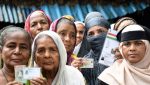
At the heart of the proposals is a 48-hour workweek for women. It has provisions that would allow women to take up night shifts between 7 pm and 6 am. This would be subject to safety and consent requirements.
The draft, highlighted by a national newspaper, also widens the social security net by making contract and fixed-term employees eligible for gratuity after completing just one year of service.
The consultation spans all four pillars of the new labour framework: the Code on Wages, the Code on Social Security, the Industrial Relations Code and the Occupational Safety, Health and Working Conditions Code.
Stakeholders have been given a 30–45 day window to study the proposals and submit their feedback, setting the stage for the final shape of rules that will govern working hours, employment terms and worker protections across sectors.
The final rules, the report mentions, are expected to be notified in March. It would bring all provisions of the labour codes into force from April 1, coinciding with the start of the next financial year.
It has emerged that existing rules would continue during the transition period until the new rules are formally notified, a position also outlined by the Ministry of Labour and Employment in a separate set of frequently asked questions.
The four labour codes were notified by the government in November this year, five years after they were passed by Parliament. Draft rules had earlier been issued for public comments in 2020 and 2021 but were not notified at the time.
The draft rules reiterate that no worker can be required or permitted to work for more than 48 hours in any week and state that daily working hours, intervals and spread-over will be notified separately by the Central Government.
The OSH Code draft of November 2020 had specified a spread-over of 12 hours, up from 10.5 hours in an earlier version, and the current rules continue to leave the details of intervals, spread-over and rest days to future notification.
Several workplaces seeking flexible working arrangements, including those following hybrid and work-from-home models, are awaiting clarity on these operational details.
The draft rules mandate Aadhaar-linked registration of all unorganised workers above the age of 16 and provide for the constitution of a National Social Security Board for gig and platform workers.
The board will include members from the Lok Sabha and Rajya Sabha, representatives of unorganised sector workers’ and employers’ associations, state governments, and representatives of scheduled castes, scheduled tribes, women and minorities, as detailed in the draft.
Under the OSH Code draft rules, contractors operating in more than one state or across the country will be able to apply electronically for a single licence, with approvals or rejections required to be issued within 45 days.
For women employees working night shifts beyond 7 pm and before 6 am, the draft rules require employers to obtain written consent from the employee and ensure adequate pick-up and drop facilities from her residence, along with a safe and well-lit workplace.
The Ministry has clarified that wages under the labour codes will include all remuneration paid to an employee, including salaries and allowances, and that if payments other than basic pay, dearness allowance and retaining allowance exceed 50 per cent of total remuneration, the excess will be added to wages.
Performance-linked incentives, ESOPs, variable or reimbursement-based payments, and leave encashment will not be treated as part of wages.
On gratuity, the Ministry reportedly said that the provision would apply prospectively from November 21, 2025, the date of enforcement of the labour codes. The introduction of fixed-term employment allows hiring for defined periods based on demand and seasonality, with fixed-term employees becoming eligible for gratuity after one year of continuous service, compared with the earlier five-year requirement for permanent workers.
The draft rules also specify that minimum wages will be fixed on a per-day basis, factoring in a standard four-member family and a daily net calorie intake of 2,700 calories per member, along with expenses on housing, fuel, children’s education and medical needs. A technical committee will be constituted by the government to determine minimum wage rates.
Also Read: Women in Only 32% of Districts Attain Work-Life Balance: Study https://www.vibesofindia.com/women-in-only-32-of-districts-attain-work-life-balance-study/