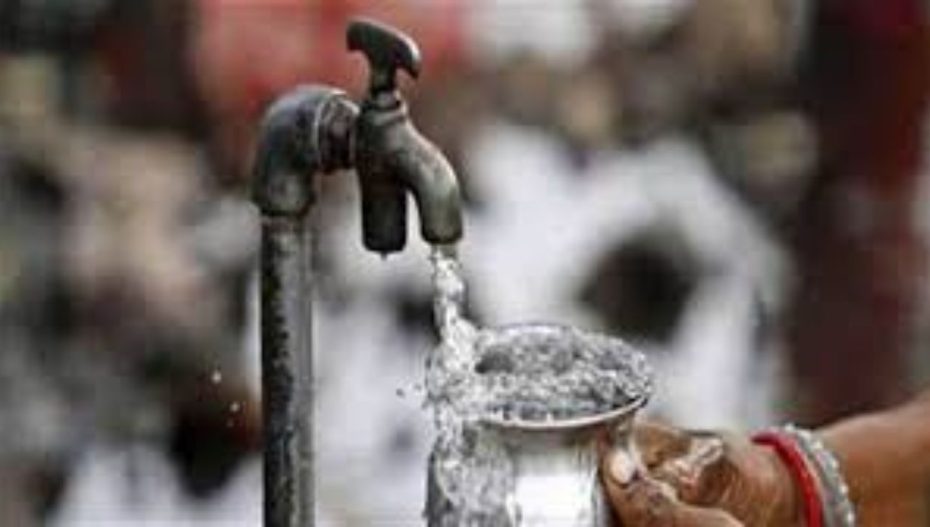
The spike in typhoid cases in Gandhinagar has drawn attention to a more entrenched problem: consuming Gujarat capital’s drinking water is putting health at severe risk.
Health authorities in Gandhinagar have linked recent infections to contaminated water supply lines. That assertion cloaks the truth. The water in general in Gandhinagar is unsafe.
Official data from the Union Government and the Central Pollution Control Board reveal it’s a statewide reality.
It’s universally proven that polluted water is the chief source of typhoid.
Multiple cases of typhoid have been reported in the capital, with officials attributing the spread to contamination in local water systems.
Ironically, the outbreak of typhoid in Gandhinagar has occurred amid the much-bandied Nal Se Jal scheme. It claims to deliver safe and potable tap water to households.
Findings from the Functionality Assessment of Household Tap Connections report by the Union Ministry of Jal Shakti sharply contradict the scheme’s success.
According to the report, only 47 per cent of households in Gujarat receive potable water through tap connections. That leaves more than half of the population dependent on unsafe or untreated sources.
In Gandhinagar, only 31.9 per cent of households have access to potable tap water, meaning less than one-third of residents can rely on it. Officials have attributed the shortage to contamination in the local water supply.
Gujarat Congress president Amit Chavda, referring to the Rs 70 crore MGNREGA scam in Dahod, has said repeatedly that a proper scrutiny of the Nal Se Jal scheme would also reveal scams. He has drawn attention to alleged irregularities in the implementation of government programmes.
Urban centres across the state fares slightly better. Ahmedabad has potable tap water coverage of only 46.1 per cent. It’s not a reassuring number. If anything, it indicates that even big cities fall short of achieving the desired yardsticks for safe water consumption.
Conditions deteriorate sharply in rural and tribal districts. The report shows that in Dahod and Banaskantha, not a single household receives potable water through tap connections. In several other districts, water supplied through taps does not meet basic drinking water standards, forcing residents to consume contaminated water on a daily basis.
In Dahod and Banaskantha, not a single household receives potable water through taps. Across many other districts, tap water fails to meet basic drinking standards, forcing residents to consume contaminated water daily. Rural and tribal areas are the worst affected.
The Central Pollution Control Board’s data made public adds to the concern. Gujarat is ranked 30th in the national Water Quality Index. This unflattering number places Gujarat at the bottom among Indian states.
The index is calculated using parameters such as dissolved oxygen, biochemical oxygen demand (BOD), pH levels, and the presence of coliform bacteria. These indicate water safety for human consumption.
Gujarat’s overall Water Quality Index score stands at 63 per cent. It reflects widespread water pollution.
On key indicators, the state performs worse than West Bengal, Jharkhand, and Chhattisgarh. These states don’t blow the bugle of growth. Yet, in the Water Quality Index, they are ahead of Gujarat that constantly beats the drum about being a progressive state.
The political backdrop is inevitable in the analysis.
The Bharatiya Janata Party has been in power in Gujarat for more than three decades. Yet access to clean drinking water remains unavailable for a large section of the population. The continued spread of water-borne diseases screams out failures in governance, infrastructure, and public health safeguards.
According to the Functional Assessment report, 19 out of Gujarat’s 33 districts have less than 50 per cent coverage of potable tap water.
This widespread deficiency leaves residents vulnerable to diseases such as typhoid, jaundice, cholera, and diarrhoea, especially during monsoon.
As Gandhinagar struggles to contain the typhoid outbreak, the official data exposes the gap between government claims and the reality.
It raises pertinent questions around accountability, water treatment systems, and public health preparedness across Gujarat.
Meanwhile, Chief Minister Bhupendra Patel convened a high-level meeting to strengthen ongoing joint efforts by the Municipal Corporation and the State Health Department to implement preventive measures in response to the typhoid outbreak in Gandhinagar.
Why has it taken a calamity of such magnitude to intensify preventive measures?
Also Read: What Failed First In Gandhinagar: Pipes Or Governance? https://www.vibesofindia.com/what-failed-first-in-gandhinagar-pipes-or-governance/