


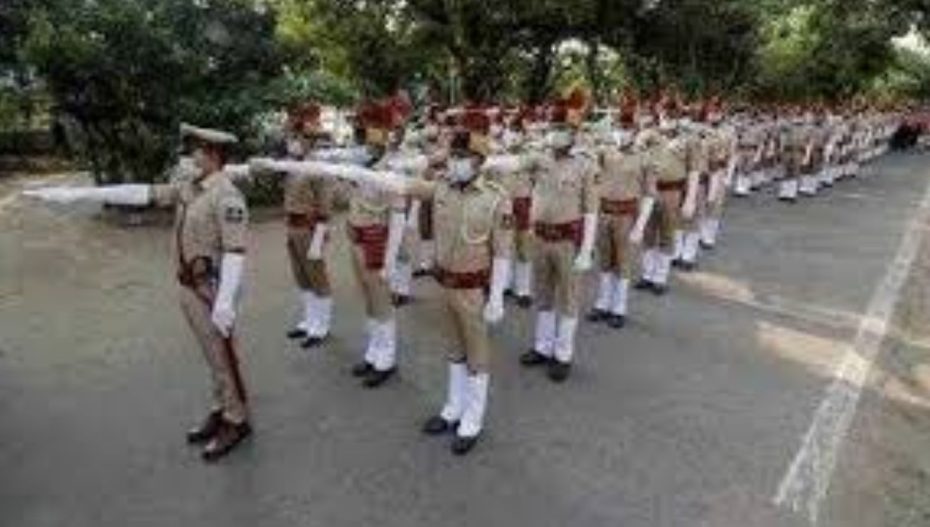
The scramble for police recruitment in Gujarat has once again exposed the harsh and deepening reality of unemployment in the state.
According to media reports, nearly one million educated youth have applied for just 13,592 posts of Police Sub-Inspector (PSI) and Lokrakshak, turning what is officially projected as a routine recruitment drive into a stark commentary on the lack of stable employment opportunities.
The numbers mean that, on average, more than 75 candidates are competing for every single post. This ratio underlines desperation rather than opportunity.
For lakhs of young men and women, the khaki uniform represents far more than a career choice. It has become a symbol of economic security, dignity and escape from poorly paid, insecure private-sector jobs.
While the state government repeatedly claims that Gujarat offers abundant employment avenues, the overwhelming response to this recruitment drive tells a different story — one where educated youth see government service as the only viable path to stability.
The police recruitment process has now entered a crucial phase, with candidates downloading call letters and preparing for physically demanding tests, including running, under strict security arrangements at designated centres.
For days, aspirants have been training relentlessly, aware that even a minor slip could eliminate them from a race already stacked heavily against the odds. The intensity on the ground mirrors the pressure of unemployment itself, where failure often means returning to prolonged joblessness.
The scale of applications is revealing. Around one million forms for fewer than 14,000 posts is not merely enthusiasm for public service; it is a referendum on the state of jobs in Gujarat. Private-sector employment does exist, but low wages, contractual hiring, long working hours and alleged exploitation have pushed educated youth away from these options. For many graduates and diploma holders, a government job has shifted from being an aspiration to a necessity.
Official data reinforces this grim picture. According to figures presented in the Rajya Sabha, Gujarat registered 3,64,252 unemployed persons between 2020 and 2022. Of these, a staggering 3,46,436 were educated unemployed, while only 17,816 were less educated or uneducated. The most telling statistic, however, is that out of this entire pool, only 1,278 candidates managed to secure a government job during that period. This gap between the number of job seekers and actual placements highlights the structural imbalance in the employment ecosystem.
Gujarat Congress spokesperson Dr. Manish Doshi observed while talking to Vibes of India that the government has failed to generate new jobs and even fill the posts that are vacant. Recruitment in the police is being done after a long time and hence people who would have aspired to become teachers have applied, he pointed out.
Dr. Karan Barot, Aam Aadmi Party’s Gujarat spokesperson, told Vibes of India that talks of giving employment to the youth has merely remained on paper. Such a large number of people applying for 13,500 plus posts shows the reality, he said, adding that this would not have been the case if the youth were given jobs. There are only big talks of “Vibrant Gujarat”, he held.
The government’s narrative of industrial growth and investment has not translated into adequate quality employment, critics argue. Gujarat’s development model has long emphasised industry and infrastructure, but job creation, particularly for educated youth, has failed to keep pace. The result is a growing army of degree holders preparing for competitive exams year after year, often well into their late twenties and thirties, with limited alternatives.
The current recruitment drive has thus become a pressure point where frustration, hope and anger converge. For those who succeed, it promises a rare ticket to stability. For the vast majority who will be eliminated at various stages, it will likely mean returning to uncertainty — coaching classes, temporary work or unemployment.
As Gujarat witnesses packed examination grounds and intense competition for police posts, the message from the youth is unambiguous. The problem is not lack of ambition or effort; it is the shortage of secure, dignified employment. Until that gap is addressed, every government recruitment — especially in the police force — will continue to serve as a hard-hitting reminder of an unemployment crisis that refuses to fade.
Also Read: Protests Continue In Gujarat Over Khel Sahayak Scheme Amid Recruitment Concerns https://www.vibesofindia.com/protests-continue-in-gujarat-over-khel-sahayak-scheme-amid-recruitment-concerns/