

New claims from a US aviation safety group have raised fresh questions about the history of a Boeing 787 Dreamliner that crashed in India last year. Campaigners were quoted as saying by a top British media outlet that the aircraft had suffered repeated technical failures. That includes an in-flight fire well before the fatal accident.
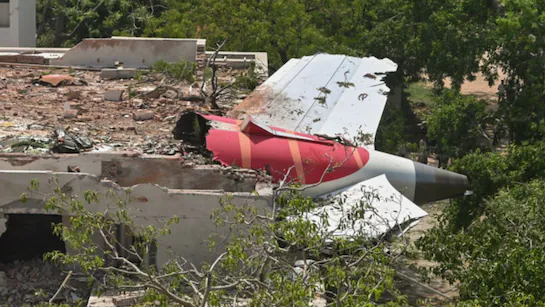
The aircraft crashed on 12 June shortly after departing Ahmedabad for London. Two hundred and sixty people lost their lives.
The claims came from the Foundation for Aviation Safety (FAS), a US-based campaign group. According to the media house, the group says it has obtained documents detailing repeated failures on the plane. The organisation has shared the findings with the US Senate.
An official investigation into the crash is still under way. An interim report released in July triggered intense debate. However, it is yet to reach firm conclusions.
The aircraft, registered VT-ANB, was among the earliest Boeing 787s produced. It made its first flight in late 2013 and entered service with Air India in early 2014.
According to the Foundation for Aviation Safety, documents indicate that the plane experienced technical issues from its first day of commercial service with Air India. The group alleges that these problems stemmed from a broad range of engineering, manufacturing, quality and maintenance issues.
The reported failures included faults in electronics and software, repeated tripping of circuit breakers, wiring damage, short circuits, loss of electrical power and overheating of components in the electrical system.
FAS has reportedly said that in January 2022 the aircraft suffered a fire in its P100 power distribution panel. One of five panels was responsible for distributing high-voltage electricity generated by the engines throughout the aircraft.
During a descent into Frankfurt Airport, pilots reportedly began receiving fault messages. The damage was discovered only after landing.
According to the group, the damage was extensive enough that the entire panel had to be replaced.
The Boeing 787 was designed to rely more heavily on electrical systems than earlier passenger aircraft, with many mechanical and pneumatic components replaced by lighter electrical alternatives to improve efficiency.
This design approach, however, was linked to early problems in the aircraft’s history. In 2013, a battery fire on a Japan Airlines 787 led to the temporary grounding of the global fleet.
The P100 panel itself had already been redesigned in 2010 following a fire on a test aircraft.
The Foundation’s presentation has been sent to the US Senate Permanent Subcommittee on Investigations, which last year held hearings examining what it described as Boeing’s broken safety culture.
The investigation into the Ahmedabad crash is being led by India’s Aircraft Accident Investigation Bureau (AAIB), with participation from US officials because the aircraft and its engines were designed and built in the United States.
One month after the crash, the AAIB issued a preliminary report, a standard step intended to summarise known facts without drawing definitive conclusions, the media report adds. A brief section of the 15-page document generated significant controversy.
The report stated that moments after take-off, the aircraft’s fuel control switches were moved from the “run” position to “cut-off”. These switches are normally used only when starting engines before a flight or shutting them down afterwards.
Moving them to cut-off would have starved the engines of fuel, causing a rapid loss of thrust. Although the switches were returned to restart the engines, the report said this occurred too late to avert the crash.
The report also said that cockpit voice recordings captured one pilot asking the other why the fuel had been cut off, with the response indicating that the second pilot denied doing so. The transcript itself was not released.
That indirectly reported exchange led some commentators in India and the US to suggest that pilot action, whether deliberate or accidental, caused the accident.
This interpretation has since faced pushback from lawyers representing victims’ families, aviation safety campaigners, a pilots’ association and several technical experts in both countries. They argue that the emphasis on pilot actions is misleading and risks diverting attention from the possibility of a technical failure.
While views on the cause of the crash differ widely, there is broad agreement that key information remains unavailable.
The Foundation for Aviation Safety is led by Ed Pierson, a former senior manager at Boeing’s Renton factory in Seattle, who has long been a vocal critic of the company’s safety and quality practices. He has previously described the preliminary report into the Air India crash as severely lacking.
The group says its concerns extend beyond the aircraft involved in the Ahmedabad accident. It says it has reviewed around 2,000 failure reports involving hundreds of other 787s operating in the US, Canada and Australia. These reportedly include water leaks into wiring bays, an issue previously noted by the US Federal Aviation Administration, along with other concerns raised in various quarters.
Boeing however has consistently maintained that the 787 has a strong safety record.
Also Read: Mother And Infant Recover After AI 171 Crash, Undergo Life-Saving Burn Treatment https://www.vibesofindia.com/mother-and-infant-recover-after-ai-171-crash-undergo-life-saving-burn-treatment/