


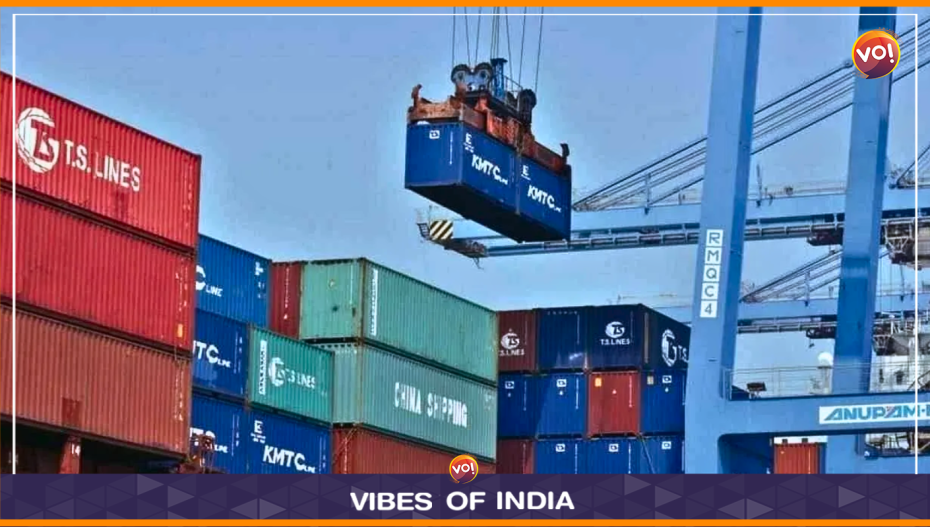
Gujarat’s exports to the United States witnessed a sharp decline of 17.4% in the financial year 2025-26 as higher US tariffs, global geopolitical tensions and cautious buying behaviour among American customers affected shipments from several key industries in the state.
According to official data, Gujarat’s exports to the US dropped to $15.06 billion in FY26, compared to $18.23 billion in 2024-25. This marks a fall of $3.17 billion in one year.
The decline impacted major export sectors, including petroleum products, pharmaceuticals, gems and jewellery, ceramics, and engineering goods. However, some industries such as electronic components, agrochemicals and selected engineering products managed to record growth despite challenging conditions.
US Tariffs and Market Uncertainty Hit Gujarat Exporters
Exporters said that uncertainty over US trade policies, rising production costs and international tensions created difficulties for businesses.
The United States first imposed a 25% reciprocal tariff on several Indian goods, followed by an additional 25% duty in August last year, increasing the total additional tariff burden on many products to 50%. However, certain sectors, including pharmaceuticals, smartphones and semiconductors, were kept outside the higher tariff structure.
Industry representatives said American buyers became more cautious and delayed large orders as they waited for clarity on final product costs.
Petroleum, Jewellery and Ceramic Industries Among Worst Hit
Several important export categories from Gujarat faced significant losses during the year. The worst-affected sectors included:
Petroleum products
Drug formulations
Pearls and precious stones
Gold and other precious-metal jewellery
Ceramics and related products
Man-made yarn
Exporters said higher tariffs increased the cost of Gujarat-made products in the US market, reducing their competitiveness against suppliers from other countries.
Some Exporters Shifted Focus to Domestic Market
The tariff impact forced some Gujarat manufacturers to change their business strategy. Some exporters diverted their products to the domestic market, often at lower prices, while others reduced production due to weak demand.
Haresh Bopaliya, a ceramic manufacturer from Morbi, said exporters faced a major decline in US orders.
“There was a significant drop in exports to the US in the last financial year. Some exporters diverted their goods to the domestic market, while others had to reduce production,” he said.
Morbi’s ceramic industry, which has a strong presence in international markets, faced pressure due to reduced demand and increased costs.
Rajkot Engineering Sector Also Faces Pressure
Engineering exporters from Rajkot, who supply auto components, machine tools, castings and forgings to the US market, also experienced difficulties.
Paresh Patel, former president of the Rajkot Engineering Association, said exporters faced challenges from both tariffs and international uncertainty.
“There was a double impact for exporters. High US tariffs and the geopolitical situation both affected exports,” he said.
However, some businesses reported signs of improvement. Mihir Madeka, director of Rolex Rings, said conditions in the American market had started becoming stable.
“Everything is coming back to normal and there are positive signs. If the geopolitical situation does not worsen, we are hoping for good exports this year,” Madeka said.
Chemical Industry Struggles With Rising Raw Material Costs
Gujarat’s chemical exporters also faced additional pressure due to increasing raw material prices.
Bhupendra Patel, chairperson of Chemexcil’s Gujarat region, said disruptions around the Strait of Hormuz in March affected supplies. Sulphur, an important raw material used in the chemical industry, became significantly more expensive.
He added that the appreciation of the dollar increased cost pressures, while tariffs reduced the competitiveness of Indian exporters in global markets.
Tariff Pressure Eases After India-US Trade Framework
The situation improved slightly after India and the US announced a framework for an interim trade agreement on February 6, 2026.
Under the agreement framework, the US agreed to reduce its reciprocal tariff on selected Indian goods to 18%.
Exporters are now waiting for further progress on the broader India-US Bilateral Trade Agreement. They believe greater clarity on tariffs and improved market access could help revive shipments in the current financial year.
Pharmaceutical Sector Remains Stable
Unlike many other industries, Gujarat’s pharmaceutical sector remained relatively protected from the tariff impact.
Generic medicines were exempt from higher tariffs, helping drug manufacturers maintain their position in the US market.
India’s strong presence in the global generic medicine industry, along with competitive pricing, helped Gujarat-based pharmaceutical companies manage the challenges better compared to other export sectors.
Gujarat Exporters Hope for Recovery Ahead
While FY26 brought challenges for Gujarat’s exporters, businesses are now looking forward to improved trade conditions.
Exporters believe that reduced tariff pressure, stable global conditions and stronger India-US trade relations could help restore growth in shipments.
Industries across Gujarat are hoping that the coming months will bring greater certainty, allowing manufacturers to regain their position in the US market and rebuild export momentum.
Also Read: From 1962 to 2026: 58 Sitting MLAs Died In Office, Gujarat Assembly Rarely At Full Strength https://www.vibesofindia.com/gujarat-assembly-full-strength-58-mlas-died-office/