


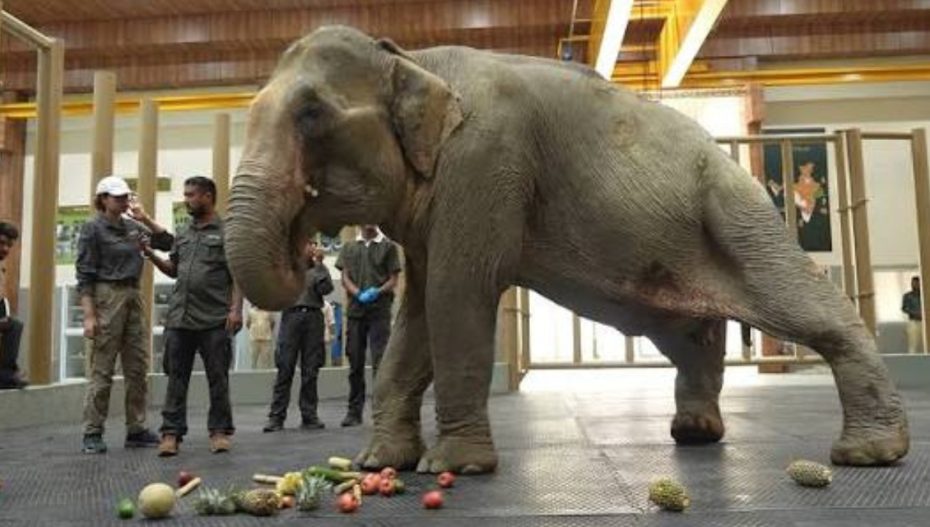
A 53-year-old elephant named Joymoti, who survived devastating floods in Nagaland and suffered multiple serious injuries, is being airlifted to Vantara in Jamnagar, Gujarat, for urgent and specialised veterinary treatment.
Joymoti was swept away by floodwaters during the second week of July. Local communities, with help from government agencies, managed to rescue her. However, the elephant was left with several wounds, a severely damaged right eye and a long-standing leg injury that has made it difficult for her to walk, feed and access water.
Her transfer to Vantara is being carried out solely for medical treatment and is not a permanent relocation.
Joymoti Suffered Multiple Serious Injuries
The flood left Joymoti with injuries in several parts of her body. She has wounds on her forehead, right ear, the area above her tail, left inner thigh and abdomen.
One of her most serious injuries is a deep wound around her external genital area, which had become infested with maggots.
Her right eye is also severely damaged, leaving her blind in that eye. She continues to experience persistent tearing from the affected eye.
The elephant also has an older mobility problem. She has been lame in her left hind leg for a long time because of a fracture she suffered during logging. The old injury affects her ability to walk normally and makes it harder for her to reach food and water.
Local Teams Provided Initial Treatment
After Joymoti was rescued, she received first aid and basic veterinary care locally.
Her treatment included regular wound dressing, pain medication, multivitamin and mineral supplements and other supportive care.
However, because of the number and severity of her injuries, veterinarians determined that she needed a higher level of medical attention.
Her age, serious wounds, damaged eye and existing difficulty with movement made it important to move her to a specialised hospital as quickly and safely as possible.
Why Joymoti Is Being Transported by Air
Moving a full-grown elephant over a long distance by road can take considerable time and place additional physical demands on an animal that is already injured and has mobility problems.
For Joymoti, air transport is intended to reduce the length of the journey and minimise the physical strain associated with prolonged ground travel.
The airlift is being planned around her health and welfare. Veterinary and animal-care teams are involved in preparing her for the journey, loading her safely, monitoring her during the flight and ensuring that she receives appropriate care immediately after arrival.
Transporting an elephant by air for intensive hospital treatment is being described as a first-of-its-kind undertaking in India, requiring extensive veterinary, animal-care and logistical planning.
Specialised Care Awaiting Her at Vantara
Once Joymoti reaches Vantara, she will undergo a complete veterinary examination.
Veterinarians will assess all of her injuries, including the wounds across her body and the condition of her damaged right eye. She will receive specialised treatment based on the findings of the medical assessment.
Her care will also include nutritional support and other supportive treatment as needed.
The immediate goal is to control her injuries, address her medical complications and give her the best possible chance of recovery.
The Journey Is Not a Permanent Relocation
Joymoti’s transfer to Jamnagar should not be seen as a permanent move away from Nagaland.
She is being transported to Vantara only because she currently needs specialised medical treatment that requires a dedicated elephant hospital and advanced veterinary facilities.
The focus is on getting her the care she needs without unnecessary delay and ensuring that her journey is carried out safely.
Joymoti’s Case Highlights a Larger Need
Joymoti’s rescue has also drawn attention to the need for specialised wildlife medical facilities closer to areas where such emergencies occur.
Elephants and other wild animals can face serious risks from floods, human-wildlife conflict, injuries and other health emergencies. When advanced veterinary facilities are far away, transporting an injured animal over long distances can itself become difficult.
To address this gap, Vantara has proposed establishing three wildlife veterinary care centres in Assam, including a dedicated centre for elephants.
The proposed facilities would provide species-specific veterinary care and support, allowing animals to receive treatment closer to where emergencies occur.
Proposed Assam Centres to Be Run by Forest Department
The proposed wildlife veterinary centres in Assam would be operated independently by the Assam Forest Department.
The aim is to strengthen the state’s own capacity to respond to wildlife emergencies and provide timely, specialised treatment to animals in need.
If developed, such facilities could reduce the need for long-distance transportation in cases where treatment can be provided locally.
At the same time, animals requiring advanced or highly specialised care could still be transferred safely when necessary.
A Fight for Recovery
For now, Joymoti’s immediate priority is her recovery.
The 53-year-old elephant has already survived a major flood, serious wounds and years of difficulty caused by an old leg injury. Her journey to Vantara is being undertaken to give her access to specialised medical care while keeping her safety and comfort at the centre of the operation.
Her case also highlights a wider lesson: wildlife emergencies require both immediate rescue and strong long-term veterinary infrastructure.
For Joymoti, the journey to Jamnagar represents a crucial medical step — one aimed at helping her recover, regain strength and eventually live a healthy, safe and dignified life.
Also Read: Two Ships Hijacked By Pirates Off Yemen And Somalia, 22 Indians Among Crew https://www.vibesofindia.com/22-indians-among-crew-on-two-ships-hijacked-off-yemen-somalia/