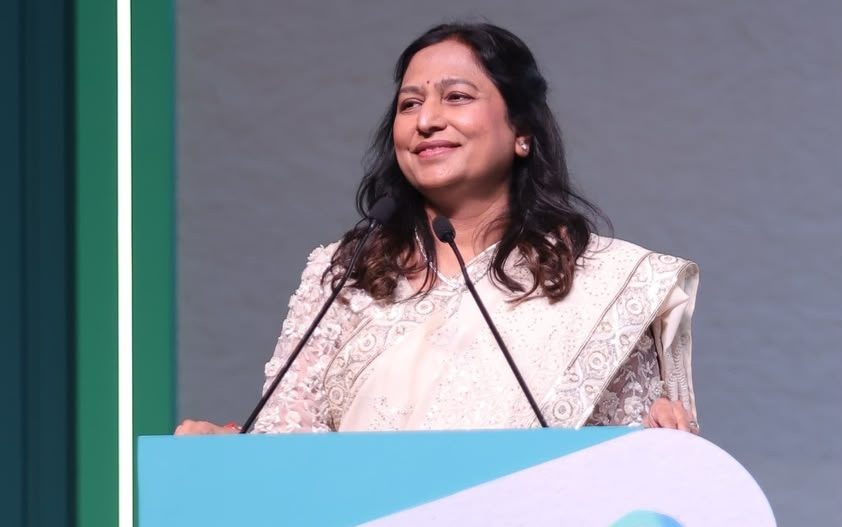
Distinguished guests, philanthropists, policymakers, leaders from various development foundations, corporate and social entrepreneurs …
… my dear friend Naina Subberwal Batra, and the entire AVPN network from across the globe,
Good evening and a very warm welcome to New Delhi, India.
It is a true privilege for me to be with the AVPN members once again.
Last year, when I had the honour of addressing you in Hong Kong, we spoke about the emerging promise of Asian leadership in philanthropy.
I am absolutely delighted that, today, that promise has travelled to my home country, to India, for the very first time.
It is our great pleasure to host this networking dinner – and, on behalf of the Adani Foundation, I extend a warm welcome to each one of you.
Many of you have travelled long distances across time zones, and we are deeply grateful that you have chosen to spend your evening with us in the pursuit of a shared purpose.
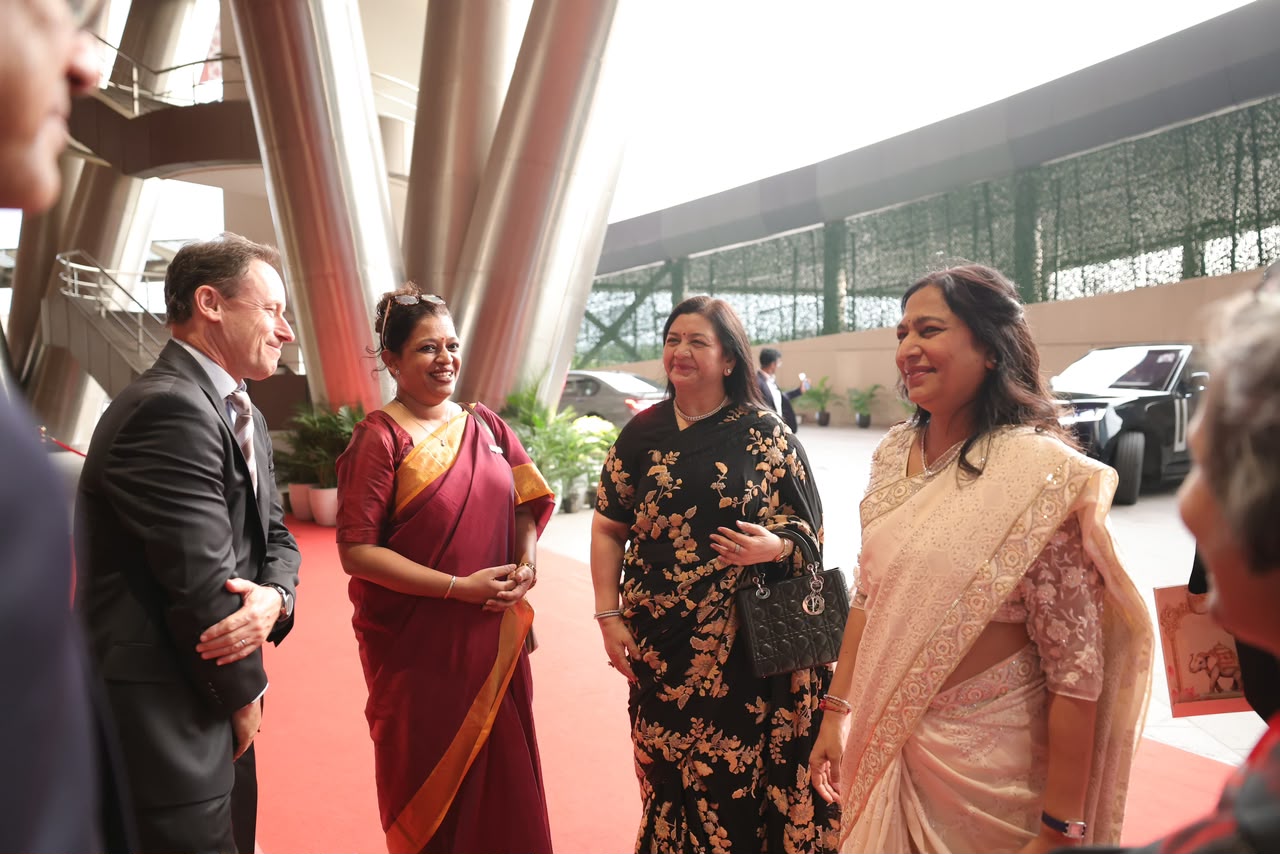
My dear friends,
Tonight is about something fundamental.
Long before partnerships are formalised, ideas are scaled, or capital is deployed, there is the simple, transformative power of human connection.
Before we are delegates, development professionals or decision-makers, we are people who care deeply about fellow human beings and the future of our shared world.
It is profoundly fitting that we are at the iconic Bharat Mandapam — a venue that honours India’s timeless cultural heritage while symbolizing her progressive aspirations.
For decades, the global conversation about India has focused mostly on the size of her needs. That lens is outdated. Today’s India must be seen and understood through the scale of our ambition, the speed of our transformation and the energy of our people.
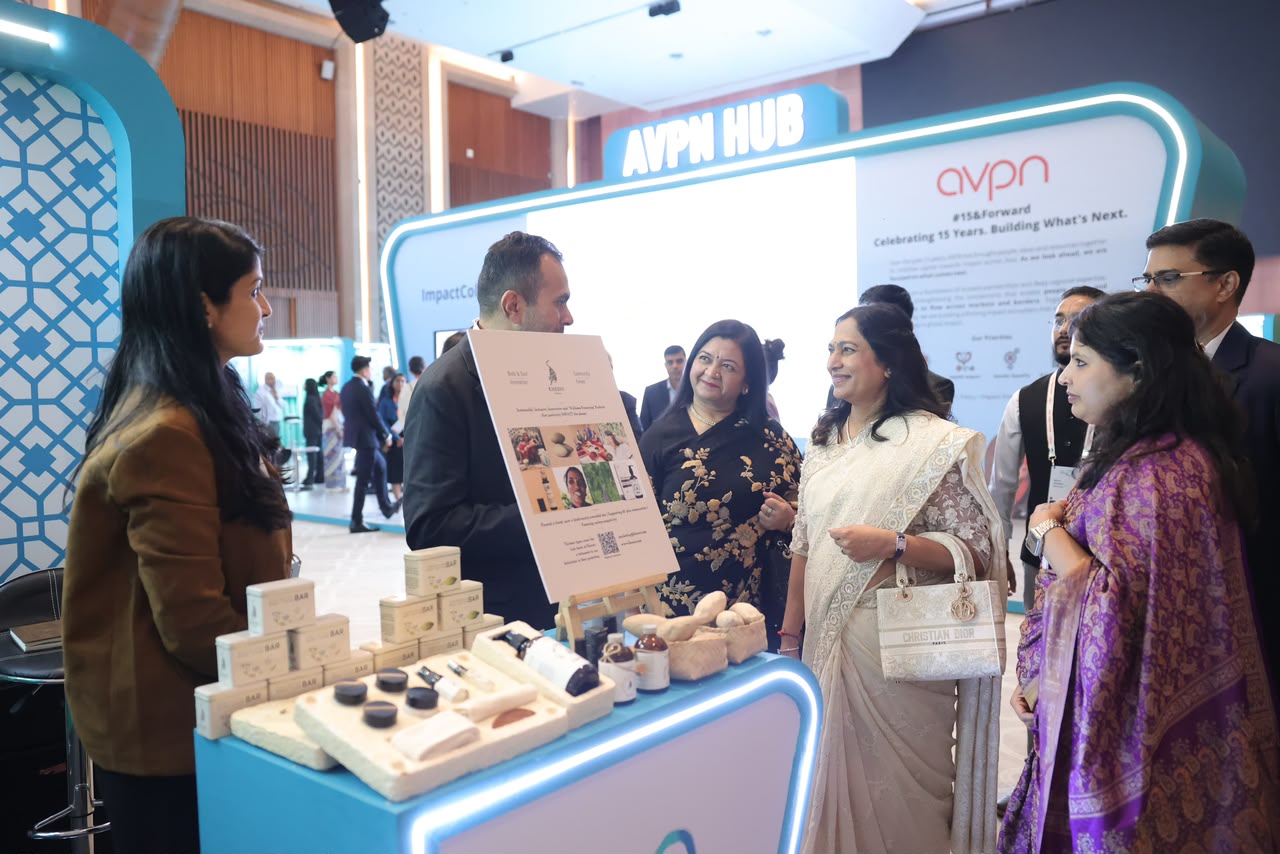
Today’s India is a nation united by the vision of Viksit Bharat 2047 — our collective commitment to becoming a developed country by the centenary of our independence.
In today’s India, technology is already democratizing dignity — and we are building solutions at scale.
Our development journey is also becoming increasingly self-reliant. India’s annual social-sector funding has reached over 310 billion dollars — and it is growing at a 13% compound annual growth rate.
This is Atmanirbhar development: a self-reliant ecosystem in which India’s growth story is written by Indians and for Indians.
So, what really is fuelling this national transformation?
In my view, the most significant roles are being played by grassroots entrepreneurship, relentless skill development and local innovation.
By investing in our youth, women and local creators, we are doing more than just solving local challenges — we are creating models for the Global South.
India is now home to over two hundred thousand recognized startups. Remarkably, the majority of these are not in our big cities or financial centres — but are spread across our small towns and villages. Unlike earlier, innovation is no longer concentrated in a few centres — it has been democratized across the country.
From metros to mandis, from campuses to small towns, India is now innovating everywhere. Whether it is a waste management problem or a climate change issue, be it safe drinking water or affordable healthcare, better agricultural practices or innovation up to the last mile, Indian startups are working to solve the nation’s problems, big and small.
Earlier this month, I saw firsthand an amazing example of this national drive.
When my husband, the Chairman of the Adani Group, launched a nationwide hunt called Vande Bharatam to identify innovative ideas for India, more than 26,000 startups applied. What impressed Gautam and me even more was that most of these startups were designing solutions to create social and environmental impact. Embedded in their innovative ideas was a foundational layer of national consciousness, social empathy and responsibility to India.
When we step back to look at the larger picture, another question arises: Globally, where do we stand today?
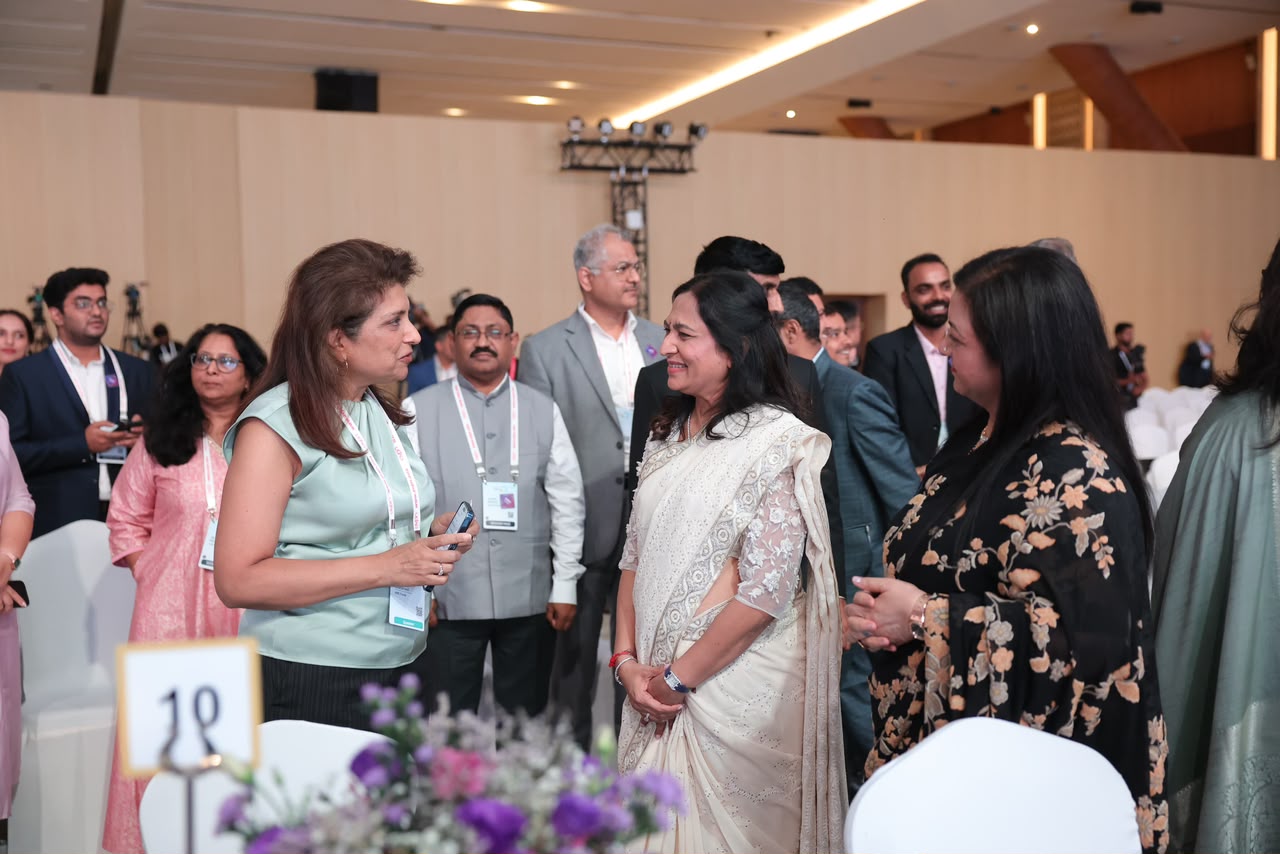
We are now at a strange juncture in human history. No doubt, there has been significant progress in human development indicators. But on the other side, we are watching the climate system destabilise in real time.
We are watching a generational leap in artificial intelligence unfold with breathtaking speed. This still-maturing technology can compress decades of progress into years or, just as easily, deepen the gap between those who have access and those who do not.
We are watching the harmful effects of the overuse of social media and technology on children and adults, with an alarming rise in burnout, depression and suicide.
This is the paradox of our time.
Unprecedented capability.
Unprecedented capital.
And yet, unprecedented fragmentation in how we choose to use them.
My dear friends,
Asia is home to extraordinary diversity — different cultures, different languages, different economic frameworks and different developmental stages. Yet, across every border, we are bound by shared human aspirations.
I am sure the scenario of innovation and ambition in India resonates in other Asian countries. None of us is here tonight because philanthropy is absent in Asia. We are all here because each one of us has something to learn from another.
We recognize that collaboration is not limited to resources or funding. Collaboration becomes more powerful when knowledge, ambitions and experiences are shared. When we met in Hong Kong last year, I urged us to build a Unified Collaboration Platform. Tonight, here in New Delhi, I urge you to build upon that spirit — and transform HOW we fund.
With domestic giving and social capital at historic highs, our challenge is not scarcity of funds — it is a challenge of strategic allocation. And to address that challenge together, let us now shift our collective focus towards Capital for Capacity.
I urge this incredible group of philanthropists to pause and reflect on the purpose of funding and its impact. While funding for survival is certainly important, the need of the hour is to shift to sustainable impact. Funding for behavioural change, for institution building, for imparting skills, for innovative solutions, for climate action and for improving societal interconnect — this is the shift I see defining the next era of giving.
My dear friends,
2026 is a milestone year for me — and also my entire family at the Adani Foundation. This year, we complete 30 years of walking alongside India’s communities. Over the past three decades, we have had the humble privilege of touching the lives of two generations — and our work has organically evolved into a comprehensive, life-cycle approach:
• Caring for maternal and newborn health,
• Strengthening foundational primary education,
• Equipping over two hundred thousand youth with market-ready skills,
• Nurturing sustainable agricultural and non-agricultural livelihoods,
• Supporting persons with disabilities,
• Delivering healthcare through rural clinics, hospitals and mobile medical units,
• Strengthening community infrastructure, sports and grassroots climate action
• And creating educated, healthy, prosperous, and happy villages in India.
If these 30 years on the ground have taught me one indisputable truth, it is THIS:
Philanthropy is not about changing people’s lives.
It is about giving them the leverage to change their own.
And I believe that one of the best ways to do this is by strategically allocating capital for capacity.
I’ve seen this philosophy validated again and again through the Adani Foundation’s work. Let me leave you with one example – that of Kiran Harinkhede from Churdi village in Maharashtra.
Kiran benefited from our Livestock Development initiative, through which we impart guidance for improved breeding and better animal healthcare.
Kiran got better breeds of cattle, yielding more milk. This, in turn, enabled her to be part of a dairy enterprise we constituted — and which is run entirely by women.
Kiran now sells 25 to 28 litres of milk every day to the collection centre. Her income has allowed her to send her son to college — and is now funding her daughter’s graduation.
Kiran is not alone. The Adani Foundation has created thousands of beneficiaries like her, creating a value chain worth over 10 million dollars annually.
My dear friends,
Ten days ago, we celebrated India’s 80th Independence Day. For me, this freedom — the economic freedom enjoyed by millions of women like Kiran — is what independence truly means.
The freedom of choice.
The freedom of opportunity.
And the freedom of upward mobility.
Viksit Bharat will not be built by larger budgets alone — it will be built by stronger institutions. It will not be built only by funding more programs — it will be built by funding the people and systems that allow impactful programs to endure and scale.
India has the ambition.
Our communities have the ideas.
Our young people have the energy.
Our nonprofits have the trust and the reach.
Philanthropy must now provide the capacity.
Once again, welcome to India, to Bharat Mandapam, and to the AVPN Global Conference. I thank you for honouring us with your presence and hope you have a wonderful evening!
Thank you.