


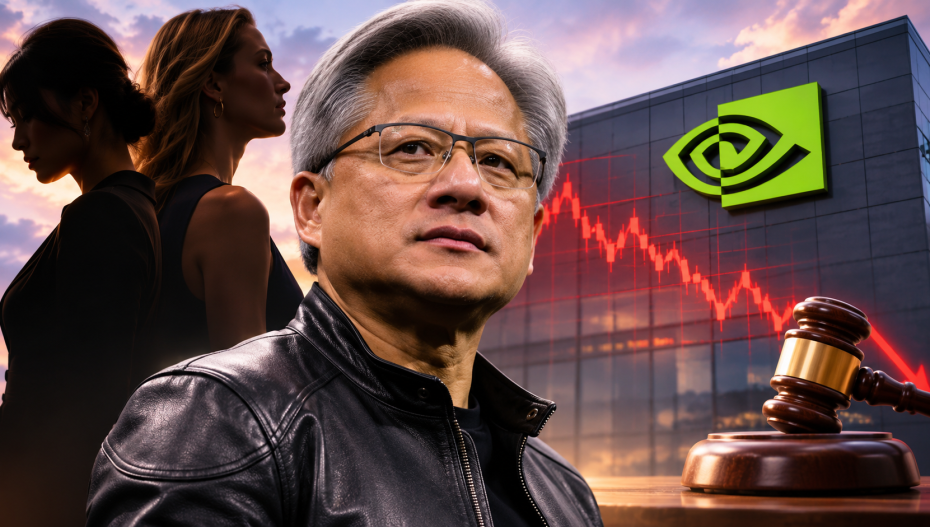
In the corporate world, building a billion-dollar company and becoming one of its most powerful faces does not necessarily mean an executive is protected from questions about personal conduct. Some of the biggest names in the Western business world have faced serious consequences over relationships and alleged workplace misconduct. From Microsoft’s Bill Gates to the former CEOs of McDonald’s and Intel, corporate leadership has often come with expectations that go beyond business performance.
Now, Nvidia CEO Jensen Huang is facing a similar wave of scrutiny, with reports of alleged extramarital relationships with two women raising questions about his position, the company’s reputation and even possible foreign intelligence links.
The controversy has become particularly sensitive because one of the women reportedly linked to Huang, Kimberly Powell, is a senior Nvidia executive who heads its healthcare division. According to the media reports, Powell worked directly under Huang. The newspaper’s report, citing five people who had worked at Nvidia, alleged that the two were seen together at a hotel in San Jose during a conference in March.
Two former employees reportedly claimed they witnessed the pair behaving closely. A video was allegedly recorded by someone present, following which Huang’s security team intervened. The person who recorded it was reportedly asked to sign a non-disclosure agreement (NDA).
According to information, Huang declined to discuss the allegations.
The controversy does not end with allegations about Huang’s personal life. His name had earlier been linked to Alice Huang, a Chinese businesswoman suspected by US intelligence agencies of having connections with Chinese intelligence. She was also allegedly involved in helping move Nvidia chips to Chinese companies.
These allegations have raised questions about whether Huang’s reported personal connections could have exposed the company to foreign intelligence activities.
On Sunday, Nvidia’s board reportedly began an investigation into whether Huang had been targeted by a foreign intelligence operation. Independent directors, supported by outside legal advisers, are handling the matter. The board has also expressed confidence in Huang.
Huang reportedly sent an internal message to employees on the same day, admitting that he had been unfaithful to his wife and accepting full responsibility without sharing further details.
The controversy also brings attention to how major Western companies deal with the personal conduct of their top executives. A chief executive may build a company, lead thousands of employees and deliver extraordinary financial results, but that does not necessarily place them beyond internal scrutiny.
Microsoft co-founder Bill Gates is one example. As per information, following the discovery of his past relationship with a Microsoft employee, the company’s board reportedly investigated the matter. Gates subsequently resigned from Microsoft’s board.
There have also been leadership changes at McDonald’s and Intel involving their chief executives and inappropriate workplace relationships with employees.
These cases highlight an important aspect of corporate culture: the position an executive holds does not automatically protect them when questions arise about their conduct, company rules or possible conflicts of interest.
For Nvidia, however, the situation is particularly complicated because the allegations also touch upon national security concerns and the company’s business relationships.
Huang, 63, co-founded Nvidia in 1993 with Curtis Priem and Chris Malachowsky. What began as a company developing graphics processors for computer gaming eventually became one of the world’s biggest suppliers of artificial intelligence chips.
Its CUDA software helped expand the use of its technology into AI and other computing applications. Today, Nvidia is valued at around $4 trillion, with Huang owning approximately 3.6% of its shares and exercising considerable influence over the company.
Reports have raised the possibility of his removal as CEO, although no final decision has been established. Nvidia also does not have a clear succession plan. According to Bloomberg, its board is working with an external firm to identify possible successors.
With dozens of senior executives reporting directly to Huang, analysts believe replacing him immediately could be difficult and may leave the company facing a major leadership gap.
Reports about a possible change in leadership have also unsettled investors. Nvidia shares reportedly dropped around 8% in after-hours trading, while the company lost approximately $600 billion in market value during the week, including Wednesday’s decline.
Nasdaq futures also fell around 1%. Meanwhile, rival chipmakers AMD and Broadcom saw their shares rise approximately 4% and 3%, respectively, in after-hours trading.
Investors reportedly believe these competitors could benefit if Nvidia remains occupied with its leadership controversy for a prolonged period.
US President Donald Trump, however, has publicly backed Huang, describing him as “a very respectable person” and praising his contribution to the country.
The controversy could also bring Huang under greater scrutiny in Washington. Congress may issue him a subpoena over his reported links with the Chinese businesswoman and allegations involving the transfer of information to Beijing. This could follow his failure to respond to a request for a closed-door briefing.
Separately, Axios reported, citing senior sources, that US Commerce Secretary Howard Lutnick had blocked Trump’s efforts to act against companies suspected of diverting Nvidia chips to China. The White House and Lutnick’s spokesperson did not immediately comment on the report.
Beyond the immediate leadership questions, analysts are also watching the wider AI investment ecosystem connected to Nvidia. The company is at the centre of the global AI boom, with its investments and financing arrangements supporting several businesses that also buy its products.
Nick Ferres, Chief Investment Officer at Singapore-based Vantage Point Asset Management, has warned that a downturn linked to the controversy could expose weaknesses in this wider investment cycle.
For Nvidia, the challenge is therefore bigger than a controversy surrounding its CEO’s personal life. Questions about leadership, corporate accountability, national security and investor confidence are now coming together around one of the world’s most influential technology companies.
Also Read: Indian Visa Of Norwegian Journalist Who Questioned PM Modi Cancelled Just Hours Before Her Flight