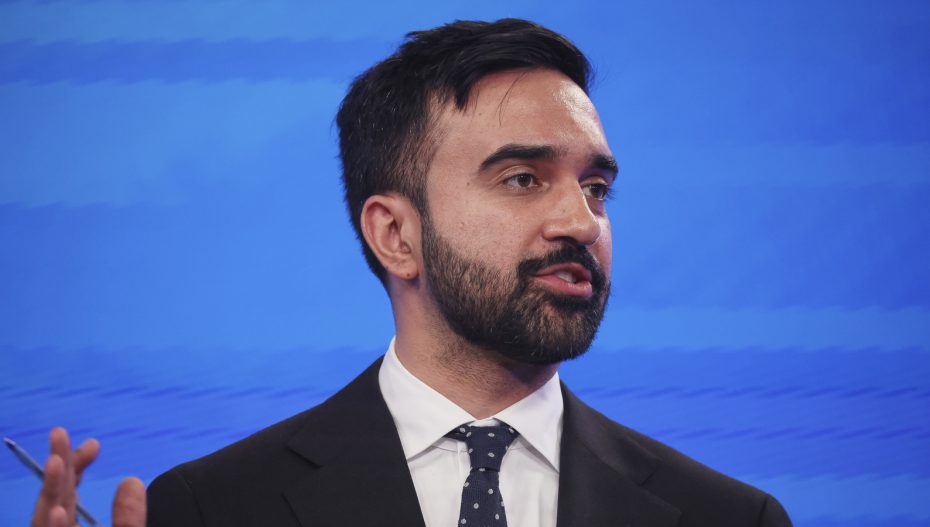
This November, New York grooved to a new political beat. A 34-year-old Democratic Socialist and state assembly member made the world draw attention upon himself.
His political charisma lit up the campaign like few in living memory. He’s now the city’s first Muslim mayor and the youngest in over a century.
Zohran Mamdani. Remember the name and the way he owned the moment.
Political observers think it wasn’t just an upset. It was proof that grassroots fire and class politics can challenge establishments.
For the record, Mamdani beat former governor Andrew Cuomo, who ran as a third-party candidate. Republican Curtis Sliwa barely made himself heard.
Over two million New Yorkers voted, reportedly the city’s highest turnout since 1969. Analysts say it was clear that Mamdani’s message of fairness hit home with working-class voters.
A year ago, Mamdani didn’t tickle our curiosity enough to do a Google search.
Yet he, rather his rise, is the story. A story of how genuine movements can take down elite-backed machines.
In June, he beat Cuomo in the Democratic primary with 56 per cent under ranked-choice voting.
By November, he had the momentum to blow the victory bugle.
Business and real estate interests saw him as a threat. They reportedly poured in millions through super PACs trying to stop him. But even with all that money, his grassroots campaign held sway. The contrast was clear: big money versus people power.
Mamdani’s campaign was built around the everyday struggles of ordinary New Yorkers. Exit polls showed the cost of living was the top issue. Three in four said housing costs were killing them. Mamdani made that pain the voice of his message.
He promised a rent freeze for those in rent-stabilised apartments. He touched the pulse of the masses by announcing free public buses. And universal childcare funded by taxing the rich.
These were no-nonsense, gutsy ideas. Experts reason that they worked because they spoke directly to people’s lives.
His strong pull with young voters was evident. About 62 per cent of those under 30 voted for him. He won more than half of voters aged 30 to 44.
According to political analysts, Mamdani’s real strength came from his campaign structure. It was run by organisers, not consultants. The New York City chapter of the Democratic Socialists of America reportedly powered his ground game. It grew from about 6,600 active members in 2024 to more than 10,000 after the primary win.
Groups like Jewish Voice for Peace, NY Communities for Change, CAAAV Voice, and DRUM Beats joined early, a coalition of pro-Palestine activists, anti-poverty organisers, and tenants’ unions. His volunteers were diverse, disciplined, and everywhere. Every conversation built trust. Every event added to his heft.
The campaign’s tone, look, and language came from the streets. Its colours and imagery screamed New York. Its outreach was multilingual and personal. That realness turned voters into participants.
Mamdani used digital tools smartly. His team worked with a Brooklyn agency to make content that felt real, not staged. Being fluent in Hindi and Urdu helped him reach South Asian voters through social videos that sounded like home.
It’s also worth mentioning that he switched between Arabic, Bangla, English, Hindi, Luganda, Spanish and Urdu to engage with diverse communities. Further, he made appearances on transnational media outlets to address issues that crossed borders.
Food, music and festivals became strong cultural expressions for his campaign.
It was genuine engagement, not token outreach.
When big donors warned his socialist plan would wreck business, he didn’t blink. A fight between billionaires and working people, as he called it. It’s undeniable that clarity lit a fire under his base. Despite a whopping $25 million poured into ads, the message of solidarity stood out.
Small donors contributed over 70 per cent of his campaign funds. Cuomo leaned on big cheques. That alone was a message: no strings, no corporate leash.
Mamdani has his own idea of governance. As part of the Socialist in Office co-governance committee, he believes power should rise from below. As an assembly member, he even helped locals organise around things as small as a traffic light. His idea of government is participation, not transaction.
Many analysts call Mamdani’s victory a revival of moral politics. His focus on housing, childcare, and transport echoes an older Nehruvian sense of justice as freedom’s base. He brought young voters back from the sidelines. He made them believe. Observers view this as not just charm but credibility.
What’s more, in the 14 days leading up to the registration deadline for the Democratic primary, about 37,000 people registered to vote, compared with about 3,000 people in the same period in 2021, claimed an analysis by The New York Times.
Political analysts believe Indian political parties could take notes from Mamdani’s playbook. The fight against the BJP is on a different scale, but logic holds.
Comparisons have been made with the Congress whose communication often feels cautious and disconnected. Maybe, the party could be inspired by Mamdani who has shown what can be achieved with the twin forces of right method and strong message.
The deeper message from Mamdani’s rise is about imagination. He mobilised young voters who had long felt excluded from politics. He made them participants rather than spectators.
For Indian political parties, experts believe, this is an important lesson. Parties can no longer rely on nostalgia or name recognition. It must reclaim its moral and democratic energy, not through committees or slogans, but through connection and credibility.
Experts point to the power of everyday issues. Like Mamdani focused on rent, transit, and childcare, Indian opposition parties need to talk about inflation, unemployment, and farm distress. Not just policies, but people’s pain.
Observers stress the need for real, rooted organisation. Indian parties often chase personalities. Mamdani proved that movements must be built from the ground up, by neighbours, not celebrities.
Analysts note that universal economic programmes can unite where identity divides. Mamdani’s coalition worked because it offered common answers to common struggles.
Experts also highlight his clarity. Indian opposition parties often parrot nationalism to stay safe. Mamdani showed that voters respect conviction more than caution.
His small-donor model is another lesson. Corporate cash has long compromised political independence in India. Building from the bottom up could bring back trust.
His digital strategy was interesting. By using real language and culture, he reached people where they lived. Analysts hold the view that Indian progressives must learn to use tech for connection, not propaganda.
Mamdani’s campaign hasn’t shut down. After his win, allies launched ‘Our Time for an Affordable NYC’ to keep the movement alive.
As The New York Times reports, “Our Time is legally distinct from Mr Mamdani’s campaign or transition, but it is aligned with his specific vision. It says on its website that its mission is to ‘win and defend the agenda that resonated with voters: free child care, fast and free buses, freezing the rent and building affordable homes and more.’”
For India’s progressives, that’s the big takeaway. Elections shouldn’t be full stops. They should be commas, or pauses before the next fight.
In his victory speech, Mamdani told supporters that fighting authoritarianism needs courage, not appeasement. His message crosses borders. India’s opposition too must go beyond critique: it must dream, and deliver.
Observers also believe Mamdani’s campaign worked because it grew through community leaders, not around them. He continued showing up at festivals, parades, and religious events. He didn’t just campaign; he belonged.
He built relationships over time. Indian parties could learn that too: grow your leaders from the ground, not drop them from the skies.
Experts warn that his battles are far from over. New York’s power brokers will test him. His success depends on whether his movement stays alive and keeps evolving with time.
Mamdani’s rise shows that even in the world’s wealthiest city, ordinary people can win.
His story reminds us that true power is rooted in people who can defeat even the might of money. It proves the future belongs to those who can turn movements into governments. And governments back into movements.
Also Read: Mayor Mamdani With Gujarati Roots Makes History In NY, Takes On Trump With Bold Vision https://www.vibesofindia.com/mayor-mamdani-with-gujarati-roots-makes-history-in-ny-takes-on-trump-with-bold-vision/