

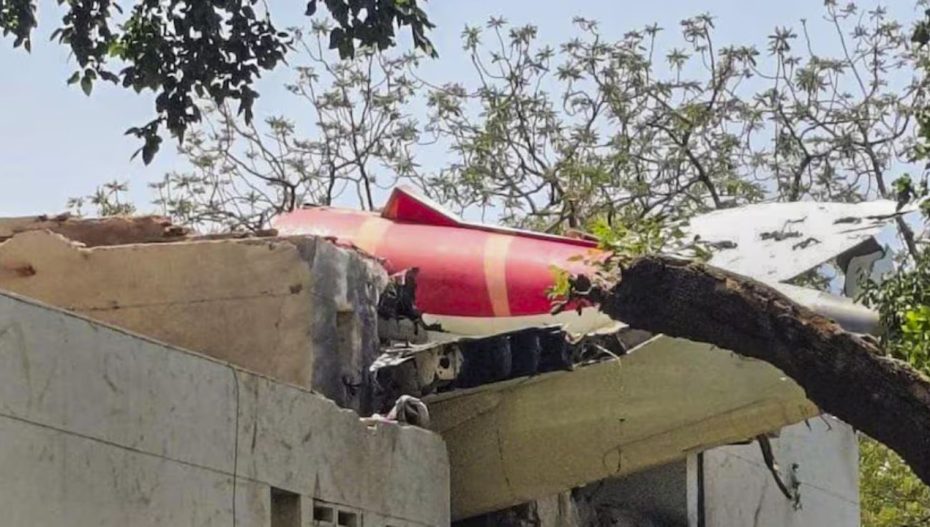
The unsettling details from the cockpit voice recorder of the star-crossed Air India Boeing 787-8 that crashed on June 12 in Ahmedabad has reignited a global outcry over why cockpit video recorders are still not standard in commercial aircraft.
In a chilling exchange recovered from the recorder, one of the pilots had asked why the fuel had been cut off, to which the other had responded that he had not done so. This conversation, captured just moments before the crash, was disclosed in the interim report released by the Aircraft Accident Investigation Bureau of India (AAIB) shortly after midnight on July 12 — exactly a month after the tragedy that claimed 260 lives.
The AAIB’s 15-page preliminary report was released after analysing both black boxes. It triggered sharp scrutiny and fresh demands for cockpit video recorders. Voice and data recorders capture sounds and flight metrics, but not the visual context of pilot actions — and that’s what’s missing. The NTSB had officially proposed installing cockpit cameras as early as 2000, arguing they would offer vital visual evidence in the final moments before a crash.
According to media reports, calls for mandatory cockpit cameras have reached a crescendo. “Yellow school buses have cameras. It’s time to put them in airline cockpits for emergency recordings,” David G Greenfield, adjunct professor at Brooklyn Law School, was quoted as saying.
Media reports quoted lawyer and drone pilot Nitin Sarin who asked pointedly: “What are the reasons for not having cockpit video recorders?”
Dr Maulik Modi, reports added, voiced frustration over scapegoating pilots: “Have we arrived at a time when we need a live cockpit video recorder with the voice recorder so no one can blame anyone for no reason?”
Despite the overwhelming technological capacity, the aviation world continues to resist. The primary barrier? Pilots themselves. Opposing cockpit cameras for decades, pilots claim the devices infringe on their privacy.
They fear being subjected to constant scrutiny, especially in traumatic post-crash scenarios. “What a camera can capture can be so easily misunderstood and misconstrued,” Doug Moss, a former test pilot and accident investigator, was quoted as saying.
Further complicating matters is the opposition from influential unions like the Air Line Pilots Association (ALPA) in the US, which wields considerable lobbying power in Congress. According to a 2024 Aviation International News report, ALPA remains the main force blocking mandatory cockpit video recorders — a system the National Transportation Safety Board (NTSB) has advocated since 1989, after a premature descent incident in Kansas City.
The NTSB has listed cockpit cameras on its ‘Most Wanted’ safety improvements since 2003. Yet, as the AIN report notes, Congress and the FAA still refuse to act. Despite mounting evidence, pilot unions continue to insist that cockpit audio and flight data alone suffice for accident investigations.
This resistance, however, clashes with an undeniable truth: cockpit cameras could exonerate pilots, not just expose them. “A single line of cockpit dialogue is not proof of human error, and the report doesn’t say why the switches moved, and whether that action was human, mechanical or electronic,” former pilot and aviation lecturer Marco Chan told a certain section of the media.
In the Air India case, a camera could have clarified whether the fuel cut-off — which led to a catastrophic loss of thrust — was accidental, mechanical, or otherwise.
Pilots argue, a news portal highlighted, that critical decisions often deviate from protocols under stress, and being visually monitored may alter natural responses. They claim the “observer effect” introduced by cameras would inhibit performance. They also cite concerns over leaks — as has happened with cockpit audio — that could traumatise victims’ families.
And yet, paradoxically, pilots freely share cockpit footage online. Hours of take-off and landing videos populate YouTube channels like Flightradar24, Aviation Attract, and Just Planes — all shot from inside cockpits. The FAA prohibits cockpit video recordings; however, the European Union Aviation Safety Agency (EASA) does not.
Beijing is reportedly integrating cameras in new aircraft like the COMAC C919. Helicopters use them for training and crash investigation.
The debate is not new. After EgyptAir Flight 990 crashed in 1999, killing 217, cockpit voice recordings suggested the first officer disengaged autopilot during the captain’s absence. The chilling voice of the co-pilot repeating “I rely on God” was recovered, but investigators could never conclusively determine motive or intent. A video would have shown what really happened.
Aviation history is rife with such mysteries. In the case of the Air India crash, the fuel supply to both engines was somehow cut moments after take-off. The AAIB report, which referenced the voice exchange, prompted theories of sabotage or suicide — unverified, unsubstantiated, and speculative. In such cases, video footage would offer clarity and silence conspiracy.
Following the report’s release, the Airline Pilots’ Association of India (ALPA-India), representing over 800 pilots, lashed out. They alleged bias in the investigation, accusing it of “presuming the guilt of pilots.” The union said it was exploring legal options to get pilot representation on the Air India crash investigation team.
Behind the resistance lies a deeper irony. Today’s cockpit voice recorders — now a staple of every crash probe — were once vehemently opposed by pilots. Over time, the need for safety overwhelmed concerns for privacy. The same reckoning is inevitable for cockpit video recorders.
Pilot unions and other groups had long opposed cockpit video cameras, arguing that images or footage could be misused by accident investigators, prosecutors, or the news media, a reputed international magazine reported in 2015.
The report also noted concerns that such footage might be used for routine monitoring or misinterpreted because of the complexity of non-verbal communication among pilots.
Still, the public is losing patience. “If cars and trucks can come with cameras, why can’t planes have them?” people now ask — both in India and abroad.
Someday, cockpit cameras will be inevitable. Not for surveillance, not for prosecution — but for safety.
Also Read: Only 4.2 Per Cent Funds Of MPLAD Budget Spent in Gujarat In One Year https://www.vibesofindia.com/only-4-2-per-cent-funds-of-mplad-budget-spent-in-gujarat-in-one-year/