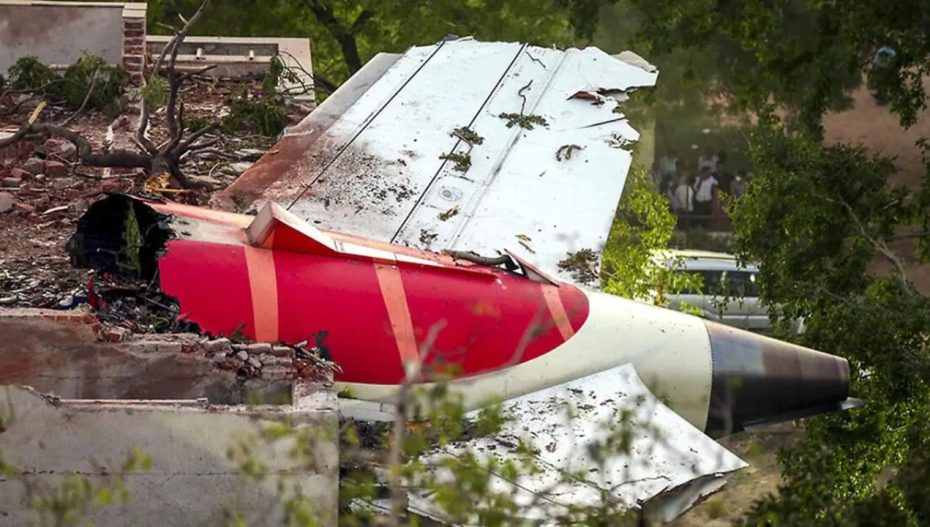
The initial probe into the crash of AI 171 has revealed that three seconds after getting airborne from Ahmedabad on June 12, fuel supply to both engines of the Air India Boeing 787 operating as AI 171 got cut off.
It has emerged that shortly after takeoff, the aircraft reached the necessary speed and lifted off. A few moments after becoming airborne, the aircraft achieved its highest recorded airspeed. Reports added that soon the fuel cutoff switches for both engines moved from RUN to CUTOFF—first for one engine, then the other. There was only a brief gap between them.
As a result, the engine parameters began to decrease, indicating that fuel supply to the engines had stopped, a section of the media reported.
In the cockpit voice recording, one pilot reportedly asked the other why did he cutoff. The other pilot clarified that he didn’t.
Footage from the airport showed the Ram Air Turbine (RAT) deploying soon after takeoff. No bird activity was seen near the aircraft’s flight path. Furthermore, the aircraft began to lose altitude before it crossed the airport’s boundary.
Among other significant details, it has been reported that the engines’ fan speed began dropping and the aircraft weighing 213.4 tons — which was close to its maximum take off weight with 54,200 kg of jet fuel — started to lose altitude before crossing the airport perimeter wall. The reason: fuel cutoff switches of the London-bound Dreamliner’s engine 1 and 2 transitioned from “run” to “cutoff” position one after another with a time gap of a second.
How and why this happened is not yet known. But what it led to is: The pilots issued a “MAYDAY MAYDAY MAYDAY” call 26 seconds after getting airborne and after that the crash happened within six seconds.
The two pilots were taken aback by the unexpected fuel cutoff. “One of the pilots is heard asking the other why did he cutoff. The other pilot responded that he did not do so,” says the report prepared by the Aircraft Accident Investigation Bureau (AAIB) and made public early Saturday.
As a result, the engines’ fan rotation speed (N1 and N2) started decreasing even as the ill-fated aircraft weighed 2,13,401 kg on take off — close to its maximum take off weight. “The aircraft achieved maximum recorded airspeed of 180 knots indicated air speed at about 08:08:42 UTC (Greenwich time) and immediately thereafter, the engine 1 and Engine 2 fuel cutoff switches transitioned from RUN to CUTOFF position one after another with a time gap of one sec. The engine N1 and N2 (fan rotation speed of different stages) began to decrease from their take-off values as the fuel supply to the engines was cut off,” says the report.
The AAIB report says “scrutiny of maintenance records revealed that the throttle control module was replaced on VT-ANB (the ill-fated Dreamliner) in 2019 and 2023. However, the reason for the replacement was not linked to the fuel control switch. There has been no defect reported pertaining to the fuel control switch since 2023 on VT-ANB.”
Why did the fuel cutoff switch transition from “run” to “cutoff” for both the engines on June 12 on the Dreamliner may be known once the ongoing probe is complete.
Without linking it to the cause, the report says the US Federal Aviation Administration (FAA) had in Dec 2018 issued a Special Airworthiness Information Bulletin (SAIB) “regarding the potential disengagement of the fuel control switch locking feature. This SAIB was issued based on reports from operators of Model 737 airplanes that fuel control switches were installed with the locking feature disengaged. The airworthiness concern was not considered an unsafe condition that would warrant airworthiness directive (AD) by the FAA.
The fuel control switch design, including the locking feature, is similar on various Boeing airplane models including part number 4TL837-3D which is fitted in B787-8 aircraft VT-ANB. As per the information from Air India, the suggested inspections were not carried out as the SAIB was advisory and not mandatory. The scrutiny of maintenance records revealed that the throttle control module was replaced on VT-ANB in 2019 and 2023.”
Soon after the release of the report, Air India issued a statement acknowledging the report. “Air India stands in solidarity with the families and those affected by the AI171 accident. We continue to mourn the loss and are fully committed to providing support during this difficult time. We acknowledge receipt of the preliminary report released by the Aircraft Accident Investigation Bureau (AAIB) today, 12 July 2025,” part of the report quoted by a section of the media reads.
“Air India is working closely with stakeholders, including regulators. We continue to fully cooperate with the AAIB and other authorities as their investigation progresses. Given the active nature of the investigation, we are unable to comment on specific details and refer all such enquiries to the AAIB.”
Also Read: A Month After Air India Tragedy, BJ Medical College Hostel Site Stands Scarred As Investigation Nears Closure https://www.vibesofindia.com/a-month-after-air-india-tragedy-bj-medical-college-hostel-site-stands-scarred-as-investigation-nears-closure/