


Few cities face the ongoing risk of the earth moving beneath them as sharply as Ahmedabad. Ask those who escaped the ravages of the 2001 earthquake here. It’s estimated that the energy released was equivalent to 400 atomic bombs thrown over Nagasaki, exploding 23 km below the earth’s surface. Such was the scale of devastation in 2001 that it claimed more than 13,000 lives.
The city has surged upward. Taller towers paint Ahmedabad’s skylines. But a reality lurks on the ground beneath. The fascination for heights could prove fragile in a place where the earth can shift without warning.
That tension now sharpens, as the Bureau of Indian Standards elevates Ahmedabad to a higher seismic-risk zone.
The BIS has delivered a decisive shake-up to Ahmedabad’s construction landscape.
It has revised the country’s seismic zoning.
Ahmedabad now moves from Seismic Zone III to the far riskier Zone IV. The change takes effect on May 3, 2026. Every new building approved after this date must follow the tougher seismic design rules.
The shift is set to redefine how the city builds, and how much it costs to build.
A national daily has reported that structural engineers will be compelled to design for significantly stronger earthquake forces, inevitably pushing up material consumption.
Industry analysts maintained that this shift would drive property prices in Ahmedabad upward by 20 to 25%. Experts in the Urban Development Department described Ahmedabad as “seismic sensitive,” recalling how the city had endured that devastating earthquake in 2001.
Officials said that the seismic zone transition would heavily influence construction planning and real-estate project costs.
The report highlights that the AMC approves building plans strictly according to BIS-declared seismic zones and added that the base, pillars, and supporting components of all new structures would now require reinforced specifications, which would inevitably increase the quantity of construction material.
This escalation in material use would raise overall project costs.
Another industry analyst observed that the revision would alter the entire structural design from the foundation upward.
With Ahmedabad now placed in Seismic Zone IV, every upcoming project would have to be redesigned with heavier reinforcement and stronger structural elements, inevitably producing a 20% to 25% rise in construction cost.
Experts from the Urban Development Department pointed out that the revision draws fully from IS 1893, the principal Indian Standard that lays down the criteria for earthquake-resistant design of structures, specifying minimum design loads and engineering norms needed to ensure that buildings can endure seismic forces safely.
With BIS now formally announcing the implementation date, Ahmedabad’s building ecosystem has less than a year to brace for the transition. According to sources, developers, structural consultants, and municipal authorities are expected to begin aligning new proposals with Zone IV norms well before the deadline.
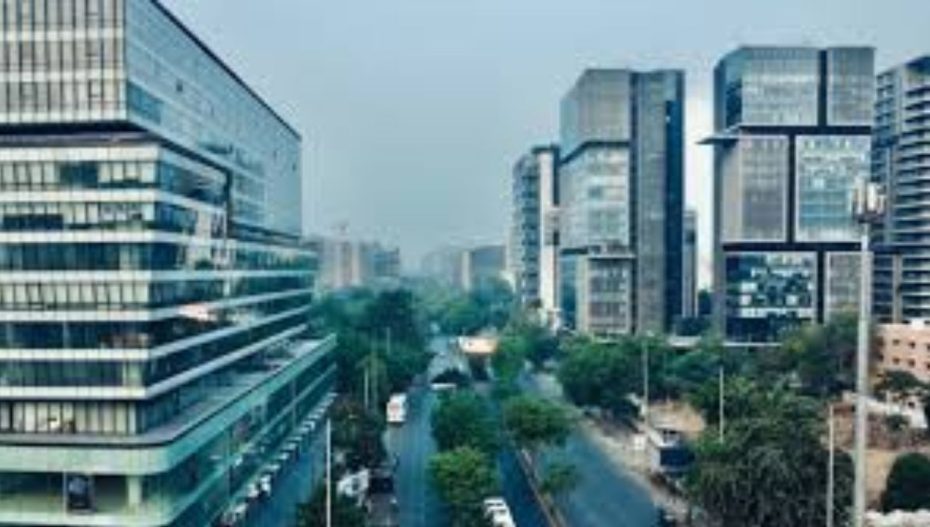
This looming shift comes at a time when Ahmedabad has allowed itself to soar vertically.
Rules in Ahmedabad allow very tall buildings. Skyscrapers can go beyond 100 metres, which is more than 30 floors. In some high-FSI zones, such as Ashram Road with an FSI of 5.4, buildings can even cross 70 floors and rise above 200 metres. The final height depends on the width of the road and the size of the plot.
The city has already approved many such high-rise projects. Earlier, most tall buildings stopped at around 22 floors or 70 metres. But new policies now push for taller structures, allowing heights of 150 metres and more with special approvals.
This trajectory has effectively positioned Ahmedabad as a new skyscraper frontier, now forced to confront the seismic consequences of its own ascent.
Also Read: Highest Ever: AUDA Announces Rs 1,705 Cr Budget For 2023-24 https://www.vibesofindia.com/highest-ever-auda-announces-rs-1705-cr-budget-for-2023-24/