Nepal’s streets have been full, this time not with protesters but voters. The same generation that brought down a government came out to choose the next one.
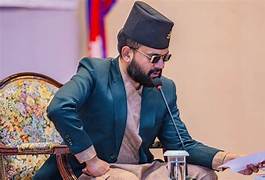
Early counting indicated that Rastriya Swatantra Party, led by former Kathmandu mayor and rapper-turned-politician, Balendra Shah, widely known as Balen, was leading in 110 seats.
Earlier, the Nepali Congress was leading in eight seats and CPN-UML in six. For a party built on protest energy, these are not small numbers.
This was the first general election since young people poured into the streets, forced a prime minister out of office and brought Parliament down with them. They didn’t just want a new government. They wanted a different kind of politics. On Thursday, they got to find out if anyone was listening.
Voting was mostly calm. Security was heavy. A handful of minor incidents were reported at polling stations, and in Dolakha district, things went quiet almost as soon as they began. Some voters walked for hours to reach a booth. Others didn’t bother — and made clear they weren’t bothering on purpose.
Police seized 2,587 vehicles for moving without permits during the election. Twenty-four people were arrested on allegations of anti-election activity, with Bagmati Province accounting for the most detentions at seven.
The contest is being read as a straight fight between the old Nepal and a newer one still trying to find its feet. On one side, the Communist Party of Nepal (Unified Marxist-Leninist) under former PM K P Sharma Oli and the Nepali Communist Party led by Pushpa Kamal Dahal ‘Prachanda’ — familiar names, familiar politics. On the other, the Rastriya Swatantra Party’s Balendra Shah and a Nepali Congress reinvented under Gagan Thapa, all of whom have staked their campaigns on the demands the protesters raised.
Dahal was quick to claim the mood of the moment. He said on social media that the high turnout reflected the people’s faith in Nepal’s Federal Democratic Republic system.
Early individual tallies back the trend. In Chitwan-2, RSP’s Ravi Lamichhane is ahead with 3,963 votes. The CPN-UML’s Ashim Ghimire is on 1,947, and Nepali Congress candidate Meena Kumari Kharel on 1,750. The count is still going.
Getting to a final result will take patience. Nepal’s terrain doesn’t make anything easy. Ballot boxes from remote mountain districts are being lifted out by Nepali Army helicopters — Taplejung, Rasuwa, Dolakha and Rukum East on Thursday, with Sankhuwasabha, Solukhumbu, Manang, Humla, Rukum West and Bajura following on Friday. Counting doesn’t begin until all party representatives and candidates at each centre formally agree to proceed.
Chief Election Commissioner Ram Prasad Bhandari has committed to wrapping up the count by March 9. Results are expected over the weekend.
Whoever ends up in charge will have very little time to settle in. The protests that triggered this election came with a list of demands, and that list hasn’t gone anywhere. Corruption, and the perennial tightrope walk between India and China, will be waiting on the desk from the first morning.
The young people who started all this will be watching to see what happens next.