Gujarat’s industrial sector is feeling the brunt of the ongoing West Asia war. Critical sectors have been hit. Export markets, energy supplies and trade routes are severely impacted.
Losses have crossed the Rs 10,000 crore mark, according to industry estimates.
Vibes of India understands that several sectors have reported production cuts and shutdowns. Rising costs and supply chain are the bottlenecks rather than outright fuel shortages. This is increasingly being seen as a viability crisis rather than a supply disruption, with industries able to operate but unable to sustain margins.
It all traces back to the Strait of Hormuz, a narrow waterway that much of the world’s oil passes through. With the conflict disrupting it, crude prices shot past $110 a barrel at points, and the cost of shipping and insurance went through the roof. Freight, insurance and logistics together have sharply increased the cost of doing business for exporters.
For a country that imports nearly 88% of its oil, India felt that hit hard. Gujarat, with its dense base of energy-hungry industries, felt it even harder.
The towns bearing the brunt
Walk through Morbi, the ceramic capital that supplies tiles to homes across the world, and the silence is striking. Nearly 40% of units are either shut or sitting idle. Gas consumption has collapsed from roughly 30–35 lakh cubic metres a day down to just 4.5 lakh. Orders from Gulf and African buyers have dried up, and with fuel and raw material costs spiralling, many manufacturers simply can’t afford to keep the kilns burning.
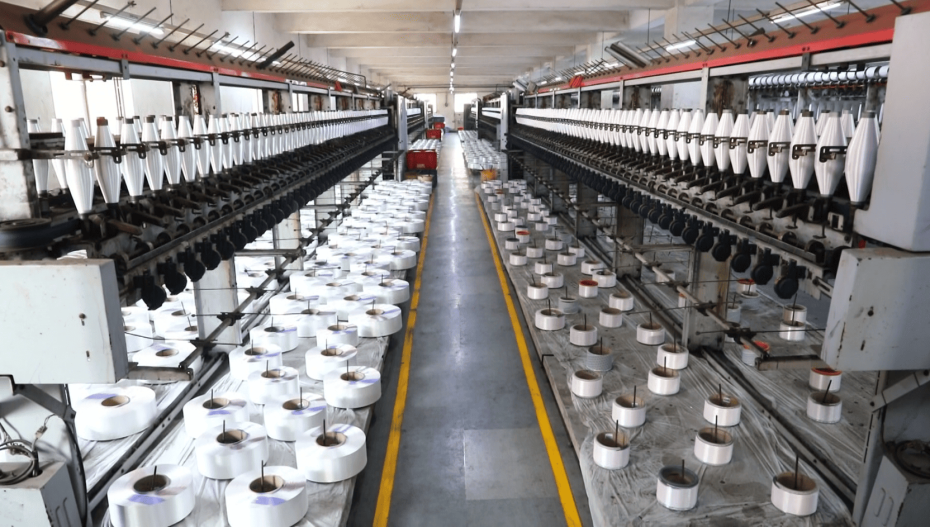
In Surat, the textile hub is losing an estimated Rs 100 crore every single day, according to media reports. Factories have cut hours and slowed down production lines. Synthetic fabrics (polyester, dyes) all derived from petrochemicals, all now significantly more expensive because of the crude oil surge.
Surat’s diamond traders are hurting too. Shipments are delayed, marine insurance has become expensive, and demand from Gulf markets, historically a strong buyer, has weakened considerably. The slowdown in West Asia itself is adding to the demand-side pressure, compounding the export slump.
Even farmers in Banaskantha are caught in the crossfire. Potato exports to Gulf countries have dropped sharply, pushing prices down and leaving growers and traders counting losses.
Getting desperate
The scramble for raw materials is getting desperate. Chemicals, plastics, pharmaceuticals, they all depend on naphtha and similar inputs.
In the present scenario, those are hard to come by and expensive when you do find them. It’s not just a Gujarat problem either. Petrochemical supply chains are fraying globally. the knock-on effects are showing up in everything from food packaging to medicine.
Glass factories have quietly dialled down. Production is off by somewhere between 30 and 40 percent. Cement, steel, tiles. None of them are shutting down, but all of them are paying more for everything and charging roughly the same for their products. That gap kills profits.
Meanwhile, oil marketing companies are taking a direct hit, losing roughly Rs 6 on every litre of diesel they sell. That’s not a rounding error; it’s a structural wound that’s bleeding through the entire fuel supply chain. For exporters, the pain is even more visible. Many are shipping their goods abroad and coming back with less money than they spent, once the ballooned freight costs are accounted for.
This has led to widespread margin compression across sectors, especially for export-oriented units. And the businesses least equipped to absorb any of this. Small and medium enterprises are the worst off. Many having quietly pulled down their shutters for now.
An official review of over 4 lakh industrial units found that 1,212 have shut down entirely, while more than 28,500 are running below capacity.
In response to the crisis, the government has temporarily removed import duties on select petrochemical products to ease input cost pressures on industry.
Why Gujarat is especially exposed
Gujarat isn’t just any industrial state. It’s built around exactly the kinds of industries that get hurt most in a crisis like this — ceramics, chemicals, textiles, all energy-intensive, all reliant on petrochemical inputs, and all deeply tied to Gulf trade. That combination has made the impact here sharper than almost anywhere else in the country.
What comes next
In the short term, expect continued volatility. MSMEs are likely to stay in survival mode. If things stabilise, ceramics and textiles may gradually shift towards alternative energy sources and consolidate.
The longer this drags on, the harder it becomes to recover what’s been lost. As experts often say, export relationships aren’t like machinery. Buyers who’ve spent months finding alternatives may not come back. And supply chains that took decades to carefully build around Gulf trade could quietly unravel, not in one dramatic moment, but gradually, deal by deal.
Zoom out, and the picture gets more unsettling. The energy shock is feeding into inflation in ways that are difficult to contain, and markets remain on edge, even on the days when ceasefire talks offer a flicker of hope. That hope hasn’t been enough to calm things down for long.
The Rs 10,000 crore figure captures the immediate damage. But what’s harder to quantify is the uncertainty. The orders not placed, the investments put on hold, the workers sent home. That’s the real cost of what’s unfolding.
Also Read: War Brings Covid Nightmare Back to Gujarat’s Factory Towns https://www.vibesofindia.com/war-revives-ghost-of-covid-in-gujarats-manufacturing-hubs/