A script fit for an OTT series. A British arms consultant is accused of bribing Indian officials to win a multimillion-dollar helicopter contract for British-Italian defence company AgustaWestland. He denies the charge. He spends over seven years in custody. Strangely, he doesn’t get a trial.
But this story is no fiction. That man Christian Michel (63) was extradited from Dubai in 2018. It’s natural to presume he has been wronged. But since the jury is not out on this case, any judgment will have to wait.
For background, investigators claimed he was paid almost £26m in kickbacks for his part in a 2010 deal won by AgustaWestland. They estimated that it cost the Indian exchequer around £344m.
Starmer Raises Michel’s Detention
What began as a high-stakes arms deal has become a diplomatic tug-of-war.
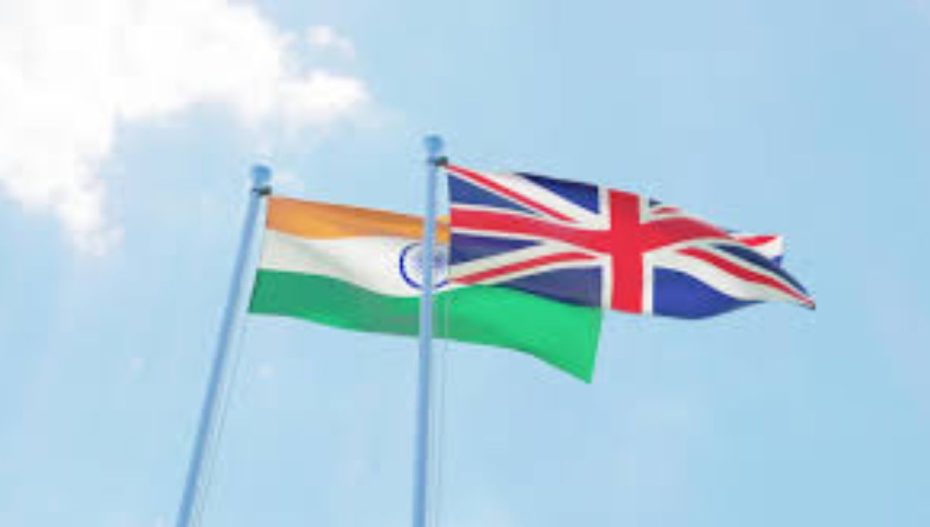
Now, according to reports, British Prime Minister Keir Starmer is said to have brought up his case with India’s Prime Minister Narendra Modi during their most recent meeting at Chequers, the UK prime minister’s country residence.
The UK’s Foreign, Commonwealth & Development Office (FCDO) confirmed that this conversation took place on 24 July, marking the first time a British prime minister has acknowledged discussing Michel’s detention with Modi. According to the FCDO, Starmer, who had previously worked as a human rights barrister, raised the matter himself.
In a handwritten letter dated 14 August and addressed to Starmer from prison, Michel reminded that he had now completed a full sentence of seven years without ever being charged or tried.
He reminded that four of those years were spent in a Dubai jail. The initial request cited a violation of Section 420 of the Indian Penal Code. According to the laws, it carries a maximum sentence of seven years. However, after his arrival, Indian authorities added a supplementary charge under Section 467. And that allows for life imprisonment.
Two years ago, a bench led by then Chief Justice of India Dhananjaya Chandrachud examined the terms of Michel’s extradition.
The court observed that Article 17 of the India-UAE Extradition Treaty bars prosecution for any offence other than the one for which extradition was granted, unless directly connected.
It also referred to Section 21 of the Indian Extradition Act, 1962, which reinforces this restriction. However, the court still allowed proceedings under the newer charge filed under Section 467.
Earlier this year, Michel was granted bail in both the CBI and ED cases by special designated courts. However, conditions attached to the bail required him to deposit his passport with the court.
The report highlighted that the passport, seized by the CBI, had expired, and Michel claimed he had no permanent address as his family home in London had been sold during his incarceration. The British High Commission in Delhi reportedly declined to renew his passport, citing “Tihar Jail” as an unacceptable residential address.
In his letter to Starmer, Michel wrote that the judge presiding over his ED case, Sanjay Jindal, told him that he would only be released once charges were formally framed, at which point it could be considered that the sentence had been completed. According to Michel, Jindal reportedly said that if he signed a confession, he would be released immediately.
Following a plea for discharge submitted by Michel’s lawyer, Aljo Joseph, Judge Jindal ruled on 7 August that the official record of the case did not indicate any period of detention prior to extradition, nor was there any reliable or binding document to support such a claim.
He concluded that since the seven-year period had not officially been completed, Michel’s request for release was not sustainable and therefore declined.
Reports mentioned that Michel also expressed criticism of the British authorities. In his letter, he claimed that while reviewing his case file at the CBI office, he met with his senior investigation officer, who made reference to statements by his business partner, D Syms. Michel asserted that such information could only have come from the Serious Fraud Office (SFO) in Britain and must have been sent mistakenly by the UK government.
He argued that this communication had undermined his legal protection under the principle of double jeopardy, referring to his earlier acquittal in Italy.
The original corruption allegations were the subject of an extensive trial in Italy involving two senior Finmeccanica executives, Giuseppe Orsi and Bruno Spagnolini. In a final judgment delivered by the Milan Appeal Court in January 2018, both were acquitted on the grounds that there was “insufficient evidence that the facts of culpability exist.”
The Indian Ministry of Defence had participated in the proceedings and requested that both defendants be convicted, but the Italian court rejected this. In relation to Michel, the judges stated that the investigation had revealed no role attributable to him in determining the operational requirements of the contract, either directly or indirectly.
They also dismissed suggestions arising from diary notes written by a Swiss national connected to Finmeccanica, which were alleged to implicate Indian politicians. The court clarified that no significance could be attributed to the interpretation of acronyms mentioned in those notes.
UN Calls for Michel’s Release
A United Nations Working Group on Arbitrary Detention (WGAD) issued an opinion in 2020 stating that a deputy director of the CBI had allegedly attempted in January 2018 to coerce Michel into signing a 20-page pre-drafted confession related to the AgustaWestland case. Michel was reportedly threatened with prosecution if he refused to comply.
WGAD concluded that, given the circumstances of the case, the appropriate remedy would be for the Government of India to release Michel immediately. India’s Ministry of External Affairs rejected this recommendation, stating that the opinion was not legally binding. The British government under Boris Johnson did not oppose the Indian position.
Family Appeals and UK Government Response
On 26 August, Michel’s children, his son Alois and daughter Alienor, met with FCDO junior minister Catherine West.
According to Alois, West promised to intensify the UK government’s efforts to secure Michel’s release. She is reported to have said that discussing the matter with Indian diplomats was a “top priority.”
The FCDO also revealed that the former Foreign Secretary, David Lammy, now Deputy Prime Minister, had discussed the case with Indian External Affairs Minister Subrahmanyam Jaishankar on multiple occasions, the most recent being on 7 June.
However, during an official briefing following the Chequers meeting, India’s Foreign Secretary Vikram Misri made no reference to Starmer raising Michel’s case with Modi. Instead, Misri indicated that Modi had requested UK cooperation in bringing economic offenders and fugitives from Indian law to justice.
Michel’s prolonged detention without trial has complicated India’s attempts to extradite others from the UK. British courts have rejected several requests in recent years, often due to poor prison conditions in India. High-profile cases include businessmen Vijay Mallya and Nirav Modi.
Also Read: Turning Point Or Ticking Fuse? As Rahul Gandhi Drops First Charge, Congress Watches Closely https://www.vibesofindia.com/urning-point-or-ticking-fuse-as-rahul-gandhi-drops-first-charge-congress-watches-closely/