


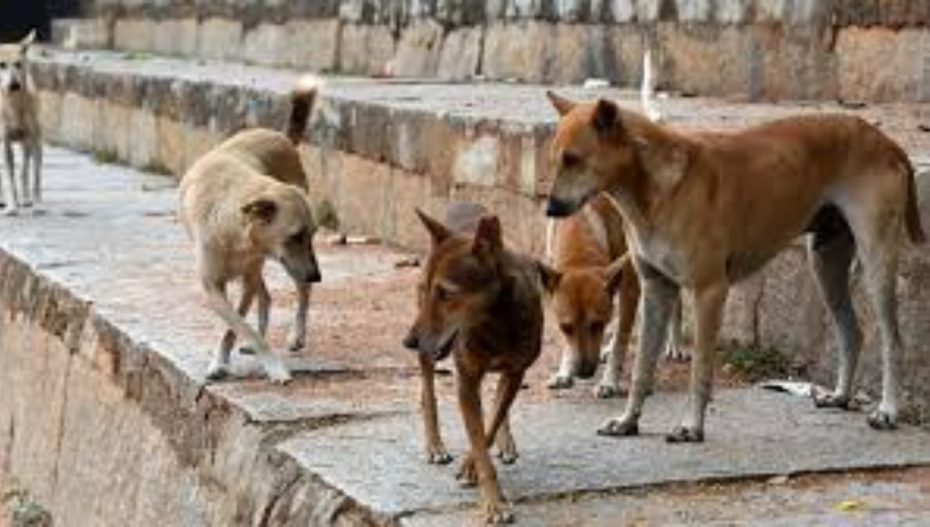
Ahmedabad is counting its four-legged residents. The city believes a survey of stray dogs is long due. And there’s a reason behind that. Dog bites are rising. And not just within city limits. Vaccination drives are growing, but authorities believe more needs to be done.
The new survey aims to track, sterilise, and relocate these free-roaming dogs, in line with Supreme Court directions.
The last random census of stray dogs in Ahmedabad was conducted in 2019. It recorded around 2.1 lakh animals within city limits. AMC estimates the current population at about 1.5 lakh.
Since January 2025, the AMC has been implanting Radio Frequency Identification (RFID) chips in stray dogs and developed an application to record the data. So far, 6,007 stray dogs have been implanted with RFID chips.
The new survey, named the ‘free roaming street dog survey,’ will be conducted by an agency hired by the Cattle Nuisance Control Department (CNCD) in all 48 municipal wards.
AMC’s CNCD head Naresh Rajput told a national daily that the survey is needed to estimate stray dog populations in each ward. This would help set up infrastructure to relocate dogs from public spaces like schools and hospitals to shelters, as per SC’s guidelines.
Tenders for the survey have been invited, with the last date set for February 13. According to the report, the terms, including no security deposit and installment payments, were designed to encourage not-for-profit organisations to participate.
The 2019 census had been followed by a mass sterilisation drive, which neutered around 1.94 lakh dogs. Rajput told the media outlet that sterilisation has reduced daily procedures from 150-170 dogs per day to 30-35. The focus is now on newly included areas along the Sardar Patel Ring Road.
The survey agency will need to identify stray dogs sterilised before 2025 and those implanted with RFID chips.
A report by the High-Level Committee (HLC) on Urban Planning under the Union Ministry of Housing and Urban Affairs highlighted the growing stray dog issue. It cited 27.5 lakh dog bite cases in 2023, up from 21.8 lakh in 2022.
The report noted that most street dogs rely on solid waste for food, while only a small percentage are fed by NGOs. It recommended better waste management, dog adoption incentives, expanded veterinary infrastructure, and removal of aggressive dogs from public spaces.
The report also called pedestrians, especially women, children, and the elderly, the most vulnerable. It noted India has the highest number of stray dogs and rabies deaths worldwide, with cities like Delhi and Ahmedabad housing hundreds of thousands of these animals.
Despite SC’s guidelines, AMC believes an increase in dog bite cases could be a possibility.
Rajput told the daily that vaccines given at 35 AMC health facilities have risen from 5,000-5,500 per month three years ago to 7,000-7,500 now, reflecting both more bites and greater awareness. About 20-25% of cases are reported from outside AMC limits.
He added that no rabies deaths occurred in Ahmedabad in 2025.
The last recorded case was in 2024, involving a man from Ranip who contracted the virus at a wedding in Madhya Pradesh and did not take the vaccine.
Meanwhile, it has emerged that while rabies vaccines are sufficient, there is a shortage of rabies immunoglobulin, recommended for severe bites or contamination of mucous membranes.
Also Read: Stray Dog Menace Continues In Gujarat’s Ahmedabad; 46,332 Dog Bite Cases Registered In 2021 https://www.vibesofindia.com/stray-dogs-continues-to-rule-the-streets-of-the-city/