


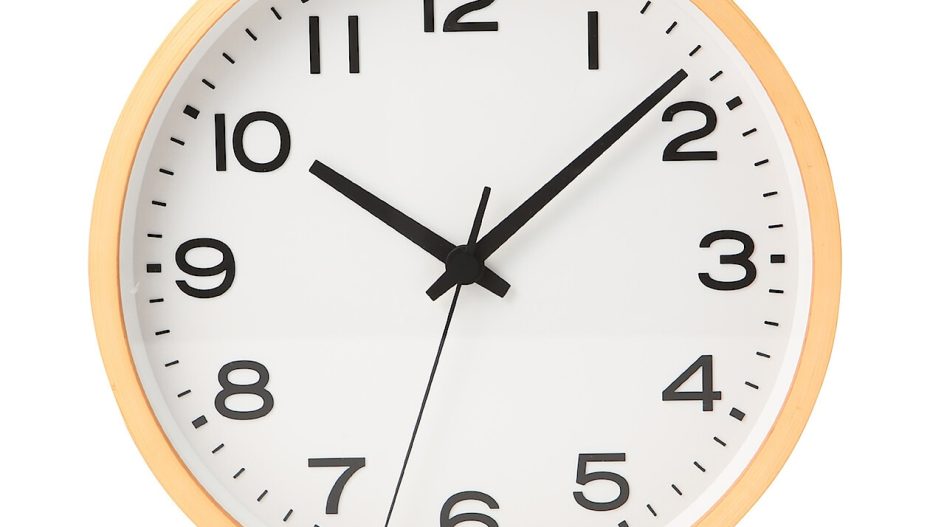
From today, if you have friends or relatives in America, you must know that Daylight saving time has ended in the US and now clocks have gone back an hour back.
Less than a year after the U.S. Senate unanimously voted to end the ritual of “springing forward” and “falling back,” the effort to make daylight saving time (DST) permanent has died in the House, leaving a vast majority of Americans stuck with a practice they oppose.
A new Associated Press-NORC poll confirms the widespread frustration: only 12% of U.S. adults favour the current system of changing clocks twice a year, while 47% are opposed and 40% remain neutral. For most, the upcoming end of DST this Sunday, which temporarily gifts an extra hour of sleep, is overshadowed by a desire to simply stop the switch altogether.
A Century of Time Trouble
The time shift is a uniquely American custom rooted in a century-old quest for efficiency. The United States first adopted Daylight Saving Time during World War I and later during World War II, primarily as an emergency measure to conserve fuel and energy.
The practice was later standardized by the Uniform Time Act of 1966, which permitted states to opt out but forbid them from permanently observing DST—a federal rule that still stands. Today, only Arizona and Hawaii remain on permanent standard time. The clocks also change in other parts of the world, like Canada and Europe, but are ignored in large regions like Asia, including India.
Los Angeles resident Pranava Jayanti, 31, who grew up in India, noted how jarring the change was upon moving to the U.S.
“I thought I was prepared,” Jayanti said, “but when it actually happened, it still took me by surprise, because of how quickly it got dark in the latter half of the day.”
Permanent DST Dream Collapses in Congress
The push to end the switch reached a fever pitch with the introduction of the “Sunshine Protection Act”.
- The Proposal: Sponsored by a bipartisan group of senators, the Act was designed to make Daylight Saving Time the new, permanent standard time, ending the biannual clock change effectively on November 5, 2023.
- Senate Approval: The bill achieved a major victory in March 2022 by passing the Senate via unanimous consent.
- The Stall: Despite this momentum and broad public support for a fixed time, the bill ultimately stalled and expired in the House of Representatives without coming to a vote, effectively killing the most recent effort to abolish the change.
The Health vs. Evening Light Divide
The battle over which time to adopt permanently continues to divide experts and the public:
| Preferred Permanent Time | U.S. Adult Support | Key Arguments |
| Daylight Saving Time (Later Sunrises, Later Sunsets) | 56% | Preferred by “night people”; believed to reduce crime and promote commerce and outdoor leisure in the evening. |
| Standard Time (Earlier Sunrises, Earlier Sunsets) | 42% | Supported by medical groups (AMA, American Academy of Sleep Medicine); aligns better with the body’s natural circadian rhythm, especially due to morning sunlight. |
Export to Sheets
“There is no time policy that you can have that will make everyone happy,” noted Jamie Zeitzer, co-director of the Center for Sleep and Circadian Sciences at Stanford. For now, despite widespread discontent and a congressional near-miss, the twice-a-year time change remains a fixed—and largely unpopular—feature of the American calendar.
The Health Argument: Why Experts Oppose Permanent Daylight Saving Time
Medical and scientific organizations, including the American Medical Association (AMA) and the American Academy of Sleep Medicine (AASM), strongly advocate for permanent standard time (ST), arguing that it is the option most beneficial for human health and safety.
While these groups support eliminating the twice-yearly clock change, their stance directly opposes the goals of the failed “Sunshine Protection Act,” which pushed for permanent Daylight Saving Time (DST).
Key Arguments for Permanent Standard Time
The core of the medical argument rests on aligning our social clock with our circadian rhythm—the body’s natural 24-hour internal clock, which is primarily regulated by exposure to light.
- Circadian Alignment: Standard Time aligns clock time most closely with solar time (when the sun is naturally highest in the sky). Standard time ensures that the sun rises and sets at times that are more congruent with human biology, promoting better synchronization of the sleep-wake cycle.
- Essential Morning Light: The biggest concern with permanent DST is the extreme delay of sunrise, particularly during winter months.
- Health and Mood: Exposure to bright light early in the morning is critical for regulating the circadian rhythm, boosting mood, and preventing conditions like Seasonal Affective Disorder (SAD).
- Safety and Learning: Permanent DST would cause sunrises to occur after 8:00 a.m. in much of the country (and even after 9:00 a.m. in some northern regions) throughout the winter. This results in children waiting for buses and adults commuting in the dark, which is linked to increased traffic accidents and safety risks.
- Reduced “Social Jet Lag”: DST essentially creates a state of “social jet lag” by advancing the clock one hour ahead of our natural rhythm. According to experts, living with this misalignment year-round is associated with an increased risk of health problems, including obesity, metabolic syndrome, cardiovascular disease, and depression.
“The more light you have earlier in the morning, the more robust your clock is,” said Jamie Zeitzer, one of the Stanford study authors. The scientific evidence, therefore, suggests that while ending the switch is beneficial, permanent standard time offers slightly better health outcomes than permanent DST.
Also Read: International Illegal Clinical Trial Scam Exposed In Gujarat. https://www.vibesofindia.com/international-illegal-clinical-trial-scam-exposed-in-gujarat/