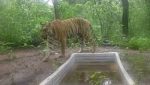



There is a reason the Gir National Park is an attractive tourist destination in Gujarat. Thousands of nature and animal enthusiasts flock there to catch a glimpse of the Asiatic Lions.
The demand for safari permits grows in the period between Christmas and New Year when India is in holiday mood.
In recent times the permit has been hard to get.
The Sasan Gir Hotel Association, which comprises over 90 hotels and resorts near Gir National Park, the only natural habitat of the Asiatic lion, has reportedly raised serious allegations of widespread fraud in the process of issuing online safari permits.
The association has claimed that permits are being siphoned off and sold on the black market. It deprives genuine visitors of fair access to the park.
Reports indicate a large-scale scam in the online permit system. Reports also added that representatives of the association met officials from the cybercrime unit and the forest department in Gandhinagar.
Too quick to be true
They called for an official investigation into the irregularities, which they claim have persisted for years without effective action.
The association said that 180 safari permits for the December 26–31 period had been booked within just 18–20 minutes. A single booking typically takes 7–8 minutes. This includes the process of entering personal details and uploading ID proof.
Naturally, the association questioned how all permits could be secured so quickly. Such a scenario, the assocation believed, was unlikely without some form of malpractice.
The association also raised concerns about fake or duplicate websites misleading tourists searching online for Gir Jungle Safari bookings. These websites were said to offer safari permits, accommodation, and transport at prices up to five times higher than the official rates.
Large-scale manipulation?
It was observed that many tourists abandon their travel plans upon finding that online slots appear fully booked. To address this, a suggestion was made to issue offline permits exclusively through registered hotels using official letterheads, which, it was argued, would help curb malpractice and ensure that genuine tourists are not discouraged.
It has emerged that multiple third-party websites, falsely presenting themselves as official lion safari booking portals, are manipulating the reservation system on a wide scale. These operators appear to work through a network that includes hotel staff and intermediaries who secure a bulk of the available slots as soon as bookings open, thereby crowding out individual tourists.
A key strategy used by these platforms is reportedly a ticket-blocking scheme. In cases where they don’t receive enough immediate bookings, they reserve tickets using the names of their own employees and associates.
No concrete action
Simultaneously, they place real customers on a waitlist. Later, they cancel the blocked tickets and assign them to waitlisted clients at inflated prices. A safari ride for a group of eight — which typically costs Rs 14,000 to Rs 15,000 — has reportedly soared to over Rs 25,000 on weekends and holidays.
The forest department issues 150 permits daily for safaris across different routes in Gir, increasing the quota to 180 during peak periods. Despite ongoing complaints, it has emerged that no concrete action has been taken, citing the fact that most of these third-party entities are formally registered and possess GST numbers.
In one instance, a forest officer who unknowingly booked a permit through an unofficial site was able to get a refund but only after the intervention of a local beat guard.
As of October 6, the report adds, these unofficial websites were already accepting bookings for February 1 and beyond.
With rising reports of manipulation and inflated pricing, industry stakeholders fear that the state’s premier wildlife destination may gradually lose its appeal.
Also Read: Behind Jagdish Vishwakarma’s Appointment As Gujarat BJP President https://www.vibesofindia.com/behind-jagdish-vishwakarmas-appointment-as-gujarat-bjp-president/