

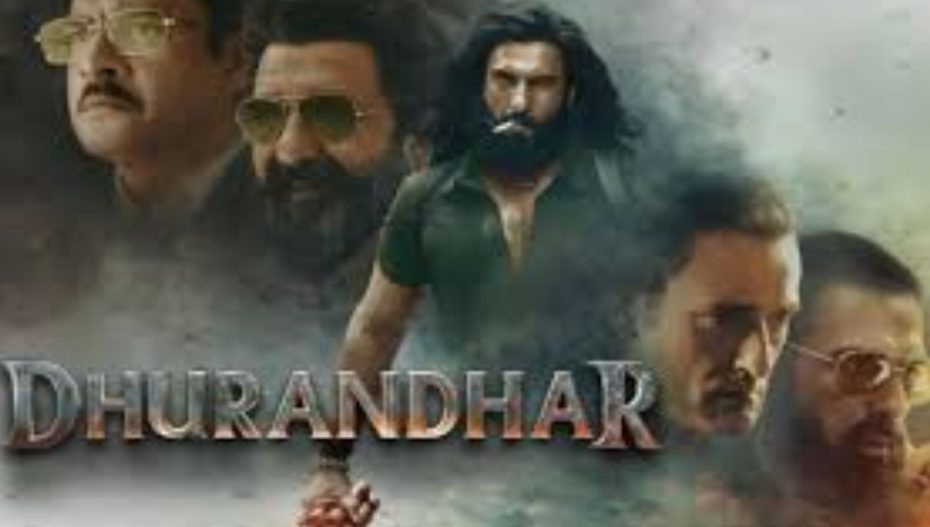
Insisting that a dialogue in the film Dhurandhar defamed the Baloch, two members of the community sought the Gujarat High Court’s intervention.
They wanted what they believed were objectionable lines removed and urged the court to initiate a strong action against the filmmaker. However, the court asked them to substantiate how the reference had caused prejudice to the community in India.
The court orally sought to know how the petitioners had been prejudiced by the dialogue. Additionally, the court noted that the film was based in a region outside India. It said that the petitioners would have to substantiate how they had been prejudiced and that they took the dialogue out of context.
For context, the Gujarat High Court heard a petition filed by two members of the Baloch community seeking directions to the Central Board of Film Certification (CBFC) and the filmmakers to remove the contentious dialogue from the film and its promotions.
Justice AP Mayee, according to news reports, heard the petition filed by Yasin Allarakha Baloch of Gandhinagar and Ayub Balekhan Baloch, who identified himself as a member of a community Trust. The petition raised objections to a dialogue delivered by a policeman character played by actor Sanjay Dutt.
The petitioners reportedly said that they objected to a dialogue delivered by the character played by Sanjay Dutt, in which he said Magarmachh pe bharosa kar sakte hai, par Baloch pe nahi.
They contended that the dialogue had been spoken in a derogatory and contemptuous manner, hurting sentiments while showing the community in poor light and defaming it, and that it arbitrarily singled out the Baloch community and subjected it to hostile stereotyping, violating the guarantee of equality before the law.
Through their counsel, the petitioners submitted that the Baloch community was part of a large area of Balochistan extending from countries in the North West to India, including Iran and Pakistan, as well as parts of Gujarat.
The counsel contended that the dialogue compared the community to an animal that could not be trusted and did not mention any specific character or gang, but appeared to be a general statement.
The petitioners also submitted that the film’s visuals and words referring to the community were anti-caste and racial. They sought initiation of appropriate legal action against film director Aditya Dhar and modification of the certificate issued by the CBFC until the dialogue was permanently deleted or muted from all versions and platforms.
They further requested the court to direct the CBFC to conduct a fresh review of the film and enforce strict compliance with constitutional and statutory guidelines, and demanded restraint on further exhibition, broadcast, streaming, or circulation of the dialogue.
The petition contended that despite the objectionable and unconstitutional nature of the dialogue, the film had been permitted for public exhibition. They alleged the movie caused continuing and recurring harm to the dignity of the Baloch community.
Further, they argued that freedom of speech did not protect speech that demeaned, vilified, or stigmatised a community.
The petition also cited past instances where, due to judicial intervention, objectionable material was removed from films such as Jolly LLB, Padmavat, and Adipurush.
Also Read: Heroism Or Ideology? Dhurandhar Debate Rages https://www.vibesofindia.com/heroism-or-ideology-dhurandhar-debate-rages/