


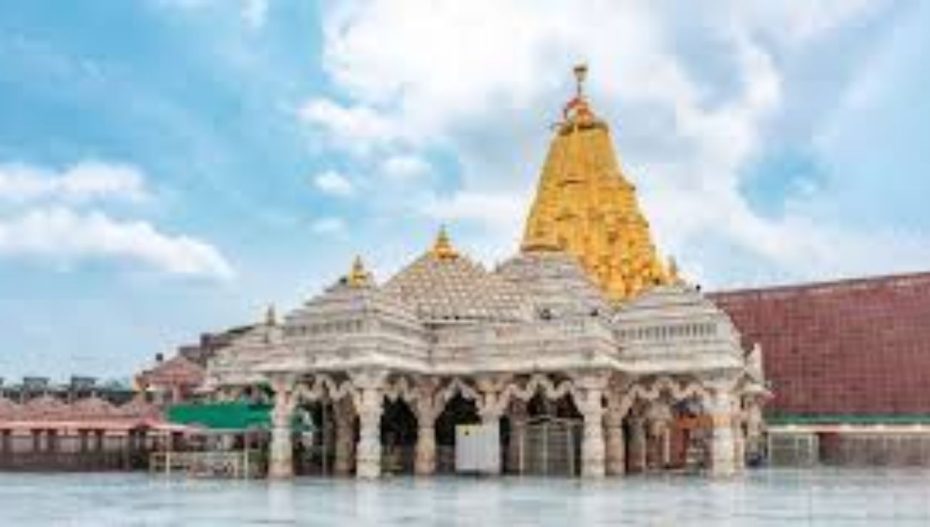
The Gujarat High Court has put a decisive end to a long-running dispute over the Arasuri Ambaji Mata Devasthan, ruling that the ancient shrine is a public religious institution and must function as such.
According to reports, the court upheld the registration of the temple as a public trust, dismissed the appeal filed by the erstwhile Danta state royalty, and struck down the special privileges earlier granted to them to perform private puja on the eighth day of Navratri while ordinary devotees were barred from entering the temple.
The appeal had been filed by Maharana Mahipendrasinhji Parmar, heir of the former Danta state, who challenged the trust registration and claimed hereditary rights over the ownership and management of the temple. The case, pending since 2009, centred on the control of the Arasuri Ambaji Temple, one of Gujarat’s most prominent religious sites that draws millions of pilgrims every year, particularly during Navratri.
The appellant asserted exclusive hereditary rights to perform special puja on the eighth day of Navratri, conduct havan inside the temple, and wave the Chamar before the Goddess. During these rituals, pilgrims were shut out or excluded from the temple premises.
These privileges had earlier been accepted by authorities, but disputes with the state government over the matter have continued since 1960, leading to multiple rounds of litigation.
After examining the historical background of the Danta state, the claimed royal rights, and the merger agreement following Independence, Justice H M Prachchhak held that the temple is a public religious institution and that the deity is a juristic person owning endowed property.
Referring to the Supreme Court’s verdict in the Padmanabhaswamy temple case, the high court ruled that the appellant could not claim ownership or special rights over property belonging to the deity, nor seek exclusive puja privileges that curtail the rights of pilgrims.
The court noted that lakhs of devotees visit the temple during Asho Maas Navratri and that on the eighth day in particular, the shrine witnesses massive crowds. In such circumstances, the high court said, no special privileges can be granted in favour of the appellant that restrict public access to worship at the Arasuri Ambaji temple.
For decades, the issue of who controls the rituals at Ambaji has simmered, occasionally flaring into legal battles.
The verdict cuts through that history, clearly stating that the shrine belongs to the public and not to a former royal household, no matter how old the claim or how long the practice continued.
The judgment also brings an end to a practice that allowed doors to close on devotees during one of the most crowded days of Navratri. With lakhs thronging the temple in Asho Maas, the court made it clear that faith at Ambaji cannot be filtered through privilege, and worship cannot be reserved behind barriers.
Also Read: White Marble From Ambaji Gets GI Tag https://www.vibesofindia.com/white-marble-from-ambaji-gets-gi-tag/