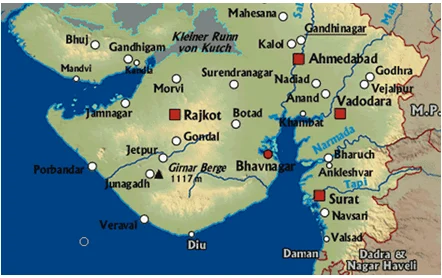
“Disturbed areas” is out and “specified areas” is in. And the collectors who oversee them now have significantly more power. The Gujarat Assembly passed an amendment to the Disturbed Areas Act that reshapes how property transfers are handled in sensitive localities.
The Bill (formally, the Gujarat Prohibition of Transfer of Immovable Property and Provision for Protection of Tenants from Eviction from Premises in the Disturbed Areas (Amendment) Bill, 2026) was passed by a majority vote on the last day of the budget session, amid opposition from Congress.
The Act has its roots in communal violence. It was originally brought in to prevent panic sales of immovable property following communal riots that had led to the segregation of communities. Under it, transactions of land between Hindus and Muslims (or even among Hindus) require the Collector’s permission if the land falls within a covered area.
The amendment builds on this foundation. It aims to regulate property transfers and protect occupants from eviction in such areas. Tabling the Bill, Minister of State for Revenue Sanjaysinh Mahida reportedly said the core purpose is to prevent involuntary transfers and safeguard the interests of lawful owners. He said it had been observed that properties were being transferred in contravention of the Act, with unscrupulous persons coming into illegal possession. The amendment, he added, was necessary to curb such illegal transfers and protect lawful owners.
Several changes come with it. The definition of who counts as an “aggrieved person” has been widened — a third party residing in a specified area can now approach the Collector over a property transfer, even if not directly a party to the transaction. The Collector’s powers have also been expanded. They can now act suo motu or on application from an aggrieved person. If a transfer is found objectionable, the Collector can take temporary possession of the property in question.
A new financial provision has been added to address distress sales. Residents of specified areas will be able to mortgage their property with recognised financial institutions to obtain loans, the intent being to reduce economic pressure that might otherwise force a sale.
The law’s trigger conditions have been broadened too. An area where there is a possibility of a breach of public order can now be declared a specified area, not just one where disorder has already occurred.
The monitoring and advisory committees have been strengthened under the amendment. They can conduct studies in any area to ascertain and advise the government on whether it was disturbed for a substantial period, or is likely to become prone to communal disturbance resulting in involuntary displacement of people. Special investigation teams can assist the committees and the Collector in examining cases for the grant of sale permissions.
Congress MLA Imran Khedawala opposed the Bill during discussion. He was quoted as saying that the government had introduced it purely for political gains, seeking to divide votes along community lines.
He drew a contradiction with the BJP’s position on Article 370, saying the party had abrogated it in Kashmir and encouraged people to buy property there, while imposing restrictions in Gujarat. He demanded the government provide details of any forceful property sales and the number of FIRs or court cases filed. Such bills, he said, created rifts between communities that had otherwise been living peacefully.
Mahida believes the amendment will help prevent forced property transfers, protect owners’ rights, and maintain social harmony in sensitive areas.
Also Read: Union Home Minister Lauds Gujarat For UCC Bill https://www.vibesofindia.com/union-home-minister-lauds-gujarat-for-ucc-bill/