

Gujarat’s electorate has shrunk by nearly 74 lakh, and over 7.37 million names were deleted from the draft electoral roll released at the end of the Special Intensive Revision (SIR), according to data by the Election Commission of India (ECI) and Chief Electoral Officer Harit Shukla.
The revised draft list shows the total number of voters in the state declining from over 5.08 crore to around 4.34 crore following a large-scale verification of voters under the SIR of electoral rolls, media reports revealed.
According to Shukla, the reduction followed an extensive scrutiny process carried out ahead of the publication of the draft rolls. Prior to the draft being issued, Gujarat had 5,08,43,436 registered electors. After the completion of the SIR exercise, the figure now stands at 4,34,70,109, he said.
He added that 73,73,327 entries were removed during the revision drive, which involved verification of voter details across the state. The names were excluded after enumeration forms were not received despite repeated verification and coordination with Booth Level Agents and political party representatives.
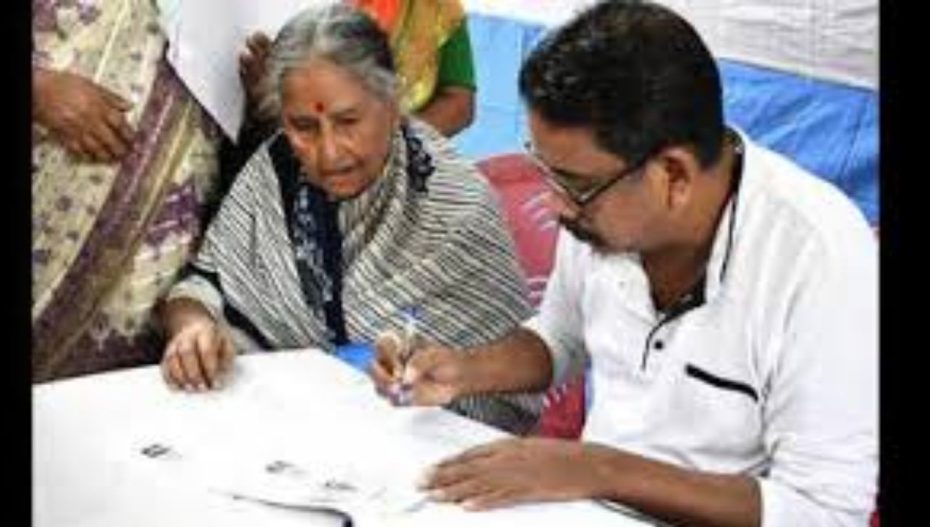
Door-to-door verification was conducted to identify deceased voters, those who had permanently migrated, voters registered at multiple places, and those not traceable during the survey. Shukla said enumeration forms were fully digitised.
Of the 73,73,327 names deleted, 18,07,278 belonged to deceased voters, 40,25,553 to voters who had permanently shifted, 9,69,662 to absent voters, 3,81,470 to duplicate registrations and 1,89,364 to other categories, according to data published by media outlets.
As of December 19, enumeration forms have been submitted by 4,34,70,109 electors out of a total electorate of 5,08,43,436. The Commission said the verification phase of the state-wide campaign, which began on October 27, has been completed across all 33 districts and 182 Assembly constituencies.
The exercise involved 33 District Election Officers, 182 Electoral Registration Officers, 855 Assistant Electoral Registration Officers, 50,963 Booth Level Officers, 54,443 Booth Level Agents and 30,833 volunteers.
To ensure that no eligible elector is left out, the Commission said extensive awareness campaigns were carried out during the enumeration period. CEOs, DEOs and EROs held meetings with political parties, while BLOs conducted house-to-house visits to all electors whose names appeared in the rolls as on October 27, 2025, distributing enumeration forms and making at least three follow-up visits for collection. BLAs were permitted to submit up to 50 forms per day.
Several special initiatives were undertaken to boost inclusion, including special camps at polling stations on November 15–16 and November 22–23, and at block-level locations on November 29–30 across all 182 Assembly constituencies. Additional arrangements were made for senior citizens and persons with disabilities.
Officials said information on the SIR was disseminated through public announcements on garbage collection vehicles, local television channels, newspaper and TV advertisements, social media platforms and WhatsApp groups. Press notes, podcasts and interviews by district officials were also released.
The Commission said special focus was placed on young voters, with citizens who have attained or will attain the age of 18 on or before January 1, 2026 encouraged to apply for enrolment through Form-6 along with the prescribed declaration.
Booth-level lists of electors reported as deceased, permanently shifted, untraceable or whose forms were not received were shared with Booth Level Agents for verification. Election staff and volunteers assisted electors, particularly senior citizens, persons with disabilities and vulnerable groups, and coordinated with government departments.
The ECI said DEOs in all 33 districts personally addressed issues raised in print, television and social media during the enumeration phase.
The draft electoral roll has been published in printed and digital, booth-wise formats at all polling stations, designated locations and on the CEO Gujarat website.
Copies have been provided to recognised political parties along with lists of voters whose enumeration forms were not received. Booth-wise lists of absent, shifted, deceased and duplicate electors whose names do not appear in the draft roll are being displayed at panchayat offices, urban local body offices and block-level offices with probable reasons for non-inclusion.
During the claims and objections period from December 19, 2025 to January 18, 2026, electors and political parties may file claims for inclusion of eligible voters or objections to ineligible names. Election authorities will verify and dispose of all claims and objections by February 10, 2026, after issuing notices and hearing the concerned voters.
No deletion can be made without due process, including prior notice and a reasoned order by the ERO or AERO. Aggrieved electors may appeal to the District Magistrate and subsequently to the Chief Electoral Officer under the Representation of the People Act, 1950.
The final electoral roll will be published on February 17, 2026.
Reaffirming its commitment, the ECI said the SIR in Gujarat is being conducted in a transparent, participative and inclusive manner to ensure that no eligible elector is left out and no ineligible name remains on the electoral rolls.
Also Read: Stress, Overwork: Another BLO Death In Gujarat Highlights Toll Of SIR Duties https://www.vibesofindia.com/stress-overwork-another-blo-death-in-gujarat-highlights-toll-of-sir-duties/