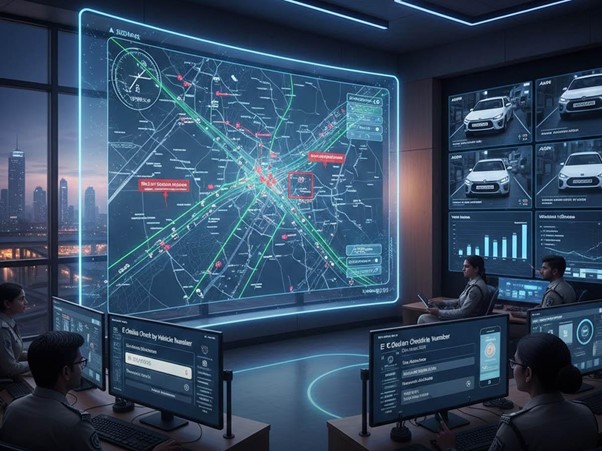
The national capital has long been the centre of India’s push toward a Smart City infrastructure. With over 1.2 crore registered vehicles, manual traffic management in Delhi is a monumental challenge. To combat congestion and rising road safety concerns, the Delhi Traffic Police (DTP) has pivoted toward a data-centric enforcement model. This system doesn’t just catch violators; it leverages granular vehicle data to create a safer, more disciplined driving environment.
Central to this transformation is the integration of high-speed digital monitoring and the ability to conduct an e challan check by vehicle number instantly. For the modern Delhi driver, understanding how their vehicle’s digital footprint is used by the authorities is key to navigating the city responsibly.
The Architecture of Intelligent Enforcement
Delhi’s traffic enforcement is powered by a network of thousands of Intelligent Traffic Management System (ITMS) cameras. These are not standard CCTV units; they are equipped with edge-processing capabilities that allow them to perform complex tasks in milliseconds.
- Gantry-Mounted Speed Sensors: Installed on high-speed corridors like the Delhi-Meerut Expressway and Ring Road, these sensors calculate vehicle speed based on the time taken to travel between two points.
- Red Light Violation Detection (RLVD): These cameras are synced with traffic signals. If a vehicle crosses the stop line even a fraction of a second after the light turns red, the system triggers a capture.
- Automatic Number Plate Recognition (ANPR): This technology reads number plates in various lighting and weather conditions, instantly linking the plate to the owner’s data in the central VAHAN portal.
Turning Data into Discipline
The real power of Delhi traffic challan enforcement lies in how the data is analysed. The system creates a violation profile for every vehicle.
Identifying Habitual Offenders
The DTP uses predictive analytics to identify vehicles that are frequently flagged for high-risk behaviors like overspeeding or dangerous driving. By analyzing the time and location of these violations, authorities can deploy interceptor vans to specific hotspots during peak hours. This data-driven deployment ensures that limited human resources are used where they are needed most.
Real-Time Alerts and Contactless Ticketing
The days of being stopped at a barricade for minor offenses are largely over. When a violation is captured, the system pulls the registered mobile number and sends an automated SMS. This contactless approach reduces the potential for bribery or disputes and ensures that the vehicle owner is notified of the offense within minutes.
The Consequences of a High Digital Penalty Count
The integration of vehicle data across departments means that a traffic violation is no longer an isolated event. It has long-term implications for the vehicle owner.
- Impact on Resale and Transfers: When you decide to sell your car in Delhi, the first thing a professional buyer or agency will check is the pending challan status. A vehicle with heavy unpaid fines is a massive red flag. Often, the ownership transfer (RC Transfer) at the RTO is blocked by the system until all dues are cleared.
- Insurance Premium Adjustments: While still in its early stages in India, there is a growing movement toward usage-based insurance. Insurers may eventually use your traffic violation data to determine your premium. A vehicle with zero challans suggests a lower risk, potentially leading to lower insurance costs in the future.
- Legal Summons and Virtual Courts: Delhi has pioneered the use of Virtual Courts for traffic offenses. If a challan is not paid within the stipulated timeframe, the data is automatically transferred to the judiciary. The owner then receives a legal summons, making the resolution process a judicial matter rather than a simple administrative one.
Improving Road Safety Through Transparency
The primary goal of the digital system is transparency. By allowing citizens to check their violation history online using their vehicle number, the DTP has moved the responsibility of compliance onto the citizen.
Motorists can view the high-definition image of their vehicle during the violation, which leaves no room for ambiguity. This visual proof acts as a psychological deterrent; when drivers know they are being accurately recorded by an impartial machine, they are statistically more likely to adhere to lane discipline and speed limits.
Conclusion
Delhi’s traffic management has evolved from a game of hide and seek with traffic cops to a sophisticated data-exchange system. Your vehicle’s registration number is now a key that unlocks a wealth of safety information. By staying proactive, checking your status regularly, and respecting the digital eyes on the road, you contribute to a more organized capital. In a city as fast-paced as Delhi, data is the most effective tool we have to ensure that every journey is a safe one.