

It was widely expected that the BJP’s electoral juggernaut would march on in Maharashtra too. The end result should come as no surprise.
The alliance dynamics may be complex. And multiple contenders may jump in the fray. The narrative this time, centred on Marathi identity, was expected to pose a challenge to the BJP’s electoral strategy.
The prelude changes, not the outcome. The BJP not just won emphatically but it also recorded its most dominant performance in Mumbai.
The results were also a reminder of the party’s foothold in urban local governance.
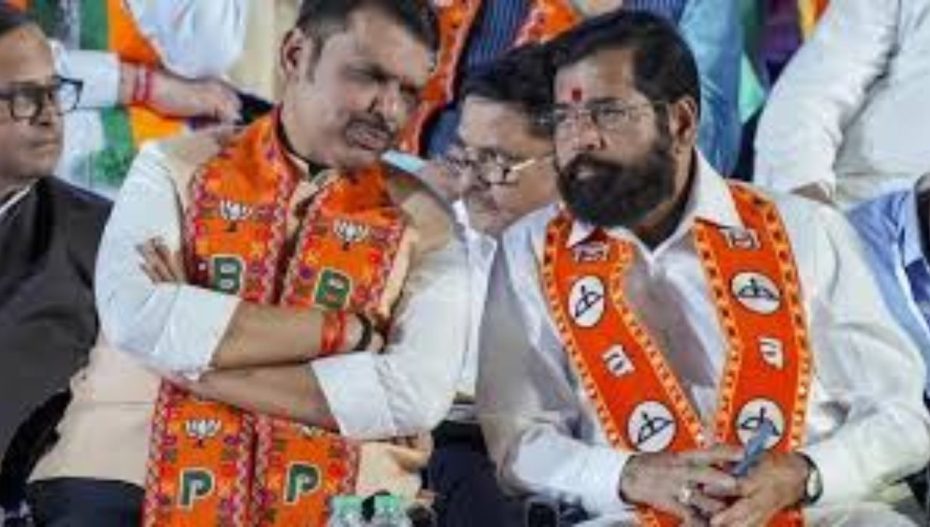
Party leaders have credited Chief Minister Devendra Fadnavis’s intensive campaigning and carefully scripted strategy.
They described Fadnavis as the biggest political winner of the civic polls. They told media outlets that he led from the front and shouldered most of the campaign responsibilities.
For the record, in Mumbai, the BJP surpassed its previous best performance of 82 seats registered in the 2017 BMC elections.
Senior leaders believe the improved result was the outcome of sustained ward-level work and meticulous planning. Fadnavis himself has taken personal interest in shaping the party’s strategy for the BMC polls.
Addressing BJP workers at the state party headquarters after the victory, Fadnavis was quoted as saying, “The BJP offered a developmental agenda. We put it before the people and they responded positively. We have received a record-breaking mandate in many municipal corporations and it underscores that people want honesty and development. That is why people voted for the BJP.”
Staking claim to the legacy of Shiv Sena founder Bal Thackeray, the chief minister said that Balasaheb’s blessings had helped the ruling party and the Eknath Shinde-led Shiv Sena secure victory.
The BJP and its ally had faced their principal challenge in Mumbai from Shiv Sena (UBT), led by Bal Thackeray’s son Uddhav Thackeray.
Fadnavis also said that the verdict reflected the trust of the people of Maharashtra in Prime Minister Narendra Modi and in the policies pursued by the BJP-led alliance.
BJP leaders in Mumbai said the chief minister focused on selecting candidates with a strong local presence and ensured that the campaign remained centred on civic issues such as roads, sanitation and infrastructure. This approach helped the party attract voters in areas where the Shiv Sena’s base had weakened after the party split. According to BJP functionaries, the results showed that voters responded positively to a party that appeared stable, organised and capable of running the city.
The party’s dominance in the three-tier local body polls, leaders said, was the result of a carefully planned and executed script that kept in mind Union Home Minister Amit Shah’s stated target of “shath pratishat BJP”, or 100% BJP, reflecting the party’s expansionist ambitions in Maharashtra politics.
Achieving this objective required navigating the state’s complex political permutations, where BJP workers often clashed with allies to protect local interests. Party sources said that amid repeated friction with the Shinde-led Shiv Sena over the poaching of grassroots leaders, Fadnavis intervened on several occasions to steer the alliance away from potential crises.
Fadnavis also campaigned in the civic polls with the intensity of an Assembly or parliamentary election, addressing multiple rallies each day, travelling across districts, and foregrounding governance and development as his central poll plank.
Senior BJP functionaries said that Fadnavis took the risk of shouldering the responsibility despite being aware that the coming together of the estranged Thackeray cousins, Uddhav and Raj, could mobilise an emotive plank of Marathi asmita.
He said that a conscious decision was therefore taken not to invite central BJP leaders, including Prime Minister Narendra Modi and Union Home Minister Amit Shah, to campaign in Mumbai, and that even Uttar Pradesh Chief Minister Yogi Adityanath was not asked to campaign. According to him, this was a tactical move aimed at denying the Thackerays an opportunity to fuel an anti-Gujarat or anti-North India narrative.
This formed part of a broader, multi-pronged strategy that also included an expansion drive overseen by state BJP president Ravindra Chavan.
Under this initiative, the BJP opened its doors to a large number of suitable candidates from Opposition parties. Leaders said this “tod fod ki rajneeti”, or politics of breaking up rival parties, had earlier helped the BJP at the state level, leading to splits in both the Shiv Sena and the Nationalist Congress Party, and was now extended to the taluka level by inducting smaller local players with their own spheres of influence, thereby weakening rivals.
Another key element was ensuring multi-cornered contests. While this exposed divisions within both the ruling Mahayuti and the Opposition Maha Vikas Aghadi, it largely benefited the BJP, which leaders said could overcome internal differences because of its superior access to resources and organisational manpower.
The Shiv Sena (UBT) allied with the Maharashtra Navnirman Sena, the Congress joined hands with the Vanchit Bahujan Aghadi, and in two civic bodies the Ajit Pawar-led NCP tied up with Sharad Pawar’s NCP (SP), fracturing any possibility of a broad anti-BJP consolidation.
To counter the Thackeray cousins’ Marathi asmita politics in the BMC, the BJP and Fadnavis also subtly pushed the Hindutva plank at various levels, believing it would override caste or community divisions. Party leaders said this helped consolidate the Hindu vote not only in Mumbai but also in other municipal corporations such as Nashik, Dhule, Chhatrapati Sambhajinagar, Akola and Nanded, where minorities constitute a significant proportion of the population.
Referring to this approach in his victory speech, Fadnavis said that the party’s agenda would always be development and that it would use its victory to transform people’s lives. He said that Hindutva had always been the party’s soul and that it could not be separated from development.
Also Read: Maharashtra Assembly Elections: Mahayuti Alliance Crosses 200 Seats https://www.vibesofindia.com/maharashtra-assembly-elections-mahayuti-alliance-crosses-200-seats/