


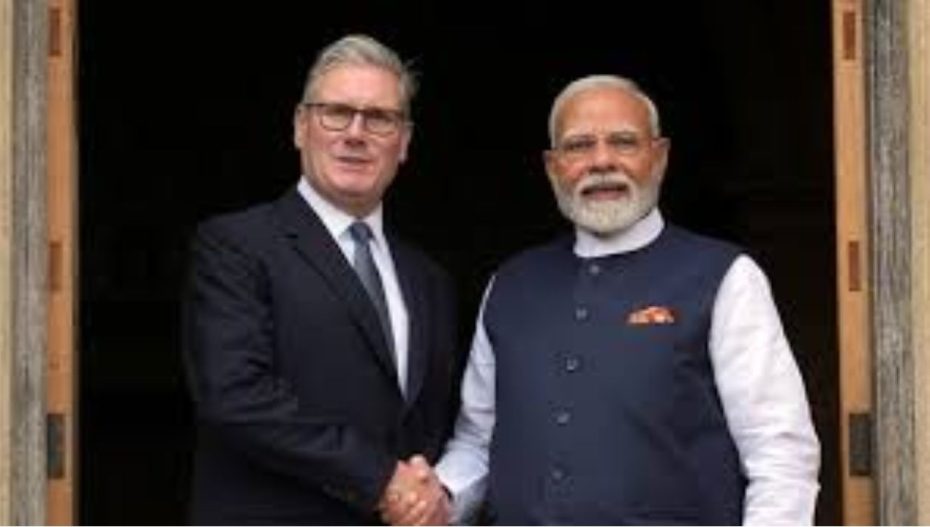
India and the United Kingdom signed a landmark Free Trade Agreement (FTA) that is projected to increase annual trade between the two countries by nearly $34 billion. On a lighter note, it’s Indian masala meeting UK marmalade as the two nations spiced up bilateral trade by nearly $34 billion a year.
The pact, formalised in London during Prime Minister Narendra Modi’s visit, saw Commerce Minister Piyush Goyal and UK Business Secretary Jonathan Reynolds representing the two sides.
Business analysts speaking to media houses believed this was India’s most ambitious trade deal in over a decade and the UK’s first major post-Brexit agreement.
According to financial analysts, the agreement would bring sweeping benefits to a wide range of stakeholders—from farmers and small businesses to professionals and exporters. Indian goods such as textiles, gems and jewellery, seafood, leather products, engineering items and processed foods will now enjoy near-zero duty access to the UK market.
British exports including aerospace parts, cars, whisky, chocolates, medical devices and cosmetics will face sharply reduced tariffs when entering India. The average rates will drop from 15 per cent to around 3 per cent, a business portal highlighted.
Understandably, “transformative” is the word used by analysts who believe the removal of tariffs on key Indian exports would drive job creation and accelerate growth in labour-intensive sectors.
They also pointed out substantial gains for Indian service professionals, including relaxed visa rules and a landmark social security arrangement. Consumers, the analyst added, would be the ultimate beneficiaries through improved choices and lower prices.
The software and services sector is expected to be among the biggest winners. Industry officials estimate that over 60,000 IT professionals annually could benefit, particularly those employed by major firms such as TCS, Infosys, Tech Mahindra, HCL Technologies and Wipro. The agreement opens up 35 sectors for Indian professionals to work in the UK for up to two years—without needing a local office.
Freelancers, chefs, musicians, yoga instructors and contract-based workers are also set to gain new opportunities under the expanded framework.
A key clause in the pact exempts Indian professionals on short-term assignments from paying UK social security contributions for up to three years. One expert from a consulting firm said this would ease both financial and compliance burdens for companies and employees. The arrangement allows employees to continue contributing to India’s social security system while working abroad, making overseas postings more efficient for global employers.
From the UK’s perspective, the FTA is expected to make 90 per cent of its exports to India cheaper, with 85 per cent of them becoming fully duty-free over the next ten years. British companies will also gain access to Indian government procurement contracts worth over Rs 2,000 crore, unlocking about 40,000 tenders annually. UK officials estimate the agreement could generate more than 2,000 new jobs and boost wages by £2.2 billion.
The Indian leather industry is eyeing an additional 5 per cent share of the UK market within two years, while exports of engineering and electronics are projected to double by 2030.
Where the scenario in other sectors is concerned, chemical exports are expected to rise by 40 per cent in the next fiscal. Additionally, software services are set for 20 per cent annual growth once the deal comes into force.
Prime Minister Modi described the FTA as a new roadmap for shared prosperity, with potential to significantly strengthen economic ties between the two nations.
Also Read: Gujarat Tribunal Overturns Government Claim, Declares 511 Acres In Naviyani As Private Land https://www.vibesofindia.com/gujarat-tribunal-overturns-government-claim-declares-511-acres-in-naviyani-as-private-land/