


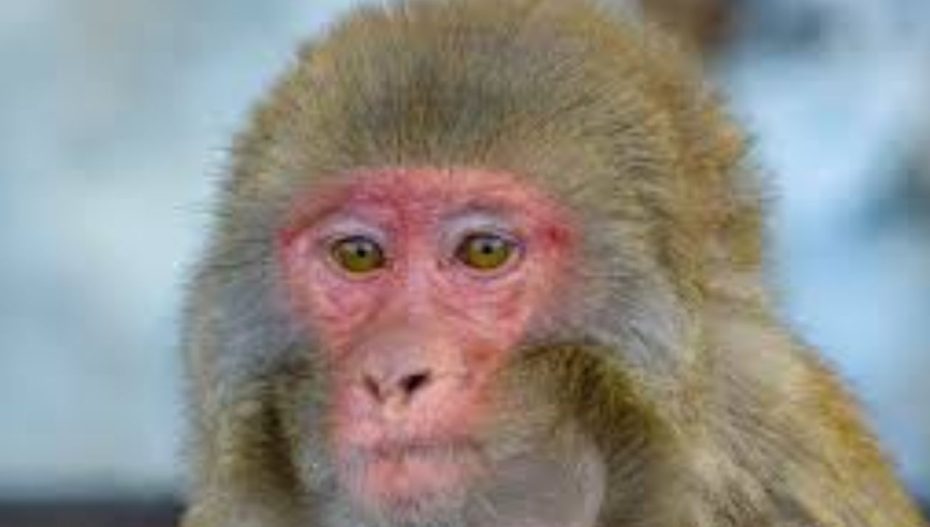
The unexpected presence of red-faced monkeys in the Bhesan area of Junagadh district, close to the Gir Wildlife Sanctuary in Saurashtra, has sparked serious concern among wildlife experts about the region’s ecological balance.
Former State Board for Wildlife (SBWL) member and wildlife photographer Bhushan Pandya has termed the development “alarming” and “potentially hazardous” for native species, urging the state government to step in without delay.
In a letter to Chief Minister Bhupendra Patel, who also heads the SBWL, Pandya said nearly 80 to 100 red-faced monkeys, scientifically known as Rhesus macaques and locally called mankda, have appeared suddenly in Chhodvadi village near Bhesan. Given the village’s proximity to the Gir Wildlife Sanctuary, he stressed the need for an urgent probe into how the animals reached the area.
According to a report in an English daily, Pandya explained that the Hanuman langur is the indigenous primate species of Saurashtra, while red-faced monkeys are native mainly to north and central India, with only limited populations in parts of south Gujarat. Their presence in this landscape, he warned, could disrupt the natural order.
“Even the introduction of a single outside element in a reserved or sensitive area is a serious matter,” Pandya wrote. “An invasive species competes directly with local fauna, which can have dangerous consequences for the entire ecosystem.”
Beyond ecological risks, the monkeys have already begun affecting local livelihoods. According to Pandya, farmers are reporting damage to rooftops, solar panels, water pipelines, and electricity and telephone cables. Crops are also being destroyed, raising fears of major losses to the prized Kesar mango orchards in the upcoming season.
“Farmers have erected walls and fences to protect their fields from blue bulls and wild boars, but such barriers are useless against mankda,” he noted in the letter.
The report further says that Pandya also cautioned that the monkeys could pose indirect risks to wildlife, including the Asiatic lion, as well as to agriculture across the region. He pointed out key behavioural differences between the species: Hanuman langurs are generally docile and herbivorous, whereas red-faced monkeys are aggressive and omnivorous.
There is also a health concern. Pandya warned that Rhesus macaques may carry viruses that could be deadly for Asiatic lions and other wild animals. “They live in large groups, which makes them bold and powerful. Their aggressive behaviour often creates fear in human settlements,” he added.
Calling for immediate action, Pandya appealed to the Chief Minister to ensure the capture and relocation of the monkeys to their native habitats before their population grows and spreads deeper into the Gir region.
“Any delay will only worsen the situation,” he cautioned. “If they are allowed to multiply and disperse, it may soon become nearly impossible to control or capture them.”
Also Read: Black Marketing Of Safari Permits Unearthed In Gir, Gujarat https://www.vibesofindia.com/black-marketing-of-safari-permits-unearthed-in-gir-gujarat/