From charting distant worlds to mastering complex operations in orbit, India has long established itself as a capable and ambitious spacefaring nation. The Chandrayaan missions, the de-docking of SpaDeX, and the Aditya-L1 solar observatory echo the call of Percy Bysshe Shelley’s “higher, still higher” in his poem, To a Skylark. That trajectory of ambition, however, faced a setback.
Isro’s PSLV-C62 mission has reportedly ended in failure with the loss of all 16 satellites on board. The launch itself appeared textbook-perfect, a media report claimed.
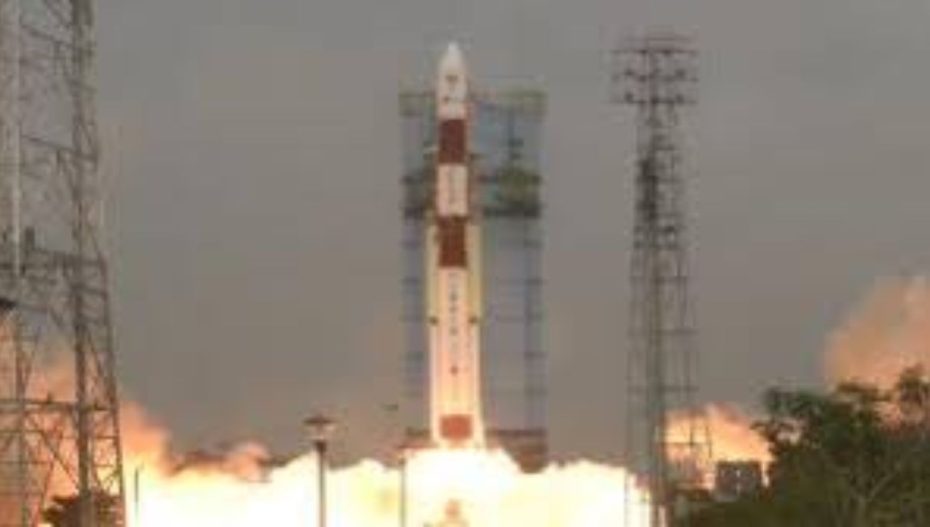
The 260-tonne PSLV-DL variant lifted off from Sriharikota at 10:17 am IST and performed nominally through the first two stages and separation. It drew applause and attention across the country.
However, there was a setback after third-stage ignition. According to reports, the telemetry stopped and confirmation of orbit insertion never arrived. It may be noted that the PSLV-C61 mission failed last year.
away on time, and there was no hint of trouble until the data stream went quiet. The silence inside mission control made it clear that the mission had not reached orbit and could not be recovered.
Isro chairman V. Narayanan later said the vehicle’s performance at the end of the third stage had initially been nominal, before engineers noticed a disturbance in roll rates and a deviation from the planned flight path. He indicated that the agency was analysing the data and would return with updates.
The mission was carrying DRDO’s EOS-N1 (Anvesha) as the primary payload for maritime surveillance, along with 15 co-passengers that included Indian student-built satellites, experiments from private firms and Spain’s KID re-entry demonstrator. All were bound for a 505-km sun-synchronous orbit.
The vehicle cleared solid booster separation without issue, but around eight minutes after liftoff the third-stage anomaly halted progress. The sequence mirrored the PSLV-C61 failure, where a chamber pressure drop during the PS3 stage had doomed EOS-09, and once again the flight deviated from its intended trajectory.
Isro confirmed that the PSLV-C62 mission encountered an anomaly during the end of the PS3 stage and that a detailed analysis had been initiated. The deviation will be examined by a Failure Analysis Committee, though no immediate root cause has been made public.
This is the PSLV’s second rare failure in eight months, affecting a launcher that had built a 94 per cent success record over 63 prior flights and had supported missions such as Chandrayaan-1 and Aditya-L1.
The repeat third-stage issue comes amid lingering questions following the unpublished findings of the C61 inquiry, raising concerns over solid-fuel motor performance, nozzle behaviour or casing integrity during an accelerated 2026 launch schedule.
With commercial rideshare missions marketed through NSIL, the setback also impacts confidence in India’s growing private space ecosystem.
The twin failures have reportedly cast a shadow over Isro’s 2026 plans, which include launching more than 100 satellites, expanding the NavIC navigation system and advancing preparations for the Gaganyaan human spaceflight programme, even as private competitors gain ground.
While the PSLV’s modular design is expected to allow corrective measures, continued opacity risks renewed scrutiny.
Meanwhile, chairman V Narayanan’s team has said it is focused on a rapid recovery, exploring alternatives such as the LVM3 while maintaining an emphasis on self-reliance under close global observation.
Also Read: Ton-Up ISRO Celebrates Momentous Occasion https://www.vibesofindia.com/ton-up-isro-celebrates-momentous-occasion/