


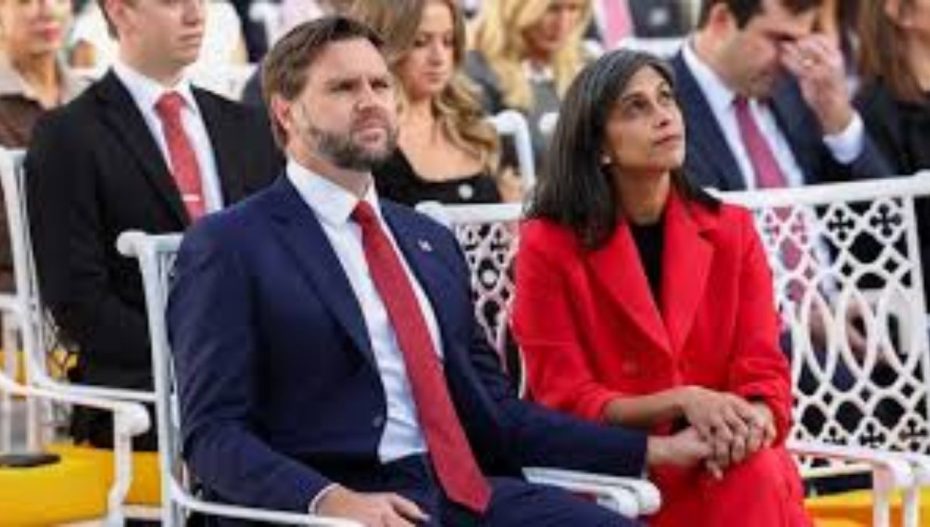
US Vice President J D Vance is facing fierce criticism after claiming that large-scale immigration amounts to “theft of the American Dream,” a remark that opponents have denounced as xenophobic and politically opportunistic. The controversy has only grown as critics highlight Vance’s own family ties to immigration through his wife, Usha, the daughter of Indian immigrants.
The uproar began when Vance posted on X that mass migration deprives American workers of opportunities, accusing researchers who dispute his claims of being funded by “people getting rich off the old system.” The response was swift. Author and commentator Wajahat Ali blasted the post, suggesting that Vance’s logic would mean “sending Usha, her Indian family, and your biracial kids back to India.”
Vance’s comments on immigration come amid continued scrutiny of his views on race, culture and faith. In a recent appearance on a New York Post podcast, he said it was “totally reasonable” for Americans to prefer neighbours who share their race, language or skin colour — a statement denounced by civil rights groups as reinforcing racial division.
The vice president has long echoed the rhetoric of former President Donald Trump, and in the same interview he criticised the Biden administration for what he called a “divisive” immigration policy. Asked whether a returning Trump administration would remove all undocumented migrants, he replied, “We’re trying to remove as many as we possibly can.”
Vance also faced backlash last month for comments about his wife’s Hindu faith. Speaking at a Turning Point USA event, he said he hoped Usha would eventually become Christian, noting that she accompanies him to church. Critics called the remark dismissive of her beliefs. Vance later clarified that his wife “has no plans to convert” and that he respects her religious identity.
The furor around Vance’s rhetoric coincides with a sweeping new immigration directive from the Trump administration. On December 3, US Citizenship and Immigration Services (USCIS) announced a sudden halt to all immigration-related applications — including green card, citizenship and asylum processes — for applicants from 19 countries previously identified in earlier travel bans.
The move followed heightened security concerns after an Afghan asylum seeker fatally shot a National Guard member in Washington, DC. The new policy pauses decisions on more than 2.2 million asylum cases and mandates re-interviews for refugees admitted under the previous administration, effectively blocking thousands of families, workers and students from advancing their applications.
Political analysts say Vance’s recent comments are part of a broader strategy aimed at converting economic anxiety into cultural grievance. While some studies do show that rapid, unregulated migration can exert downward pressure on wages in certain low-skill sectors, experts argue that Vance’s framing ignores the broader economic contribution of immigrants, who play a role in roughly a quarter of annual US GDP growth.
Opponents also note the personal contradictions in his stance: Vance’s own family story is tied to immigrant success. With Asian Americans now making up a growing share of the electorate and Hispanic voters remaining pivotal in swing states, analysts warn that racially charged messaging risks alienating key demographic groups.
Many argue that the political focus should shift from polarising rhetoric to bipartisan solutions that bolster border security while maintaining humane pathways for legal immigration. Some observers say Vance could strengthen his credibility by highlighting Usha Vance’s success as an example of how the American Dream can thrive when immigration is managed responsibly.
As the debate intensifies, one thing is clear: immigration — and the language used to discuss it — will remain at the center of the national conversation.
Also Read: Is Vance Jealous of Trump and Mamdani?! https://www.vibesofindia.com/is-vance-jealous-of-trump-and-mamdani/