


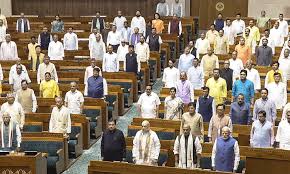
In a move to tackle the rising menace of online gambling, the Parliament has approved a sweeping bill to ban money-based online games altogether. This new law cracks down not just on the games themselves, but also on their promotion and the financial pipelines that keep them running—aiming to shut down a growing source of addiction and misuse of funds. The message is clear: the era of online money games is coming to an end.
According to reports, the Parliament has passed a bill seeking to ban the operation, facilitation, and advertising of online games involving money. The session was reportedly marked by protests from the Opposition. They demanded a discussion on the Election Commission’s special intensive revision of electoral rolls in Bihar.
For the records, India’s online gaming market is booming, currently valued at $3.7 billion and expected to more than double to $9.1 billion by 2029. But here’s the catch—nearly 86% of today’s revenue comes from real-money games.
E-sports are defined as competitive, skill-based games played in virtual arenas following recognised rules and standards. The government is now exploring the possibility of recognising professional tournaments, organised competitions, and gaming itself as a sport, another report claimed.
The Promotion and Regulation of Online Gaming Bill was cleared in the Rajya Sabha through a voice vote, a day after it had been passed in the Lok Sabha. The legislation proposes that playing, facilitating, or advertising online money games could lead to imprisonment of up to three years and/or a fine of up to Rs 1 crore.
The general apprehension, as a national daily pointed out, is that these platforms also serve as potential messaging and communication grounds for terror organisations, and offshore entities circumventing Indian tax and legal obligations.
Presenting the bill in the Upper House, Electronics and Information Technology Minister Ashwini Vaishnaw likened money-gaming addiction to drug addiction. He warned that powerful interests behind online money games would likely challenge the legislation in court and launch social media campaigns against the ban. He also claimed that the proceeds from such games had been used to support terror activities, and that their harmful impact had already been witnessed.
According to the bill, an online money game is defined as one where users deposit money with the expectation of winning financial or other rewards.
The legislation seeks to outlaw all forms of online betting and gambling—ranging from fantasy sports and card games like Poker and Rummy to online lotteries—under the broader terms of satta and jua.
It further aims to prohibit advertisements promoting such games and restrict banks and financial institutions from facilitating any related transactions.
The proposed punishments vary depending on the nature of the offence.
Advertising money-based online games may lead to up to two years in jail and/or a fine of Rs 50 lakh. Facilitating financial transactions for these games could attract up to three years’ imprisonment and/or a fine of Rs 1 crore. Repeat offenders will face harsher penalties. There will be jail terms between three and five years and fines up to Rs 2 crore.
Also Read: Insurance May Not Be Economical Even With GST Change And Here’s Why… https://www.vibesofindia.com/insurance-may-not-be-economical-even-with-gst-change-and-heres-why/