A fresh controversy has erupted at the Oxford Union following claims by its Pakistani president, Moosa Harraj, that Pakistan had “won” a debate on India’s policy towards its neighbour—despite the event never taking place in the form projected. The episode has drawn renewed attention to a separate student-led debate held earlier in November, where an Indian law student forcefully challenged Pakistan’s narrative on terrorism and security.
The disputed motion read: “This House believes that India’s policy towards Pakistan is a populist strategy sold as security policy.” While a high-profile debate featuring Indian and Pakistani politicians and intellectuals was announced, Indian invitees later said the process was manipulated, with invitations sent too late for them to participate. Pakistan subsequently claimed a walkover victory, triggering criticism from Indian participants.
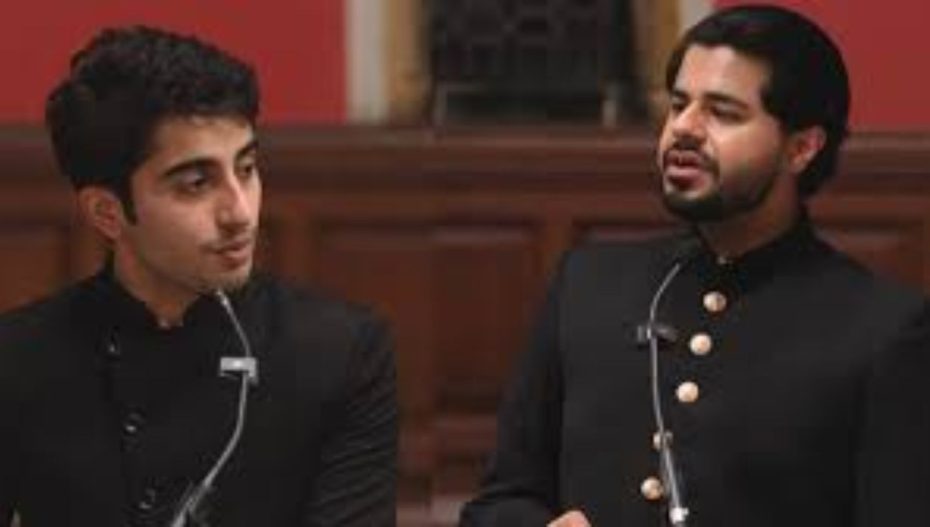
However, a separate Oxford Union student debate on the same motion did take place in November. Its video, uploaded only recently, has now gone viral—largely due to the performance of Viraansh Bhanushali, a Mumbai-born law student at Oxford, who led the Indian side and sharply dismantled Pakistan’s arguments.
Bhanushali opened his speech with a deeply personal account of the November 26, 2008 Mumbai terror attacks, delivered just a day after the anniversary of the tragedy. He spoke of growing up in Mumbai amid repeated terror strikes, recalling how his aunt narrowly escaped death at Chhatrapati Shivaji Maharaj Terminus and how the city endured three nights of fear as Lashkar-e-Taiba terrorists carried out coordinated attacks that killed more than 160 people.
“I share this not to darken the mood,” he told the House, “but to ground this debate in reality.” He pointed out that the suburban station near his home was also hit during the 1993 serial blasts, underscoring that terrorism has been a lived experience for many Indians—not an abstract political talking point.
Responding to the motion, Bhanushali rejected the claim that India’s security posture towards Pakistan is driven by electoral populism. “To win this debate, I don’t need rhetoric,” he said. “I just need a calendar.” He cited terror attacks spanning decades—often far removed from election cycles—to argue that India’s actions were responses to sustained violence, not vote-bank politics.
Referring to the aftermath of 26/11, he argued that a truly populist government might have rushed into war to capitalise on public anger. Instead, India exercised restraint, pursued diplomacy, and shared evidence with the international community. “Did that bring peace?” he asked, listing subsequent attacks such as Pathankot, Uri and Pulwama.
Turning to recent events, Bhanushali addressed allegations that India’s military response earlier this year was election-driven. He pointed out that the general elections were already over when terrorists linked to The Resistance Front attacked civilians in Pahalgam, killing people solely based on their faith. “They didn’t ask who they voted for,” he said.
He also explained the symbolism behind Operation Sindoor, describing it as a tribute to the widows left behind by the attack. According to him, India’s response was limited, targeted and restrained—focused on dismantling terror launchpads without escalating into a broader conflict. “That is not populism,” he said. “That is professionalism.”
In one of the speech’s most widely shared moments, Bhanushali accused Pakistan of using conflict as spectacle. “When India fights a war, we debrief pilots,” he said. “In Pakistan, they autotune the chorus.” He argued that Islamabad diverts domestic discontent by manufacturing external threats, adding that India’s goal is stability and normalcy, not perpetual hostility.
The debate itself was conducted in a cordial yet charged atmosphere. Harraj, who led the Pakistani side and is the son of Pakistan’s federal defence production minister Muhammad Raza Hayat Harraj, attempted to characterise India’s position as reflexively blaming Pakistan for all ills. Bhanushali’s response, however, anchored India’s stance in lived experience, historical record and policy choices.
The controversy surrounding the earlier “cancelled” debate—where Indian invitees like advocate-author J Sai Deepak and MP Priyanka Chaturvedi said invitations were mishandled—has only amplified attention on the student discussion. Critics have accused Harraj of orchestrating confusion to claim an unearned victory.
As clips from the student debate circulate widely, many see it as a reminder that while platforms can be politicised, arguments rooted in facts and history carry weight. For supporters of Bhanushali’s position, his message was simple: when it comes to terrorism, India’s stance is shaped not by populism, but by decades of repeated attacks—and the calendar bears witness to that reality.
Also Read: Declared Deserter By Pak Army, Rana Closely Studied Mumbai Before 26/11 Attacks https://www.vibesofindia.com/declared-deserter-by-pak-army-rana-closely-studied-mumbai-before-26-11-attacks/