


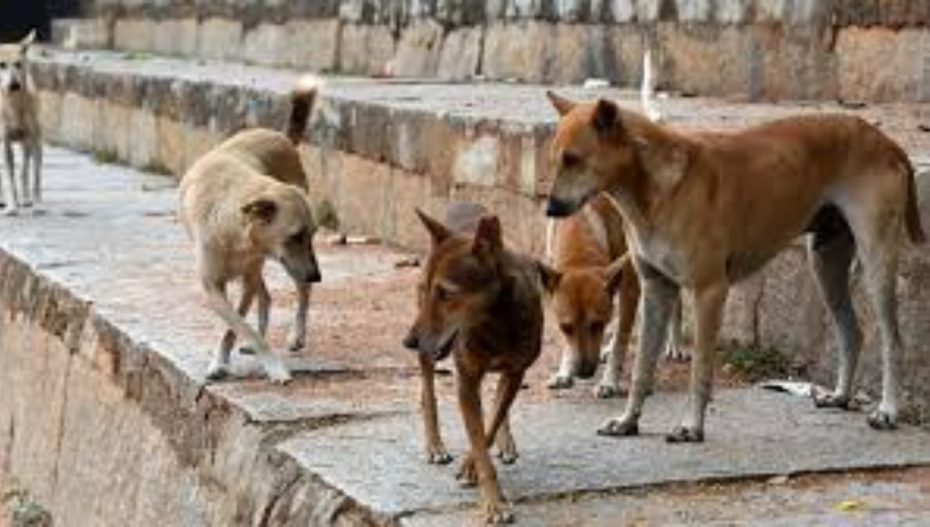
The Supreme Court on Wednesday examined multiple interlocutory pleas linked to the ongoing stray dog matter, with a three-judge bench expressing serious concerns about public safety, particularly on roads and highways.
The bench, comprising Justices Vikram Nath, Sandeep Mehta, and N V Anjaria, observed that it is impossible to predict animal behaviour, noting that no one can determine when a dog may turn aggressive. Stressing the importance of proactive measures, the court remarked that preventing harm is far better than dealing with its consequences later.
Highlighting the risks posed by stray dogs, the judges questioned their presence in public spaces such as roads, educational institutions, and government premises. They pointed out that even if dogs do not attack, their presence on streets can still lead to accidents and endanger human lives.
Referring to earlier directions, the bench recalled that guidelines under the Animal Birth Control (ABC) Rules were issued as far back as 2018. The court sought clarity on the status of their implementation, asking why ordinary citizens should continue to suffer due to administrative inaction. The matter has been listed for further hearing on Thursday.
According to media reports, during the proceedings, senior advocate Kapil Sibal, appearing for the petitioners, explained that aggressive or unruly dogs could be reported to designated centres, where they would be sterilised and later released back into their local areas. Reacting to this submission, the court remarked wryly that counselling dogs to ensure they do not bite after release seemed to be the only missing component of the system.
The bench reiterated that the problem extends beyond dog bites. Stray dogs running across roads pose a serious threat to traffic safety, potentially causing accidents involving moving vehicles. When Sibal argued that dogs are generally found within compounds and not on roads, the court countered that such information appeared outdated, once again emphasising the need to keep roads free of stray animals, media reports said.
Solicitor General Tushar Mehta, representing the Centre, suggested that Resident Welfare Associations (RWAs) in gated communities should be empowered to decide whether stray dogs are permitted within their premises.
While acknowledging compassion for animals, he underlined the need to balance human convenience and safety. Drawing an analogy, he questioned whether residents would tolerate other animals, such as livestock, being brought into housing societies, pointing out that such situations could inconvenience others.
In view of the increasing number of dog-bite incidents, the Supreme Court on November 7 last year ordered the removal of stray dogs from sensitive locations such as schools, hospitals, bus terminals, railway stations, and sports complexes. The court directed authorities to transfer these animals to designated shelters and ensure they are not released back into the same locations.
The bench, which is overseeing the issue through a suo motu case, had instructed local bodies to carry out regular inspections to prevent the formation of stray dog habitats in institutional areas. It warned that repeated dog-bite cases in such places indicate both administrative negligence and a broader systemic failure to safeguard public spaces.
In a separate ruling delivered in July last year, the Supreme Court described the stray dog situation in Delhi and neighbouring areas as “extremely grim.” The court ordered that stray dogs be relocated from residential neighbourhoods to shelters equipped with trained professionals capable of handling, sterilising, and vaccinating the animals.
The court also cautioned that any individual or organisation obstructing authorities from capturing stray dogs would face strict legal action. However, it clarified in later hearings that dogs could be returned to their original areas after sterilisation and immunisation—except in cases involving rabies-infected, suspected rabies-infected, or aggressively behaving animals.
Additionally, municipal authorities were directed to create designated feeding zones for stray dogs, making it clear that feeding them in public spaces would not be permitted and would attract stringent action if violated.
Also Read: Supreme Court Orders Removal Of All Stray Dogs From Residential Areas In Delhi NCR https://www.vibesofindia.com/supreme-court-orders-removal-of-all-stray-dogs-from-residential-areas-in-delhi-ncr/