

Sulekha Malini (name changed) doesn’t know if she can vote. Her name was on the rolls last year. Now it’s under review. She and many others comprise nearly 60 lakh voters in West Bengal whose eligibility is being questioned. The last date to add the names back to the rolls is April 6.
Nobody has told her what happens if the paperwork doesn’t come through in time.
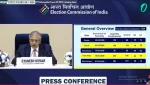
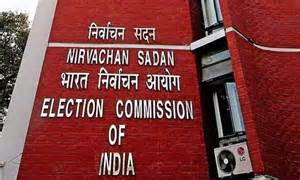
Her uncertainty sits at the heart of an election already mired in controversy. The Election Commission of India has announced its schedule for polls across four states and one Union Territory. On paper, it’s routine.
More questions than answers
In practice, it has raised more questions than it has answered.
Chief Election Commissioner Gyanesh Kumar has reportedly promised that every eligible voter will be included and every ineligible name removed. But for the 60 lakh voters like Sulekha Malini still caught in the system, a promise is not a process.
The schedule itself is striking. In contrast to the trend of increasing phases in states politically problematic for the BJP, West Bengal has been compressed into just two (152 seats in the first phase, 142 in the second). The history is worth spelling out: 2014 Lok Sabha polls saw five phases; 2016 Assembly polls, six; 2019 Lok Sabha, seven; 2021 Assembly, eight; 2024 Lok Sabha, seven. Now, two.
Assam, which had three phases in 2021, now has one. The campaign window has been cut to its legal minimum (24 days). The Commission moved fast too, issuing the formal Gazette notification within a day of the announcement, departing from earlier practice where a gap of several days was the norm.
The Commission has not provided a detailed explanation.
In 2021, it cited COVID-19, security threats, logistical challenges, and Bengal’s geographic complexity to justify the extended timeline. Those reasons were offered in detail. This time, CEC Kumar said only that a shorter calendar was “more convenient for all involved.”
Worth noting is that COVID-19 became a full-blown national crisis between late March and mid-April. That is well after the elections were called in late February. The pandemic, in other words, raises questions about how central a justification it was. Convenient for whom, exactly, remains unclear.
The comparison with 2021 is pointed. Polls that year were announced on February 26, more than a fortnight earlier than this year. No explanation has been offered for the delay. Opposition leaders don’t need to spell it out. They will anyway on the campaign trail.
Green signal
What was happening in the intervening period is not hard to trace. Critics allege that the Commission announced the schedule only after PM Modi completed his four-day inauguration drive across the poll-bound states, and only after the poll body received the “green signal.” From March 11 to 14, PM Modi toured Tamil Nadu, Kerala, Assam, and West Bengal.
Over Rs 82,000 crore worth of projects were launched. In Tamil Nadu and Kerala alone, projects worth approximately Rs 16,450 crore were unveiled, including projects worth Rs 5,650 crore in Tiruchirappalli alone.
In Tiruchirappalli, Modi spoke about Tamil Nadu’s future and the Centre’s development agenda. In Assam, he addressed a rally in Kokrajhar virtually, held back by bad weather, and used the occasion to attack Congress for keeping “many generations of Bodoland entangled in false dreams.”
In Guwahati, he performed Bhoomi Poojan for projects worth Rs 19,680 crore, including the Kamakhya Temple ropeway, invoking the blessings of Maa Kamakhya ahead of Navratri. In Silchar, official announcements carried political messaging.
In Kolkata, he accused Mamata Banerjee’s government of failing Bengal’s Hindus. Of opposing the CAA. Of looking away.
The tour ended March 14. The schedule was announced March 16.
Political observers did not view this as a coincidence.
The political response has been predictable and revealing. In 2021, Trinamool Congress attacked the multi-phase schedule. BJP defended it. Now the positions have swapped.
Critics have argued that since 2014, the Commission’s autonomy has been quietly eroding — that extended phases suited the ruling party’s organisational machinery, and that BJP’s enthusiasm for multiple phases in 2021 was not incidental. The Commission’s logic this time appears limited.
Some observers see the reduced phases as an attempt to rehabilitate the Commission’s image, battered by criticism and an impeachment motion against Kumar. Others are less generous.
The SIR controversy has been particularly acute in West Bengal, but it isn’t limited to the state.
Concerns have surfaced in Tamil Nadu too. Around 500 judicial officers, appointed following the Supreme Court’s February 20 order and working under the supervision of the Calcutta High Court, are racing against the clock to clear voter names.
The deadlines to add names to the rolls are April 6 and April 9, the nomination filing cutoffs for Bengal’s two phases.
What happens to voters cleared after those dates? The Commission hasn’t said. It is, by any measure, uncharted territory.
The campaign, meanwhile, has started unevenly. In Kerala, the Left didn’t wait. The CPI and CPI(M) had their candidates out within an hour of the schedule being announced and immediately hit the ground.
The Indian National Congress and the Indian Union Muslim League, by contrast, are still locked in seat-sharing negotiations.
Assam, Kerala, and Puducherry all vote by April 9. It’s a tight window by any measure.
West Bengal is where the attention is…
West Bengal is the election everyone is watching. It is, in the BJP’s own reckoning, the last frontier in its push through eastern India. Every state going to the polls matters — each result will shape the national mood ahead of the 2029 Lok Sabha elections.
But West Bengal commands the most attention. It is shaping up as a direct contest between PM Modi and Mamata Banerjee, two contrasting visions pitched against each other. The TMC’s slogan of protecting Bengali asmita, of keeping outsiders out. The BJP’s call for parivartan, for change.
Between them, somewhere in the noise, are the likes of Malini. Still waiting. Still uncertain. Still not sure if her vote will count.
Also Read: ECI Revises SIR Schedule In 12 States, Including Gujarat https://www.vibesofindia.com/eci-revises-sir-schedule-in-12-states-including-gujarat/