


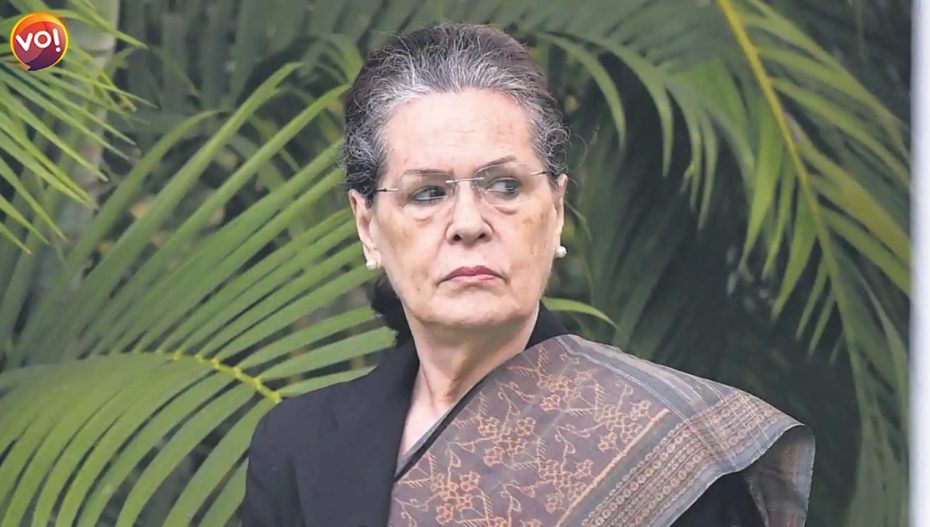
Congress Parliamentary Party chairperson Sonia Gandhi has mounted a sharp attack on the Narendra Modi-led government over its response to the assassination of Iran’s Supreme Leader, Ayatollah Ali Khamenei, calling New Delhi’s stance a troubling departure from India’s long-held diplomatic principles.
In an opinion piece published on Tuesday in a newspaper, Gandhi argued that the government’s failure to clearly condemn the targeted killing raises “serious doubts” about the credibility and direction of India’s foreign policy. She said the issue must be openly debated when Parliament reconvenes for the second half of the Budget session.
‘Silence Is Not Neutral’
Khamenei was killed in the early hours of Saturday in a coordinated strike carried out by the United States and Israel, according to Iranian authorities. The assassination, Gandhi noted, occurred without a formal declaration of war and while diplomatic negotiations were reportedly ongoing. She described the incident as a grave rupture in international norms.
Referring to Article 2(4) of the United Nations Charter, which prohibits the use of force against the territorial integrity or political independence of any state, Gandhi said the targeted killing of a sitting head of state strikes at the core of the rules-based international order.
She criticised the Indian government for not condemning what she termed a violation of Iranian sovereignty. According to her, Prime Minister Narendra Modi initially condemned Iran’s retaliatory strike on the UAE but did not address the sequence of events leading up to it. Later statements expressing “deep concern” and calling for dialogue were insufficient, she argued, especially since diplomatic efforts were already underway before the attack.
“At moments when the international order is under visible strain, silence is abdication,” Gandhi said, adding that neutrality in such circumstances cannot be equated with principled restraint.
Concerns Over Strategic Signalling
Gandhi also questioned the timing of India’s position, pointing out that the Prime Minister had returned from Israel just 48 hours before the assassination, where he reiterated support for the government of Benjamin Netanyahu. She suggested that India’s perceived alignment, without a parallel assertion of moral clarity, may signal tacit endorsement of actions that undermine sovereignty.
She contrasted the government’s stance with that of several Global South nations and even India’s BRICS partners such as Russia and China, many of whom have maintained distance from the escalating conflict.
The Congress party, she said, has condemned the bombings and targeted assassinations in Iran, describing them as a dangerous escalation with serious regional and global consequences. The party has also extended condolences to the Iranian people and reiterated India’s constitutional commitment to peaceful dispute resolution under Article 51.
Invoking India’s Diplomatic Legacy
Gandhi invoked India’s historical foreign policy ethos, rooted in sovereign equality, non-intervention and the peaceful settlement of disputes. She cited former Prime Minister Atal Bihari Vajpayee’s 2001 visit to Tehran, during which he reaffirmed India’s civilisational and strategic ties with Iran.
India, she argued, has long projected itself as a voice for justice and restraint in global affairs. The current hesitation, she said, appears inconsistent with that legacy and risks weakening India’s standing among developing nations.
“If India appears reluctant to defend sovereignty today, why should countries of the Global South trust it to defend that principle tomorrow?” she asked.
Call For Parliamentary Debate
Gandhi maintained that the matter cannot remain confined to diplomatic briefings. The targeted killing of a foreign head of state, she said, directly affects India’s strategic interests and moral commitments. She demanded a full discussion in Parliament once it reconvenes, insisting that democratic accountability requires clarity.
Reiterating India’s long-invoked civilisational ideal of vasudhaiva kutumbakam — the world is one family — Gandhi said the principle must translate into consistent support for justice, dialogue and international law, even when geopolitics makes it uncomfortable.
With instability widening across West Asia and global tensions rising, she concluded that India must clearly articulate its position. “Strategic clarity and moral conviction,” she wrote, “are not optional — they are essential.”
Also Read: ‘World Needs Peace’: Opposition Reacts To US-Israel Strikes On Iran https://www.vibesofindia.com/world-needs-peace-opposition-reacts-to-us-israel-strikes-on-iran/