

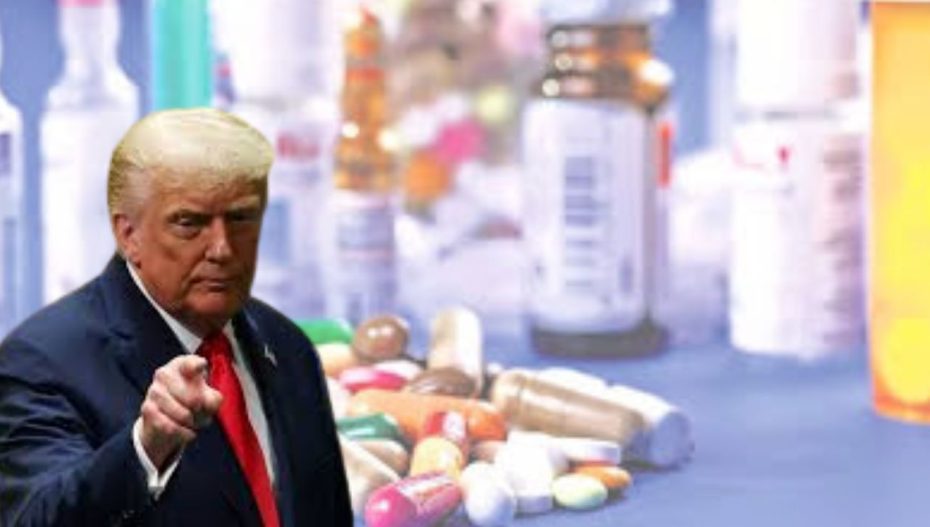
With the US election season heating up, Donald Trump has returned to the familiar battlefield of tariffs. His latest target: the global pharmaceutical supply chain. In a bold and dramatic escalation, he has threatened to hit some of the world’s largest drug exporters with crushing duties.
India, the pharmacy of the world, stands directly in the line of fire.
In a fresh salvo, he announced new tariffs on pharmaceutical imports.
“Starting October 1st, 2025, we will be imposing a 100 per cent Tariff on any branded or patented Pharmaceutical Product, unless a Company IS BUILDING their Pharmaceutical Manufacturing Plant in America,” the Republican leader said on Truth Social.
Pharma, the focus
Trump’s posts showed that his devotion to tariffs did not end with the trade frameworks and import taxes that were launched in August, a reflection of the president’s confidence that taxes will help reduce the government’s budget deficit while increasing domestic manufacturing.
““IS BUILDING” will be defined as, “breaking ground” and/or “under construction.” There will, therefore, be no Tariff on these Pharmaceutical Products if construction has started. Thank you for your attention to this matter,” he added.
The move extends Trump’s tariff push from earlier in the year.
In August, he introduced new duties on multiple imports. He claimed tariffs would help fix the federal deficit and boost US manufacturing.
Now, the pharmaceutical industry has become the latest focus.
How it will affect India…
The announcement has rattled India’s pharma sector. India is the largest supplier of generic drugs to the US.
According to reports, in FY24, the country exported Rs 2.32 lakh crore worth of pharma products. Of this, Rs 77,138 crore, or 31%, went to the US.
In the first half of this year alone, India exported Rs 32,505 crore to the US.
Firms like Dr Reddy’s, Aurobindo Pharma, Zydus Lifesciences, Sun Pharma, and Gland Pharma earn 30–50% of their total revenues from the US market.
India supplies over 45% of all generic medicines used in the US. It also contributes 15% of the country’s biosimilar drug imports.
Though the tariffs focus on branded and patented medicines, uncertainty hangs over complex generics and speciality drugs.
Some Indian companies already have plants in the US. That may protect them even if partially. But others, especially those operating on thin margins, face a stark challenge.
If the tariffs apply to their products, they may not be able to absorb the cost. They may have to pass it on to American consumers. Or exit the market in a worst-case scenario.
For the US, this risks drug shortages and rising healthcare costs. Low-cost generics from India have long helped Americans access affordable treatment.
Trump gave no detailed legal basis for the tariffs.
He justified the move by citing “National Security and other reasons.” It appeared to stretch the limits of presidential authority.
Alongside pharmaceuticals, Trump also announced new duties on:
· Kitchen cabinets and bathroom vanities: 50%
· Upholstered furniture: 30%
· Heavy trucks: 25%
He has also imposed 50% tariffs on Indian imports.
This includes an added 25% penalty for India’s continued purchase of Russian oil.
The tariff offensive is both political and economic. But for India’s pharma industry, the consequences could be real and immediate.
Also Read: Whatsapp Status Dispute Sparks Communal Violence In Gandhinagar Village; Over 70 Arrested https://www.vibesofindia.com/whatsapp-status-dispute-sparks-communal-violence-in-gandhinagar-village-over-70-arrested/