

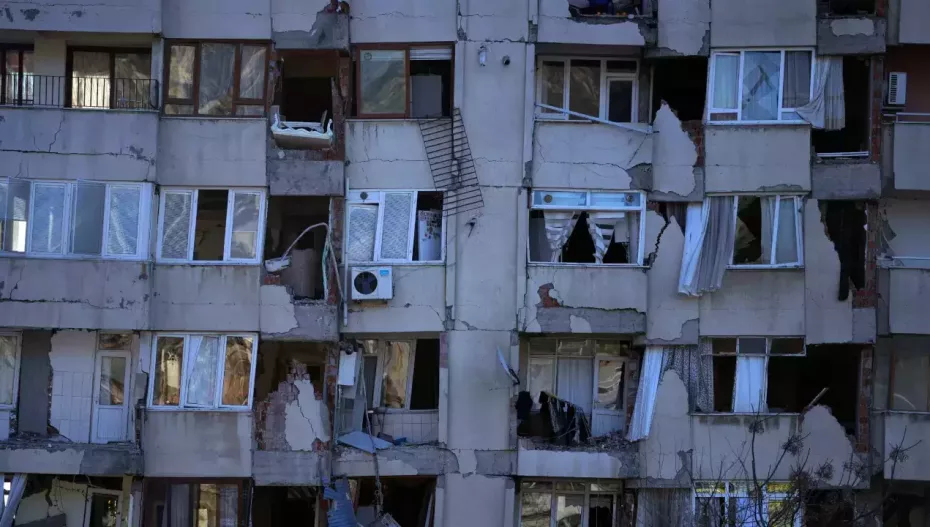
The death toll from the earthquakes in Turkey and Syria reached 33,185 on Sunday. Early on February 6, a 7.8-magnitude earthquake struck close to the Turkish city of Gaziantep. It was followed by multiple aftershocks and another 7.5-magnitude earthquake that caused extensive damage.
On Sunday, 131 people were named by Turkish justice officials as having a connection to the construction of the quake-damaged buildings. Bekir Bozdag, Turkey’s justice minister, claimed that 131 people were being looked into for their alleged involvement in the construction of structures that weren’t built to resist earthquakes.
According to the justice ministry of Turkey, three people were imprisoned, seven others were detained, and seven others were prevented from leaving the country. “We will follow this up meticulously until the necessary judicial process is concluded, especially for buildings that suffered heavy damage and buildings that caused deaths and injuries,” Turkish Vice President Fuat Oktay said.
Although he claimed the situation had been brought under control last week, Turkish President Recep Tayyip Erdogan acknowledged that damaged transport lines made it difficult to distribute help.
A representative for the UN noted that in Syria, approval concerns with the Islamist organisation Hayat Tahrir al-Sham have slowed the delivery of aid from government-controlled areas into territories governed by opposition parties. The nation has spent the last 12 years fighting a civil war.
The chief of the World Health Organization, Tedros Adhanom Ghebreyesus, claimed that the earthquake, Covid-19, cholera, economic downturn, and conflict have combined to cause an unacceptable toll on Syrians.
Syrians are “looking for international help that hasn’t arrived,” according to Martin Griffiths, the United Nations’ Under-Secretary-General for Humanitarian Affairs, who visited the Turkish-Syrian border on Sunday.
Also Read: Sarojini Naidu Birth Anniversary: India Celebrates National Women’s Day