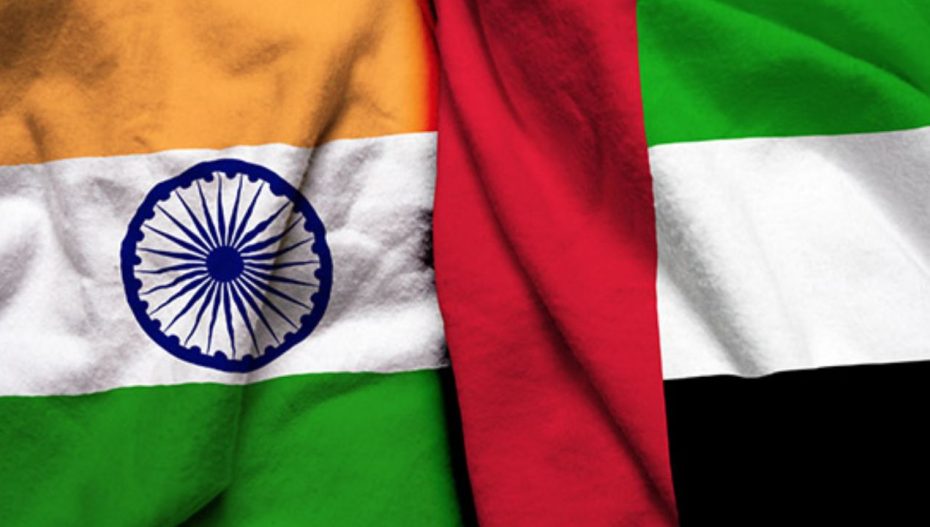
The United Arab Emirates has reportedly withdrawn from a proposed plan to operate Islamabad International Airport, dealing a late setback to Pakistan and underscoring changing geopolitical equations in the region.
The proposal had been under discussion since August 2025 but now appears to have been quietly dropped.
According to a report by Pakistani daily The Express Tribune, the UAE abandoned the plan after failing to find a suitable Pakistani partner to whom airport operations could be subcontracted, despite showing early interest in the project. Sources cited by the newspaper said the lack of a local operating partner ultimately stalled the arrangement.
The development follows closely on the heels of Sheikh Nahyan’s brief but high-profile three-hour stopover in New Delhi — a visit that generated widespread attention across South Asia. While no official connection has been drawn, the timing has led to speculation that broader diplomatic shifts triggered by the visit may have indirectly worked against Islamabad’s interests.
Notably, the reported collapse of the airport plan comes at a time of visible strain between two long-time Gulf allies — the UAE and Saudi Arabia. Once closely aligned, Abu Dhabi and Riyadh are now engaged in an unusually open disagreement over their backing of rival factions in Yemen. Although Pakistani media reports have not directly linked the UAE’s decision to these tensions, the overlap in timing has been hard to ignore.
The setback also comes as Pakistan deepens its strategic alignment with Saudi Arabia. In September 2025, Islamabad and Riyadh signed a defence agreement under which an attack on one would be treated as aggression against both. Reports have also spoken of Pakistan’s interest in building a broader security framework — sometimes described as an “Islamic NATO” — alongside Saudi Arabia and Turkey.
In contrast, the UAE has taken a markedly different route by expanding defence cooperation with India. Earlier this month, Prime Minister Narendra Modi and UAE President Mohamed bin Zayed welcomed the signing of a Letter of Intent aimed at concluding a Strategic Defence Partnership during the latter’s visit to New Delhi. While Saudi Arabia has increasingly leaned on Pakistan’s military expertise, Abu Dhabi has moved to cement new security arrangements with India.
The airport episode also reflects the broader cooling of Pakistan–UAE relations over time. Nearly four decades ago, the UAE was among Pakistan’s most important trading partners and a major source of remittances, with large numbers of Pakistani workers employed across multiple sectors. The two countries also worked together on defence, energy and investment initiatives. However, ties have gradually weakened due to concerns over safety, licensing disputes and Pakistan’s ageing infrastructure.
Recent assessments have pointed to governance failures and political interference causing heavy losses at Pakistan’s state-owned enterprises, many of which have been pushed towards distress sales. Pakistan International Airlines was privatised last year, highlighting the scale of structural and management challenges faced by the country.
Meanwhile, India–UAE relations continue to move in the opposite direction. Following the UAE leader’s visit to Delhi last week, Abu Dhabi approved the release of 900 Indian prisoners — a step widely interpreted as a goodwill gesture. During the visit, both sides reviewed their entire bilateral relationship and agreed that the Comprehensive Strategic Partnership has matured into a more ambitious and multi-layered engagement. The joint statement issued after the talks was widely seen as a long-term roadmap, with the push towards a full-fledged Strategic Defence Partnership emerging as the most politically significant outcome.
Against this evolving backdrop, the UAE’s decision to step away from the Islamabad airport project — despite its experience running airports in challenging environments, including Afghanistan — is being viewed as more than a commercial retreat, signalling a notable shift in confidence and regional priorities.
Also Read: Bilateral Investment Pact Further Cements India-UAE Ties https://www.vibesofindia.com/bilateral-investment-pact-further-cements-india-uae-ties/