


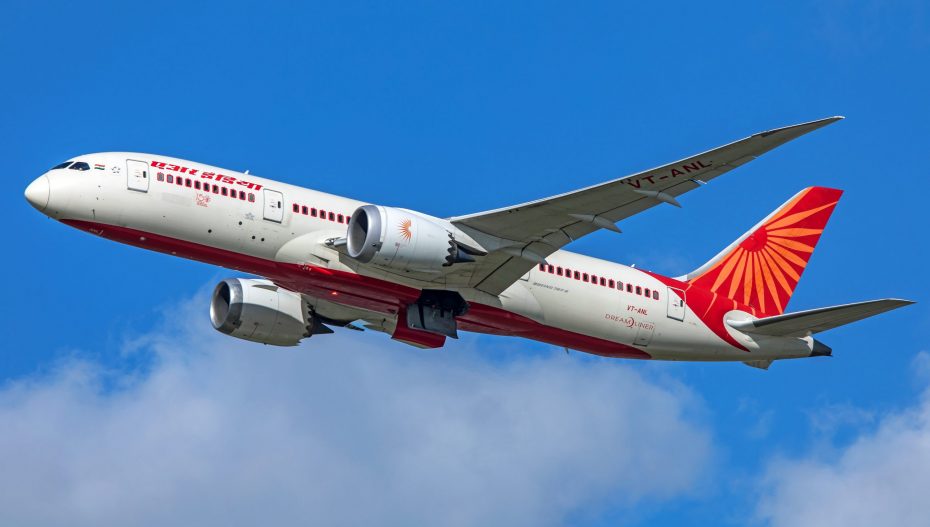
Four weeks before the fatal Air India Boeing 787-8 crash, aviation regulators in the UK had reportedly raised concerns over fuel shutoff valve actuators on Boeing aircraft.
And now, India’s Directorate General of Civil Aviation (DGCA) directed all affected operators to inspect the fuel control switch locking mechanism in line with a 2018 FAA advisory. According to a preliminary report by India’s Aircraft Accident Investigation Bureau (AAIB), both engines shut down after the fuel control switches moved to the “CUTOFF” position. This happened shortly after liftoff.
A section of the media has reported that on May 15, the UK Civil Aviation Authority (CAA) issued a safety notice to operators of five Boeing models, including the 787 Dreamliner. It instructed airlines to review a US Federal Aviation Administration (FAA) Airworthiness Directive (AD) that had identified fuel shutoff valve actuators as a potential safety risk.
“The FAA has issued an Airworthiness Directive (AD) addressing a potential unsafe condition affecting fuel shutoff valves installed on the following Boeing aircraft: B737, B757, B767, B777, B787,” the CAA notice, published by media houses, reads.
The directive required operators to test, inspect, or replace the actuators, and to conduct daily checks on affected aircraft.
According to the AAIB’s preliminary report, the crash occurred after both fuel control switches transitioned from ‘RUN’ to ‘CUTOFF’ within a second of each other, shortly after takeoff. This cut off fuel supply to both engines, causing them to shut down mid-air.
For the unversed, fuel control switches regulate fuel flow to engines. The Throttle Control Module (TCM), which houses these switches, had been replaced on the aircraft in 2019 and 2023. This is in line with Boeing’s maintenance schedule.
Meanwhile, the DGCA issued a directive to Indian operators of affected Boeing models—including the 787 and 737—to comply with a 2018 FAA Special Airworthiness Information Bulletin (SAIB) by July 21, 2025. The SAIB had warned about possible disengagement of the fuel control switch locking feature.
“It has come to the notice of DGCA, that several operators—internationally as well as domestic have initiated inspection on their aircraft fleet as per the SAIB… In the view of above all airline operators of the affected aircraft are hereby advised to complete the inspection required under SAIB Number: NM-18-33, dated 17th December 2018, no later than 21st July 2025. Inspection plan and report after accomplishment of inspection shall be submitted to this office under intimation to concerned Regional Office. Strict adherence to the timeline is essential to ensure continued airworthiness and safety of operations,” the regulator said in its order.
The SAIB has advised: “Inspect the locking feature of the fuel control switch to ensure its engagement. While the airplane is on the ground, check whether the fuel control switch can be moved between the two positions without lifting up the switch. If the switch can be moved without lifting it up, the locking feature has been disengaged and the switch should be replaced at the earliest opportunity.”
There is a chance that Air India did not inspect the locking mechanism on the crashed aircraft since the SAIB was advisory and not mandatory. The SAIB applied to several Boeing models, including the 787 and 737, but not the 777. IndiGo also operates a damp-leased 787, but that aircraft is not registered in India.
Other international carriers, including Etihad Airways, have voluntarily begun inspecting fuel control switches on their 787 fleets.
The AAIB’s preliminary findings did not conclude whether the fuel switches were physically moved by a pilot or transitioned due to a technical, mechanical, or software issue. The report also did not issue any safety recommendations for other operators of the Boeing 787-8 and its GE engines.
Experts quoted in reports noted that the fuel control switches are spring-loaded and fitted with brackets. They require a lift-up action to transition between RUN and CUTOFF positions.
On July 11, the FAA stated that the design of the fuel control switches does not pose any safety risks. Boeing issued similar guidance to global airlines.
Air India CEO Campbell Wilson, in an internal communication, said: “The initial findings of the probe identified no cause nor made any recommendations.”
He urged against drawing premature conclusions regarding responsibility for the crash.
Also Read: Tesla Finally Makes India Debut, Powering The Next Wave Of Innovation And Sustainability https://www.vibesofindia.com/tesla-finally-makes-india-debut-powering-the-next-wave-of-innovation-and-sustainability/