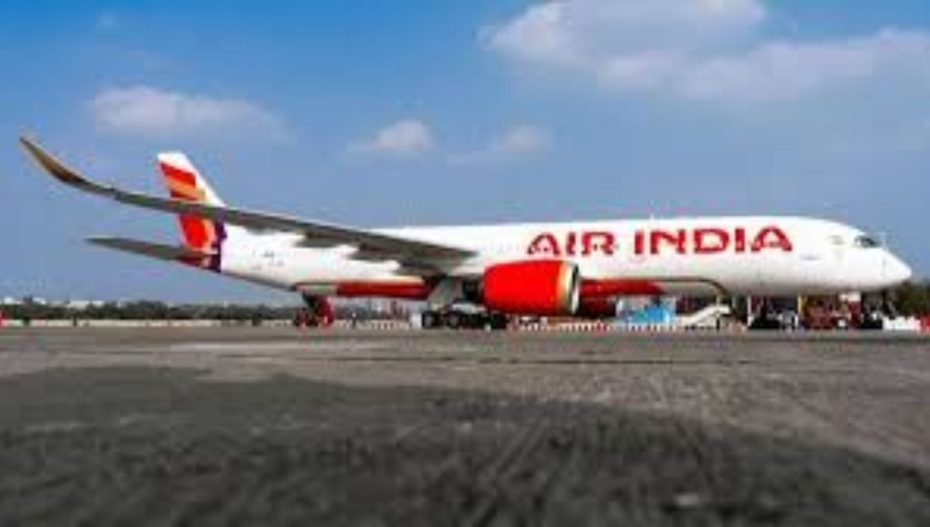
Even as unresolved questions haunt the Air India Boeing 787 narrative in June last year, another fuel switch incident involving an Air India Dreamliner has added new complexity to the inquiry.
On February 1, during engine start at London Heathrow, a Boeing 787 (VT-ANX) operating Air India flight AI-132 to Bengaluru experienced abnormal behaviour of a fuel control switch. The switch reportedly moved from “run” to “cut off” after a crew member pressed it lightly to check whether it was locked.
The fuel control switches on the 787 are designed to require a two-step action. They must be lifted before being moved between “run” and “cut-off”. The safeguard is meant to prevent inadvertent fuel shutdown.
The pilot lightly pushed the left fuel control switch to check if its lock feature was working and found it was not because the switch moved though it was not lifted first, an official who didn’t want to be named told a section of the media.
The switch reportedly failed to lock on the second attempt. On the third attempt, it remained locked and did not move without lifting.
The aircraft departed at 9.40pm for Bengaluru. It is currently grounded.
The London incident challenges the narrative that the Ahmedabad crash resulted from a deliberate pilot act. It instead points to a possible technical flaw in the fuel switch design and its locking integrity.
In its preliminary report released last July, the AAIB stated that both fuel control switches on the Ahmedabad aircraft moved from “run” to “cut off” seconds after takeoff. The report said one pilot asked the other why he cut off the fuel. The other responded that he did not do so.
The AAIB report added that no technical or design flaw had been found so far, implying pilot action. Following this, the DGCA mandated inspections of the fuel switch locking system. Air India later said it completed the checks and found no faults.
However, the London incident expectedly brought into focus switch design and locking integrity of the airliner.
The London event directly undermines the assumption that fuel switch movement in the crash must have been manual.
A senior official said the incident showed uncommanded switch behaviour was a credible failure mode and placed the DGCA’s earlier fleet clearance under scrutiny, suggesting inspections may have been visual or incomplete. The commander added that fuel cut-off could no longer be equated with intent and that the investigation must expand to fleet-level and component analysis.
“Particularly concerning”
Air safety expert Capt Amit Singh was quoted as saying: “The London incident is particularly concerning because in 2018 the US aviation regulator cautioned that fuel control switches on Boeing 787s could malfunction and lead to inadvertent engine shutdown. Occurring after Air India said its fleet’s fuel control switches have been checked, and amid the ongoing June 12 B787 crash investigation, it raises serious questions about inspection adequacy and demands the highest level of regulatory scrutiny.”
Beyond immediate flight systems, experts and media reports have also pointed to maintenance practices and aircraft age. The Boeing 787 involved in the crash was around 11 years old. Indian regulators directed Air India to undertake “additional maintenance actions” on its remaining 787 fleet after the crash.
Air India said in a statement: “We are aware that one of our pilots has reported a possible defect on the fuel control switch of a Boeing 787-8 aircraft. After receiving this initial information, we have grounded the said aircraft and are involving the OEM to get the pilot’s concerns checked on a priority basis. The matter has been communicated to the aviation regulator, DGCA. Air India had checked the fuel control switches on all Boeing 787 aircraft in its fleet after a directive from the DGCA, and had found no issues.”
Boeing said: “We are in contact with Air India and are supporting their review of this matter.”
With the final AAIB report due by mid-2026, investigators continue to reconstruct flight data, examine aircraft components and analyse cockpit recordings, as scrutiny intensifies over whether a critical system flaw may have played a role in one of India’s deadliest aviation disasters.
Why premature conclusions?
Meanwhile, the Aircraft Accident Investigation Bureau (AAIB) has been meticulously examining the wreckage left behind by the Air India Flight AI 171 crash.
Vibes of India has learnt that early analysis has focused on possible technical malfunctions, particularly within the aircraft’s electrical distribution systems and engine controls.
Some wreckage from the tail section, preserved from the intense post-crash fire, is believed to contain clues pointing to a contained electrical issue that may have disrupted critical flight systems during takeoff.
Starved of fuel?
One emerging theory from the preliminary AAIB report suggests that both engines may have been starved of fuel within seconds of lift-off. Investigators found indications that fuel control switches may have moved to the “cutoff” position on both engines, abruptly halting thrust. Cockpit voice recordings reportedly captured an exchange between pilots about this fuel cut off, raising questions about whether the event was mechanical, human, or a combination of both.
Another hypothesis gaining traction is that the aircraft experienced a severe loss of thrust shortly after takeoff, leading to deceleration and stall. Aviation specialists cited visual footage showing the plane’s trajectory and body angle as consistent with a stall caused by insufficient speed and power. Some analysts believe dual engine failure, possibly triggered by fuel contamination or blockage, could explain the rapid descent after a brief climb.
While no official finding has affirmed pilot error, speculation remains high around cockpit actions in the final seconds.
Some interpretations of preliminary data and cockpit audio suggest confusion or miscommunication between the captain and co-pilot. Authorities have cautioned against premature conclusions. They stress that the investigation has not determined whether human input, system design, or their interaction was decisive.
Vibes of India understands that investigators are also examining factors beyond fuel systems. This includes the aircraft’s electrical distribution network and software design. Officials are studying how multiple systems may have interacted or failed together. While no evidence confirms external or environmental factors, such possibilities have not been ruled out.
Also Read: Unexpected Fuel Switch Movement On London Boeing 787 Spurs Air India Crash Scrutiny https://www.vibesofindia.com/unexpected-fuel-switch-movement-on-london-boeing-787-spurs-air-india-crash-scrutiny/