


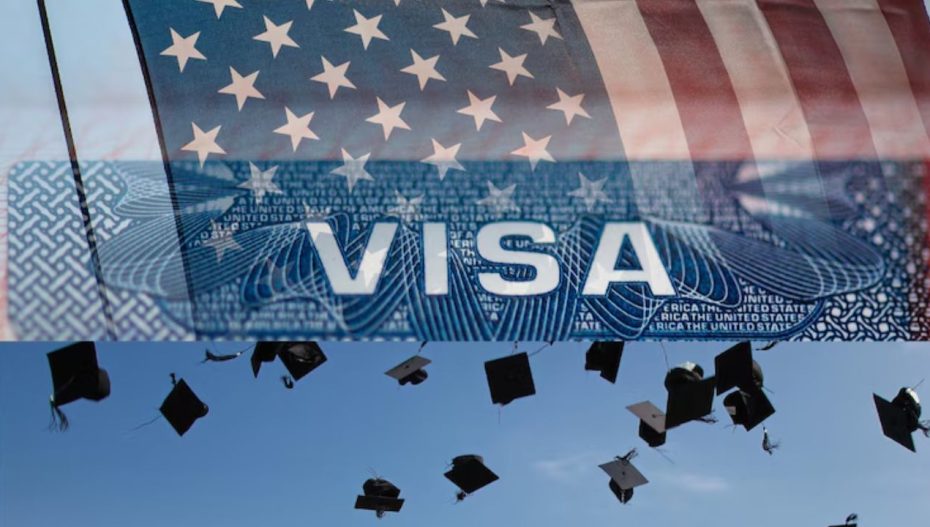
In a move that could reshape what is happening in higher education in the United States, the Department of Homeland Security (DHS) has proposed significant changes to the way international student visas are issued and monitored.
The draft regulation, published on August 28, aims to limit the stay of F-1 and J-1 visa holders to a maximum of four years. If implemented, this would mark a major departure from the long-standing “duration of status” (D/S) system, which has governed student stays in the US for nearly half a century.
Under the current D/S system, students entering the US on an F-1 academic or J-1 exchange visa are not assigned a specific end date for their stay. Instead, they are allowed to remain in the country as long as they are enrolled full-time and are compliant with visa requirements.
Universities manage these records through Designated School Officials (DSOs), who report student activity to the Student and Exchange Visitor Information System (SEVIS), the federal tracking system maintained by DHS.
The proposal, which may be enforced by 2026 if approved, seeks to replace this flexible framework with a fixed four-year cap on all F-1 and J-1 visa stays. After this period, students would be required to apply for an ‘extension of stay’ (EOS) with US Citizenship and Immigration Services (USCIS). The new rule would apply to both new and existing international students in the United States.
According to the DHS, the change is necessary to improve oversight and prevent misuse of the student visa program. Officials point to concerns over students who have remained in the country for decades by continuously enrolling in different programs — including cases where individuals pursued English language studies even after completing advanced degrees.
In 2023, the suspected overstay rate among F-1 visa holders stood at 2.69%. Given the scale of international student enrollment — over 1.6 million F-1 visa holders and more than 500,000 J-1 exchange visitors in 2023 — DHS officials claim the current system presents challenges for effective tracking and enforcement.
If enacted, the proposed changes would bring several key modifications to the student visa process. Students would be admitted for a period of up to four years or until the end of their academic program, whichever is shorter. Those who need to stay beyond that period — whether to finish a degree, pursue Optional Practical Training (OPT), or begin a doctoral program — would need to file Form I-539 with USCIS to request an extension. This application process includes a fee, biometric data submission, and potentially an interview. USCIS would have the authority to approve or deny the request.
Additionally, the grace period granted to students after the completion of their studies would be reduced from 60 days to 30 days. Transfers between institutions would become more limited: undergraduate students would need to complete at least one academic year before transferring to another school, while graduate students would be prohibited from switching programs mid-course. A notable change would prevent students from pursuing a second Master’s degree or enrolling in a new program at the same or lower level under the same F-1 visa status. Language study programs would be limited to 24 months.
This proposed end to second Master’s programs is particularly significant for Indian students, who make up more than 330,000 of the over 1 million international students in the US. Many of them have used second Master’s programs as a backup route when they did not secure an H-1B work visa through the lottery system. With this option potentially off the table, students may be forced to consider alternative paths, such as enrolling in PhD programs.
Janak Nayak, managing director of NB Visa World Pvt. Ltd., told Vibes of India that P.hd students will have go through a long and expensive process to get the visa extended.
Nayak, who has branches all across the country, further said that many students can look towards UK, Australia and Canada.
He further said that now two masters degrees cannot be obtained in one visa. The student will apply for another visa after one degree is completed, he added.
While these changes will not affect students immediately, the uncertainty has already triggered concern within the international student community. The Student and Exchange Visitor Program (SEVP) has clarified that the proposal is still in draft form and that students do not need to take any action for now. The current rules under the D/S system remain in effect. However, if the new rule is finalized, DHS has indicated that students already in the US will receive fixed end dates based on their existing I-20 forms, along with a one-time grace period to comply with the updated system.
Stakeholders have until September 29, 2025, to submit feedback on the proposed rule, while comments on paperwork and SEVIS-related changes are open until October 27. After that, DHS will review the input and may revise the regulation before releasing a final version. If the process proceeds smoothly, the rule could take effect in early or mid-2026.
The proposal has sparked strong opposition from educational institutions and advocacy groups. The Presidents’ Alliance on Higher Education and Immigration, representing over 580 college and university leaders across the US, has called the proposed change “unnecessary and counterproductive.” The group warned that the new policy would increase processing delays, create additional backlogs at USCIS, and discourage international student enrollment at a time when higher education is still recovering from the pandemic’s impact.
NAFSA, the Association of International Educators, has been quoted in the section of the media saying that the changes would shift academic decision-making authority away from universities and into the hands of immigration officials.
Seema Patel (name changed) of Ahmedabad will fly out to the US in a couple of months on F1 visa. She told Vibes of India that for her masters she will go to a country where there are not much restrictions.
“Even my friends who are completing studies in the US are moving to other countries for further studies,” said the 18-year-old.
Legal experts have also raised red flags. Boston-based Manifest Law was quoted saying that mandatory extensions during academic programs could lead to complications, especially if applications are delayed or denied.
Houston-based RNLawGroup pointed out that once the new rule is in place, only USCIS — not the student’s school — would have the legal authority to approve continued stay, and failing to apply in time could trigger a three- or ten-year ban on re-entering the US.
Badmus Law Firm in Dallas has been quoted saying that since the average bachelor’s degree in the US takes about 4.3 years, and a PhD around 5.7 years, most students would likely exceed the four-year cap and should prepare for the extension process in advance.
Immigration attorney Chand Parvathaneni acknowledged in the media report that the increased complexity the rule could introduce but emphasized that compliance remains the key. “Until now, as long as the school was confirming someone was enrolled, USCIS did not get involved. Now USCIS could approve or deny. So for somebody spending a lot of money to study, there could be some uncertainty if it takes more than four years,” he said. He also noted that despite the uncertainty, the US remains one of the top destinations for quality higher education. “My advice is: if you are in the country, follow the rules. Ninety-nine percent of people who do never have a problem,” he added.
However, the ongoing unpredictability in US visa policies is causing some hesitation among prospective international students. According to Parvathaneni, “The rules are changing so quickly and so often, it is definitely impacting demand for F-1. A lot fewer people have joined this year because they just want clarity, not surprises.”
While the proposal is not yet law, the direction is clear: fixed timelines, stricter compliance, and more involvement from immigration authorities in the academic journey of international students. Those currently studying or planning to study in the US in the next few years should stay informed and be ready to navigate the potential changes ahead.
Also Read: Gujarat Reduces Fuel Surcharge On Electricity https://www.vibesofindia.com/gujarat-reduces-fuel-surcharge-on-electricity/