


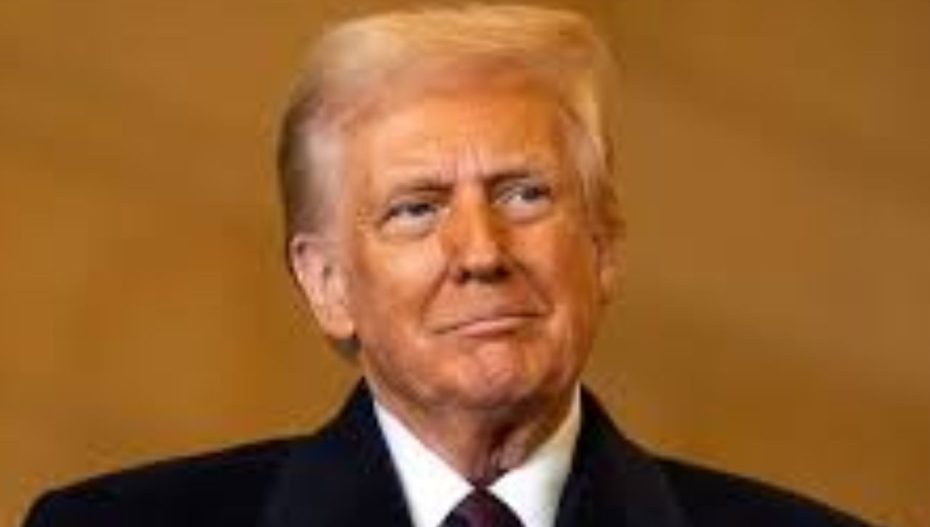
US President Donald Trump’s tariffs are a crude instrument, but they may be forcing India to confront weaknesses in its overregulated economy, writes financial analyst Sadanand Dhume.
The tense relationship with the US (India’s largest trading partner) appears to have been a wake-up call. If anything, it has compelled New Delhi to turn inward for another round of economic reforms.
The writer believes India’s reforms are out of reactions and not readiness. Many of the measures now being advertised as reforms are overdue corrections. The problems, he points out, are the government’s own making.
Prime Minister Narendra Modi must stand for free markets more consistently to be hailed as an economic reformer.
Last August, the government introduced a bill to amend the insolvency and bankruptcy code. The code was aimed at speeding up cases. It intended to make it easier for banks to recover assets from defaulters.
Then, in September, it simplified the goods-and-services tax.
Later, in November, it scrapped quality-control orders (a licensing requirement) on 25 industrial inputs, easing imports for sectors such as textiles, packaging, and plastics. That same month, 29 central labour laws were consolidated into four labour codes.
In December, India opened its nuclear-power sector to private Indian firms and foreign joint ventures for the first time, and raised the foreign direct investment cap in insurance to 100% from 74%.
More changes may follow, including a proposed electricity law that would allow greater private competition in the power sector.
However, these measures are incremental improvements rather than structural change.
They pale in comparison with the agricultural reforms PM Modi attempted five years ago. The reforms were meant to liberalise farming. They had the potential to significantly lift growth before being withdrawn after political backlash.
The pattern is familiar. Indian policymakers tend to dismiss legitimate criticisms when a policy is introduced, only to address them years later under pressure. Rather than overhauling bad rules, the instinct is usually to soften them at the margins. Reform becomes an exercise in tinkering.
The goods-and-services tax illustrates the problem. When it was introduced in 2016, the warnings went unheeded. It was perceived as too complex and the rates high. Generally, it hurt small businesses. Nearly a decade later, the tax has been simplified. Yet, it remains more cumbersome than value-added taxes in many other countries.
Labour reform tells a similar story. The new labour codes raise the threshold at which firms need government permission to fire workers from 100 employees to 300. That is an improvement, but it stops well short of transforming India’s rigid labour market.
Quality-control orders are another example. These regulations proliferated under the Prime Minister’s watch as politically connected firms lobbied for non-tariff barriers to shield themselves from competition.
In 2014, India had just 14 such orders. By 2025, that number had risen to 156, covering nearly 700 products. High tariffs and these non-tariff barriers are precisely what provoked Mr Trump’s anger.
Proposed power-sector reforms should address India’s chronic electricity shortages. It’s about time the poor finances of state-run distributors are looked at, the writer adds.
He reminds that similar promises were made in 2015. Yet, electricity pricing remains unresolved.
India will not achieve meaningful economic change through half-measures, the writer notes.
What is needed is a far bolder agenda. It could be rolling back bureaucratic overreach as one of the measures. Privatising loss-making state firms, making land acquisition less cumbersome, unleashing market forces in agriculture, cutting fuel and fertiliser subsidies must be part of the reforms.
The writer asserts that only a decisive embrace of free markets is the way forward.
Also Read: Trump’s Fee Hike Rattles Markets, Hits Indian Tech Stocks https://www.vibesofindia.com/trumps-fee-hike-rattles-markets-hits-indian-tech-stocks/