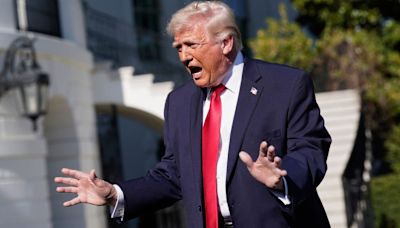
Iran has sharply pushed back against a series of claims by former US President Donald Trump on the Strait of Hormuz and ongoing negotiations, accusing him of spreading misinformation and distorting facts amid a fragile ceasefire.
Iranian Parliament Speaker Mohammed Bagher Ghalibaf said Trump made “seven claims in one hour” — all of them false — as tensions escalated over the US naval blockade and the status of the critical oil transit route.
The Iranian position is clear: control of the Strait of Hormuz lies with Tehran, not Washington. Ghalibaf asserted that passage through the strait will take place only along designated routes and with Iranian authorisation, warning that continued US blockade actions could force Iran to shut the waterway again.
His remarks directly contradict Trump’s public assertions that the strait is effectively open and that Iran has agreed to long-term guarantees. In reality, Iran has only declared the strait open temporarily for commercial vessels under a ceasefire framework — and even that access is tightly regulated.
The contradiction runs deeper. While Trump has claimed progress on multiple fronts — including nuclear concessions, mine clearance, and even transfer of enriched uranium — Iranian officials have categorically denied that any such agreements exist.
From Tehran’s perspective, the narrative coming out of Washington is not just inaccurate — it is strategic messaging detached from ground realities.
Iranian officials point out that the US continues to enforce a naval blockade despite publicly celebrating the reopening of the strait. Trump himself has said the blockade will remain until a final deal is reached, even as he claims negotiations are nearly complete.
This contradiction is central to Iran’s criticism: the US is simultaneously claiming de-escalation while maintaining military pressure.
Ghalibaf underscored this gap, stating that outcomes in the Strait of Hormuz will be determined “by the field, not by social media.” The message was blunt — operational control and security decisions will not be dictated by political announcements from Washington.
On the ground, Iran continues to regulate maritime movement through the strait, requiring vessels to coordinate routes and obtain clearances, particularly amid lingering security risks such as naval mines and military tensions.
The stakes are global. The Strait of Hormuz carries roughly 20 percent of the world’s oil supply, and even temporary disruptions have already shaken energy markets and slowed shipping traffic.
Iran’s broader argument is that Washington is attempting to claim diplomatic wins without delivering substantive agreements. Officials in Tehran insist that no deal has been finalised, no uranium transfer has been discussed, and no permanent guarantees on Hormuz have been given.
Instead, Iran frames the current situation as a ceasefire-driven, conditional opening — one that can be reversed if US actions, particularly the blockade, continue.
As the war of narratives intensifies, the gap between rhetoric and reality remains wide. On one side, Trump projects imminent resolution; on the other, Iran signals that control, leverage, and final decisions still rest firmly in Tehran.
Also Read: Questions Over Presidential Conduct Intensify Debate On Trump’s Mental State https://www.vibesofindia.com/377447-2/