

Is food only about survival and gastronomical delights? At a subtle level, it’s as much about identity and power as taste. Two grand food stories aptly illustrate this theme.
Historian Neha Vermani has reportedly revealed details of an 1897 royal dinner hosted by the Maharaja of Baroda. It flashed memories of a presidential banquet for Russian President Vladimir Putin in December last year.
That event hosted by President Droupadi Murmu sparked debate over its all-vegetarian spread.
Why are they talking points? Because food at the highest tables is never neutral. It communicates status, values and the image a host wishes to project.
Vermani, a historian specialising in Mughal South Asia, shared a dinner menu dated 31 January 1897. The banquet was hosted by Sayajirao Gaekwad III, Maharaja of Baroda State from 1875 to 1939.
It honoured Maharaja Sir Madhorao Scindia I of Gwalior, who ruled between 1876 and 1925. The venue was the Laxmi Vilas Palace in Gujarat, during the colonial era.
Vermani wrote on X that it was not what one would expect a 19th-century dinner hosted by the Maharaja of Baroda for the Maharaja of Gwalior to look or taste like. She noted the presence of truffles, artichokes and many fancy French names and items.
The menu did not feature Indian dishes. It featured what would today be described as fusion food. It read like a lesson in French haute cuisine. The now-yellowing card, embossed with the king’s profile, showed the dinner time as 7:30 pm.
The grand spread
It began with Potage d’Amandes, an almond custard or flan. This was followed by Poisson Braise sauce Mayonnaise, a braised fish with a rich mayonnaise sauce. The final starter was Crème de Volaille aux truffes, a chicken cream soup infused with truffles.
The main course featured Côtelettes de mouton à l’Italienne, Italian-style lamb cutlets. There was also Selle de perdreau rôtie aux petits pois, a roast cut of partridge served with fresh peas.
Side dishes included Fonds d’artichauts à la demi-glace, artichoke bottoms in a French brown sauce. There was also Curry de macedoine de legumes et riz, a vegetable and rice curry.
Dessert comprised apples cooked or baked with cream and pistachio ice cream.
The menu reflected the Maharaja’s reputation as a great gourmet and entertainer. A patron of the arts, he commissioned Raja Ravi Varma in 1888 to paint mythological works for the newly-constructed Laxmi Vilas Palace. His interest in food was no less significant.
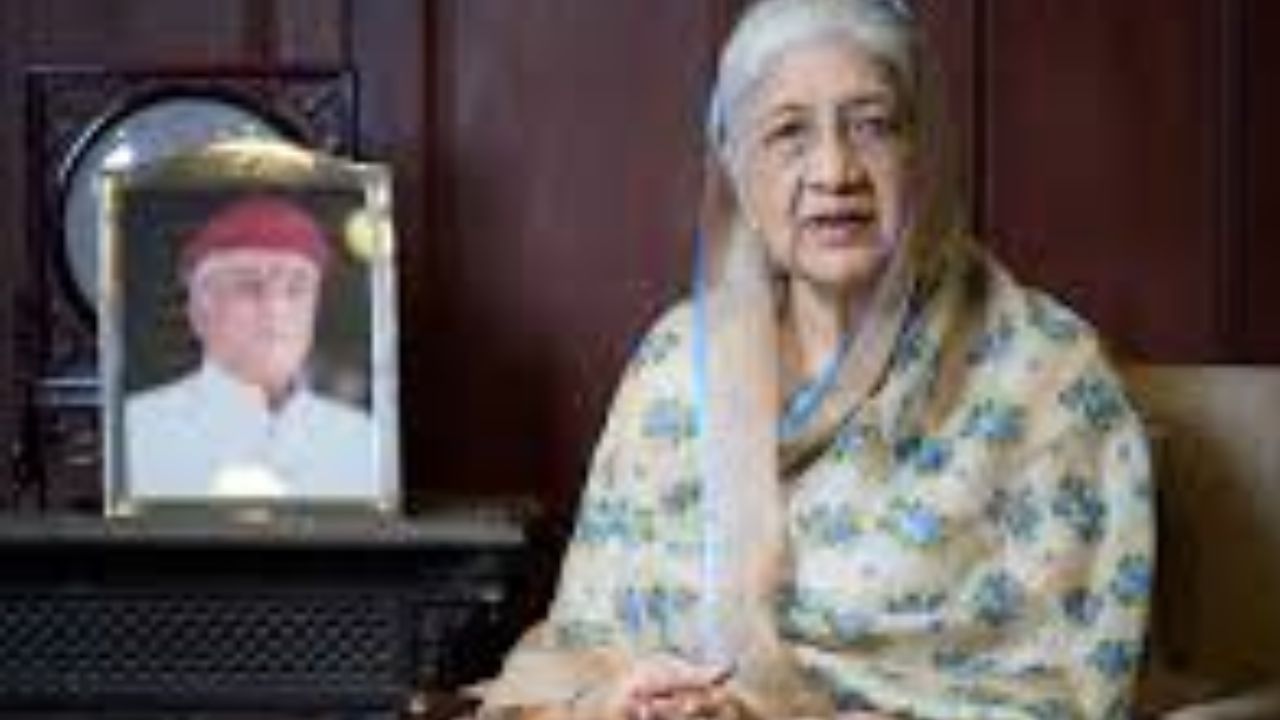
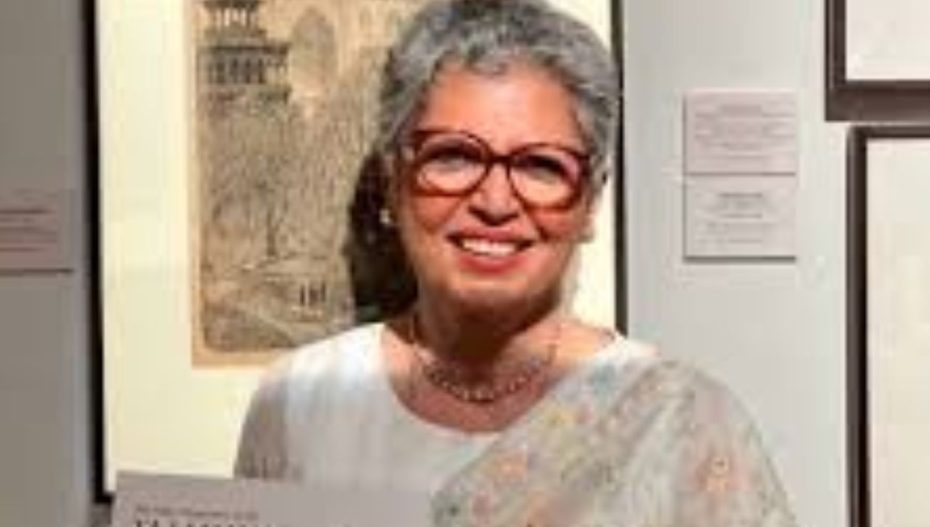
His granddaughter, Maharani Shubhanginiraje Gaekwad, wrote that Gaekwadi cuisine was unique and unavailable anywhere else in India, not even outside the Laxmi Vilas Palace. She said she believed it was the earliest version of fusion cooking in the country.
The king championed Gaekwadi cuisine. It emerged from marriages between the Gaekwad family and princesses from Gwalior, Tanjore and Kolhapur gharanas, and other princely states. These princesses, along with palace chefs of varied styles, altered the original Maratha cuisine of the Baroda palace to suit their tastes.
At one time, wild boar, partridge, peacock and duck were cooked. The palace cooks still retain recipes for these dishes.
Too rich
Maharani Shubhanginiraje wrote that lunch in the palace was Indian, and dinner was always continental. She reportedly said that Indian food, especially Gaekwadi cuisine, was too rich to have twice a day. She said they were fond of Continental food. She added that their cooks prepared Continental meals comparable to the best classic French restaurants.
She also described their tartare sauce as unique, mentioning that it paired well with a roast saddle of lamb. She noted that when dining abroad, they often wished they had carried their own tartare sauce.
More than a century later, another state banquet commanded attention.
Why no non-veg?
Russian President Vladimir Putin concluded his visit to India in December 2025 with an honoured presidential dinner at Rashtrapati Bhavan. The host was President Droupadi Murmu. The high-profile menu went viral on social media.
Netizens took a dig at the food selection since the menu featured no non-vegetarian dishes. There were no alcoholic beverages.
The all-vegetarian spread was presented as a traditional thali. It was built around fresh ingredients and aromatic spices. The curated selection aimed to highlight India’s regional diversity and culinary heritage. It was designed to remain light, elegant and festive.
The meal began with murungelai chaaru soup. It was a light broth of moringa leaves and moong beans, garnished with curry leaf-scented seeds.
It was followed by gucchi doon chetin, stuffed morels with white walnut chutney. There were kaale chane ke shikampuri, black gram kebabs. Vegetable jhol momo was served with chutney. The flavours ranged from earthy to tangy and subtly spiced.
The main course included zaafrani paneer roll, palak methi matar ka saag, tandoori bharwan aloo, achaari baingan and dal tadka. A variety of gravies and dry preparations accompanied them. The dishes harmonised the international palate while remaining rooted in Indian traditions.
They were paired with dry fruit and saffron pulao. An assortment of Indian breads followed, including lachha parantha, magaz naan, satanaj roti, missi roti and biscuity roti.
Desserts featured badam halwa, kesar pista kulfi and fresh fruits. The meal closed on a blend of rich sweetness and light, refreshing notes.
Alongside the feast, a parallel raag menu was placed on the table. An ensemble of classical instrumentalists performed on the sarod, sarangi and tabla. They played Indian classical ragas with familiar Russian melodies. The dinner became a cultural exchange as much as a gastronomic one.
Congress leader Karti Chidambaram commented on the menu. He wrote that it was completely vegetarian and questioned why. He said that to acknowledge and celebrate Indian cuisine, dishes of meat, fowl and seafood should have been included.
Completely Vegetarian? Why? To acknowledge & celebrate Indian cuisine dishes of meat, fowl & seafood should have been included. Indian wines should have featured too. https://t.co/mQgEGH4OCV
— Karti P Chidambaram (@KartiPC)
Shiv Sena (UBT) MP Priyanka Chaturvedi criticised the Centre for not inviting Congress president Mallikarjun Kharge and Congress leader Rahul Gandhi to the state dinner, describing the omission as “petty.”
Also Read: The Royal Cuisine of Rajasthan https://www.vibesofindia.com/the-royal-cuisine-of-rajasthan/