


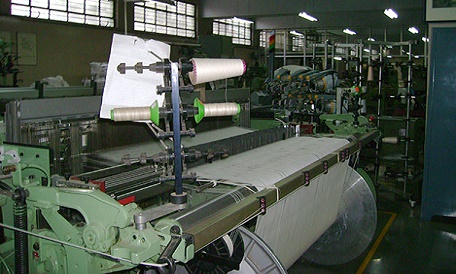
Surat’s booming textile hub is running at half its usual rhythm. Powerloom factories across the city have suspended their night shifts, operating only during daytime hours. It’s a direct fallout of a worker exodus and spiralling raw material costs.
The decision was made following a meeting of the Federation of Gujarat Weavers Welfare Association (FOGWA) on Monday. Representatives from across the city’s textile clusters gathered to take stock of a deepening crisis.
The FOGWA meeting brought together segments including powerloom, air jet and water jet units.Representatives cited labour shortage, raw material price hikes, and weak market demand as the key pressure points.
An estimated five to six lakh workers have already left Gujarat, with the exodus continuing as of late March 2026.
Around 90% of migrant workers in Surat reportedly function without authorised LPG connections. That makes them vulnerable during supply shortages.
As a media outlet reported, nearly 400 processing mills have formally shut down two days each week. Weaving units in several clusters have had to reduce to four working days.
Then there’s a teething issue of mini cylinders that are priced extremely high or unavailable, Refill costs reported as high as Rs 2,500 for a 5 kg cylinder that once cost Rs 500.
Lack of options have further added to the complexities. Solar energy, experts reminded, cannot generate steam at the desired level. The maximum temperature solar energy can attain is around 70 degrees. Dyeing requires temperatures above 100 degrees.
Additionally, the crisis, reports point out, has exposed a structural flaw in Surat. Its industries were built on informal migrant labour that has never made provisions for workers’ basic survival needs.
An official associated with FOGWA said the situation had been building for some time. He told a section of the media that with raw material prices climbing and an LPG crisis biting into operations, workers had begun leaving Surat for their home states, with many already gone.
Factories, the official added, had been forced to cut production as a result. The decision to run only day shifts was a practical response to the shortage of available workers. He mentioned that if worker numbers recover, factories would return to two-shift operations.
The LPG shortage doubtless stems from the ongoing West Asia conflict.
The scale of what’s at stake is significant. FOGWA data, according to reports, shows nearly 3.5 lakh powerloom machines, 22,000 air jet machines, 1.5 lakh water jet machines, and 25,000 Rapier with Jacquard machines are in operation across these segments.
More than eight lakh workers are employed across them. The most migrant labourers belong to Uttar Pradesh, Bihar, Jharkhand, Odisha, and Maharashtra.
Representations have reportedly been made to Deputy Chief Minister Harsh Sanghavi. The state government was working towards resolving the situation.
Pressure is mounting massively on the power tariff front.
A leader associated with the Sachin GIDC Industrial Association wrote to Dakshin Gujarat Vij Company Limited (DGVCL) seeking a 50 per cent cut in fixed power charges for both low-tension and high-tension industrial connections.
The letter mentions that industries were already running at 50 per cent production capacity and that relief on fixed charges would provide critical support during this period.
Also Read: War Brings Covid Nightmare Back to Gujarat’s Factory Towns https://www.vibesofindia.com/war-revives-ghost-of-covid-in-gujarats-manufacturing-hubs/