

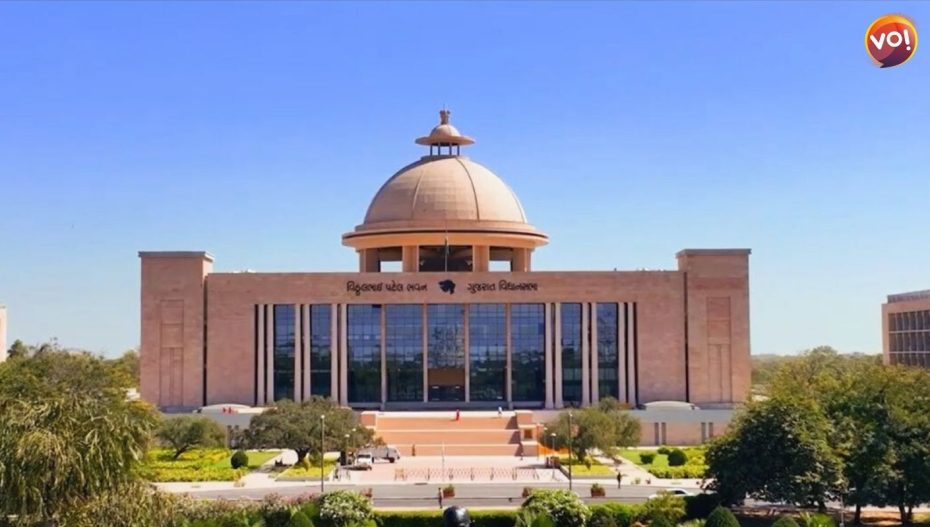
A recent analysis of the Gujarat Legislative Assembly’s budget session has revealed a striking trend—almost one in every four Members of the Legislative Assembly (MLAs) did not participate in any debate or discussion throughout the session.
According to the Assembly Secretariat’s report on the February–March budget session, 45 out of 182 MLAs (24.7%) remained completely silent during all legislative debates outside the Question Hour. Their absence from discussions covered important subjects such as the state budget, government bills, private members’ business, resolutions, adjournment motions and committee reports.
The findings have raised questions about the level of participation and accountability of elected representatives in one of the state’s most important legislative sessions.
Nine Ministers Also Did Not Participate in Debates
The report also highlights that nine ministers in the Bhupendra Patel-led Gujarat government did not speak during any debate or discussion in the budget session.
The ministers named in the report are Trikam Chhanga, Kantilal Amrutiya, P.C. Baranda, Darshana Vaghela, Rivaba Jadeja, Kaushik Vekariya, Parshottam Solanki, Kamlesh Patel and Ramesh Katara.
While ministers often spend much of their time handling administrative responsibilities and may only respond to subjects related to their departments, experts say that the complete absence of nearly one-fourth of the Assembly from legislative discussions raises broader concerns about active participation in lawmaking.
Budget Discussion Saw the Highest Participation
Despite the silence of many legislators, the Assembly recorded 493 total participations across different categories of business during the session.
The state budget discussion attracted the highest level of engagement, accounting for 223 interventions, making it the most debated issue during the session. This was followed by:
144 participations on other Assembly matters.
65 interventions during discussions on government bills.
28 speeches on the Motion of Thanks to the Governor’s Address.
18 discussions on private members’ resolutions.
Eight interventions on private members’ bills.
Seven discussions on government resolutions.
The figures indicate that while many legislators remained silent, a smaller group of MLAs handled most of the Assembly’s discussions.
A Small Group of Legislators Dominated the Session
The report shows that legislative participation was concentrated among relatively few members.
Assembly Speaker Shankar Chaudhary recorded the highest number of participations with 47 interventions, reflecting his role in conducting the proceedings.
Deputy Speaker Purnesh Modi participated 10 times, while Chief Minister Bhupendra Patel spoke five times during the session. Deputy Chief Minister Harsh Sanghavi intervened seven times.
Among ministers, Rushikesh Patel and Arjun Modhwadia emerged as the most active, each speaking 15 times.
On the Opposition benches, Congress MLA Shailesh Parmar also recorded 15 interventions, making him one of the most vocal opposition members.
AAP legislators Gopal Italia and Umesh Makwana followed closely with 14 participations each.
Independent MLA Dhavalsinh Zala spoke 13 times, while Chaitar Vasava participated 12 times. Ramanlal Vora spoke 11 times, Jitu Vaghani participated 10 times, and Gujarat Congress President Amit Chavda intervened eight times.
Why Legislative Participation Matters
Political observers believe that speaking during Assembly debates is one of the key ways elected representatives fulfil their responsibilities. Through discussions, MLAs question government policies, suggest improvements, represent the concerns of their constituencies and help shape laws.
While constituency work and committee responsibilities are also important parts of an MLA’s role, active participation inside the Assembly remains an important measure of legislative performance.
Experts Call for Greater Public Accountability
Reacting to the findings, Pankti Jog, Gujarat Coordinator of the Association for Democratic Reforms (ADR), said the report should encourage greater public attention towards legislative performance.
She said legislators are elected not only to represent people but also to actively participate in debates on laws and public policies. According to her, when a large number of elected representatives remain silent during Assembly proceedings, it can weaken democratic oversight and reduce accountability in governance.
A Reminder of the Importance of Debate
The latest Assembly data highlights a significant imbalance in legislative participation. While several MLAs actively contributed to discussions on the budget, government bills and other key issues, many others did not speak even once during the session.
As Gujarat continues to debate policies affecting millions of people, the report has renewed discussion on whether elected representatives should play a more visible and active role in legislative proceedings, ensuring that every constituency has a voice inside the Assembly.
Also Read: Oxford And KSKVKU Join Forces To Explore Dholavira’s 4,000-Year-Old History https://www.vibesofindia.com/oxford-kskvku-dholavira-harappan-research-kutch/